Last updated November 22, 2026
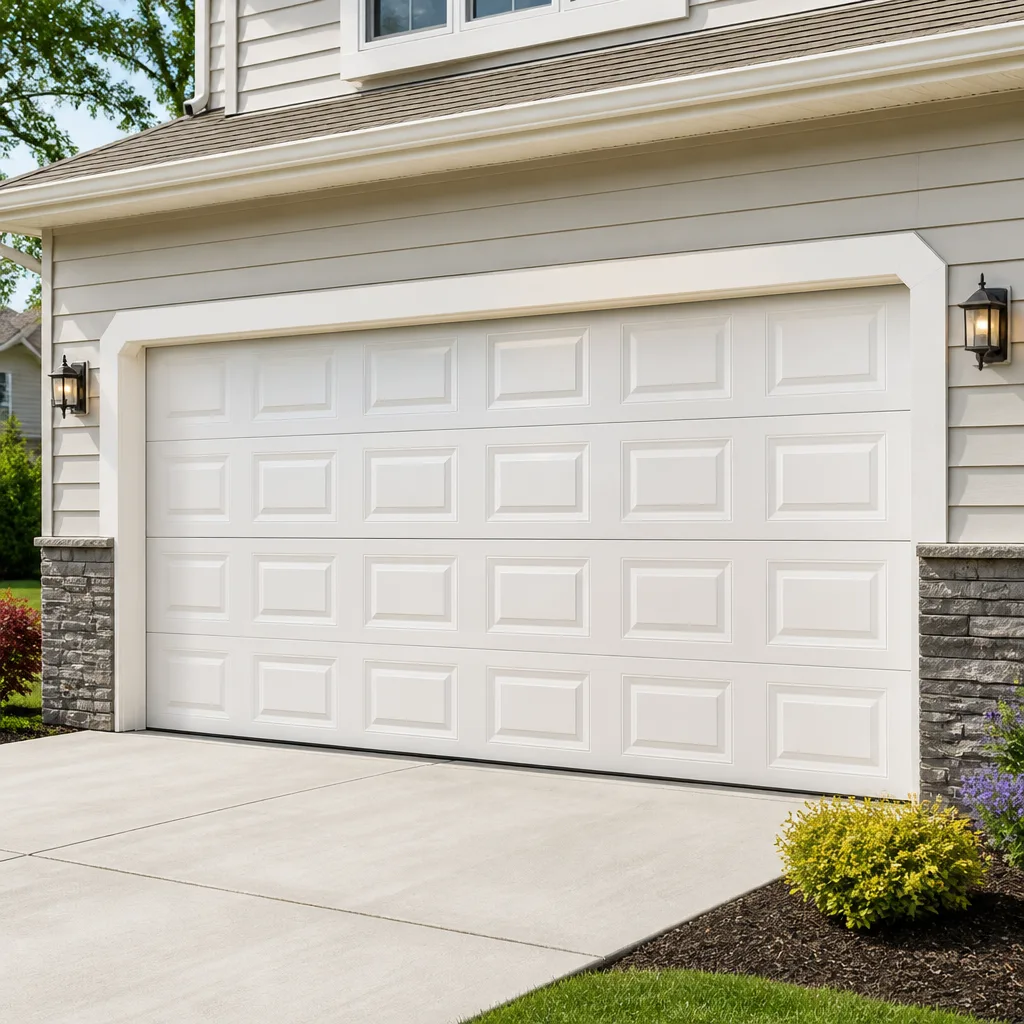 Raised-panel steel
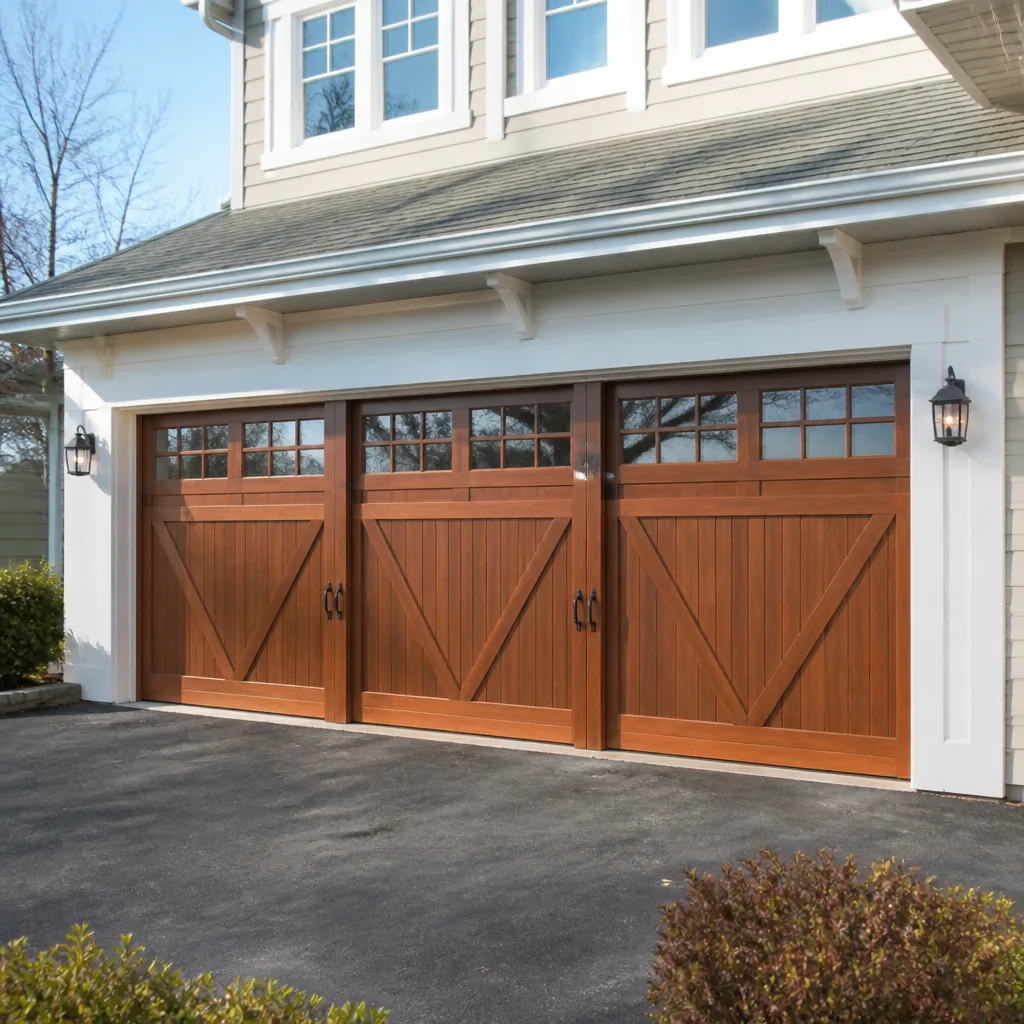 Carriage house
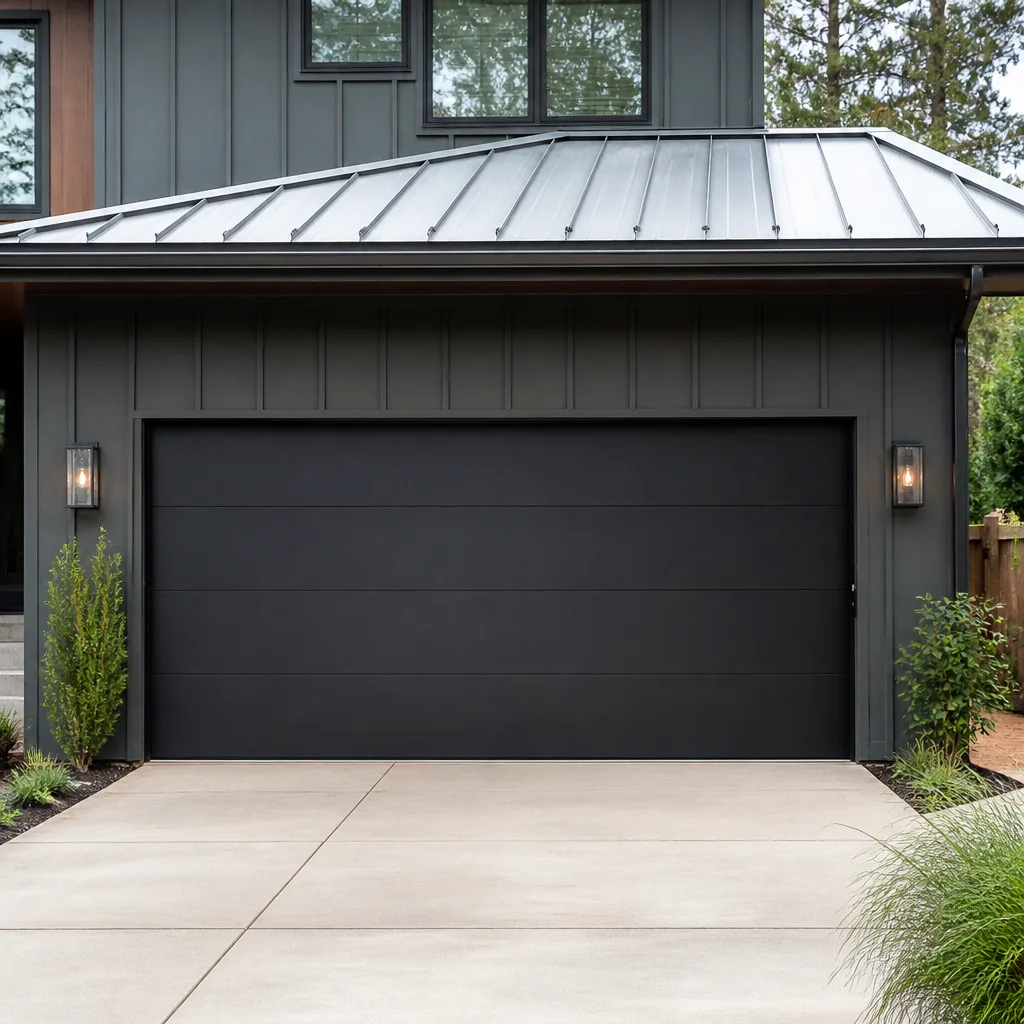 Modern flush
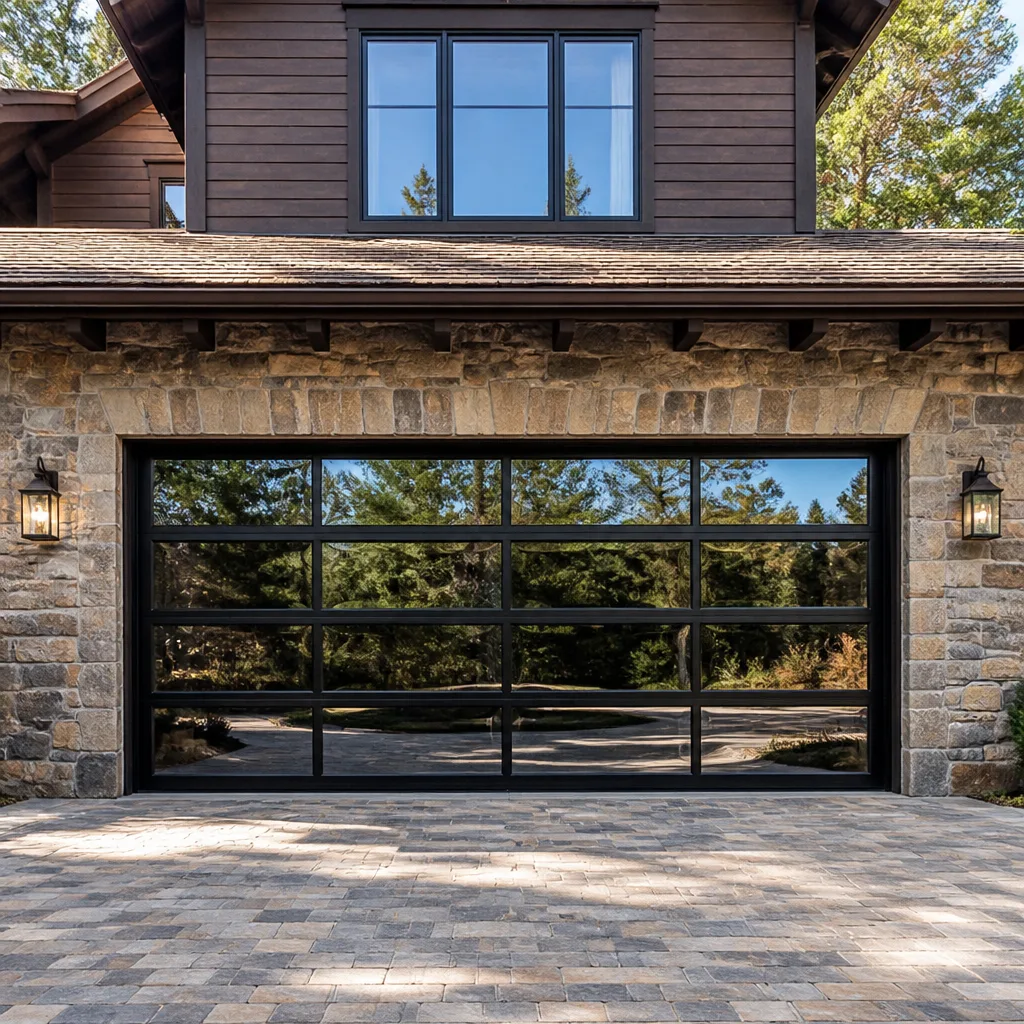 Full-view glass
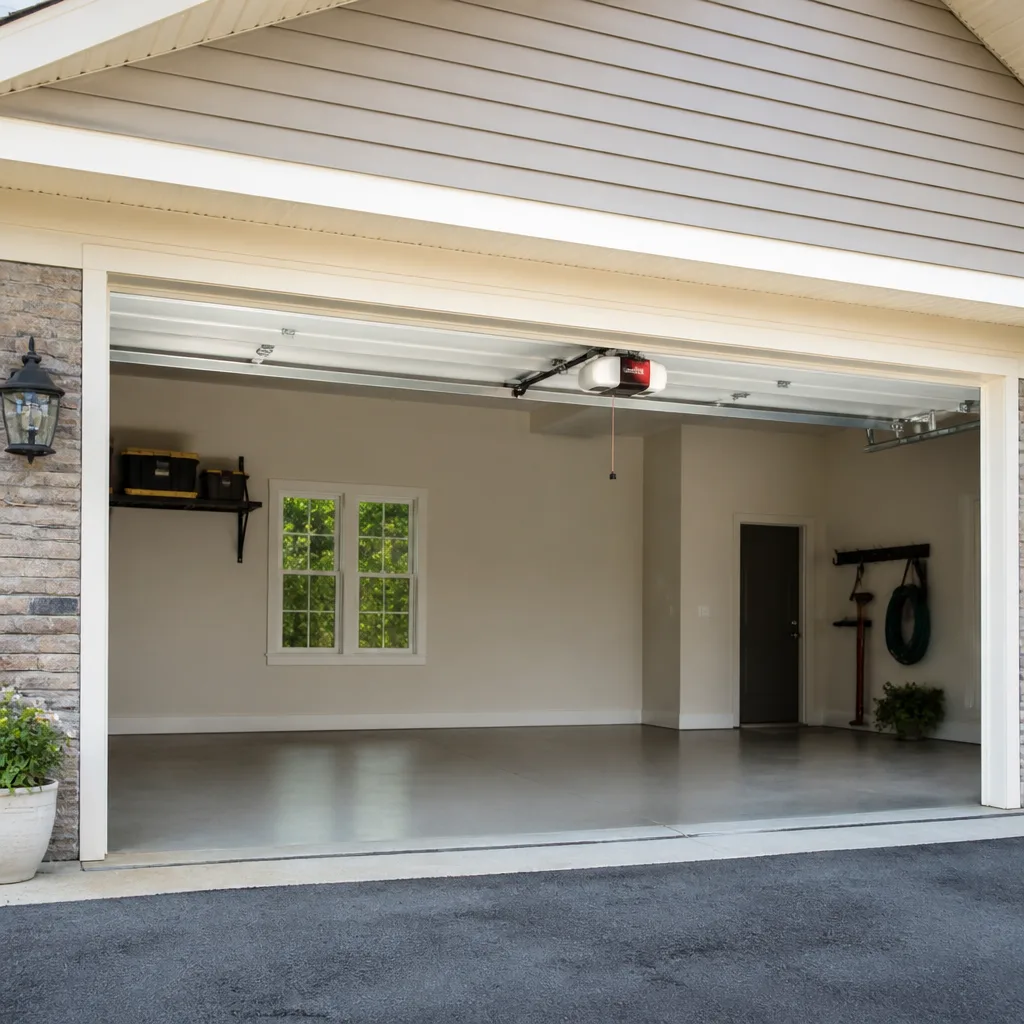 LiftMaster openers
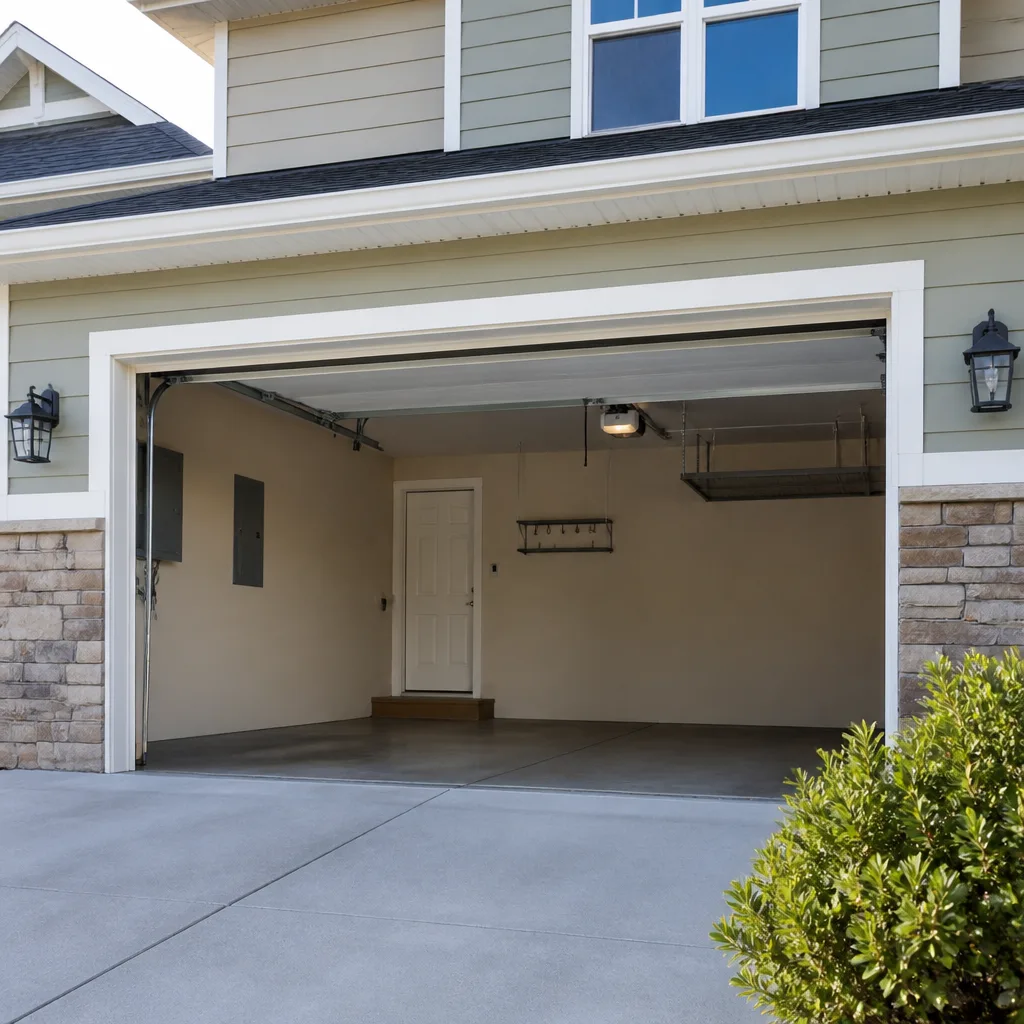 Chamberlain openers
Full 25-point door and opener safety check with every visit - springs, cables, rollers, tracks, and your LiftMaster or Chamberlain opener included
You get a price before we start. It does not change when the pro arrives.
Get your free estimateGarage Door Emergency Preparedness Guide for Coral Springs Homes
The call that surprises most Coral Springs homeowners isn’t the one about a broken spring. It’s the one from a driveway, in the rain bands of a named storm, with a door that won’t close and a car trapped inside because nobody ever practiced the manual release. During Hurricane Ian’s outer bands, the pattern held again: more calls about doors that wouldn’t latch than doors that had actually failed. That’s the gap this guide closes. You’ll learn how to release a door safely under power loss, what to confirm before June 1st, how to secure a door that won’t latch before a storm, what’s safe to run after one, and how to choose a battery backup opener built for South Florida’s outage patterns.
Quick Answer
A garage door emergency in Coral Springs is usually one of four things: a broken spring or snapped cable, a power outage that leaves the door inoperable, a damaged panel or bent track from wind and debris, or a door that won’t latch closed as a storm approaches. Each one has a different response. Know your manual release, test it before hurricane season, inspect the door after any storm before you press the button, and call a trained technician for anything involving springs, cables or structural damage. The rest you can prepare for in advance.
Styles & brands we work with
- Raised-panel steel
- Carriage house
- Modern flush
- Full-view glass
- LiftMaster openers
- Chamberlain openers
Table of Contents
- How the manual release works when the power is out
- Your pre-season checklist: what to verify before June 1st
- What to do when the door won’t close before a storm
- Post-storm damage assessment: what’s safe to operate
- Choosing a battery backup opener for South Florida outages
- Why spring failure is a safety issue, not a minor repair
- Brand familiarity and why it matters in an emergency
- The Coral Springs garage door preparedness calendar
How the manual release works when the power is out
Every automatic garage door has a manual release, and it exists so you can open the door by hand when the opener has no power. It’s usually a red cord with a handle hanging from the trolley that rides on the opener rail. Pulling it disconnects the door from the opener so the door moves free. That’s the entire concept, and it’s simple. What makes it an emergency is that most people haven’t pulled it in years and don’t know the three things that can go wrong.
The release is designed for a door with a working spring system and intact cables. If a spring is broken, the door may be too heavy to lift by hand, and forcing it can bend panels or drop the door. If a cable is snapped or hanging loose, the door can come down unevenly. So before you pull the cord, look at the springs above the door and the cables along the sides. If anything is visibly broken, don’t lift the door. Call for help and keep people and vehicles clear.
If the door looks intact, here’s the sequence:
- Make sure no one is under the door and nothing is in the door’s path.
- Pull the release cord straight down and toward the center of the door until you feel the trolley disconnect. Don’t yank sideways.
- Lift the door slowly by hand using the handle or the bottom section, not the hinges or the gaps between panels.
- Lift it fully and let it settle. A healthy door should stay up on its own. If it drifts back down, stop and hold it while you get someone to help.
- Prop nothing under the door to hold it open. If it won’t stay up, the spring system needs a technician.
- To re-engage the opener, close the door fully, then pull the release cord toward the opener rail (or follow the reconnect step for your model) until the trolley clicks back in. Test it with a short cycle before you rely on it.
The most common mistakes: pulling the cord while the door is partway up and the opener is still engaged, pulling at an angle and bending the release arm, and leaving the door disconnected afterward without telling the rest of the household. In Coral Springs, where the garage is often the main entry, someone hits the wall button the next morning and the door just hums. That’s not a failure. That’s a disconnected trolley. Make sure everyone in the house knows the door was released and how to reconnect it.
If your release mechanism is stiff, bent, or the trolley won’t re-engage, that’s a repair, not a habit to work around. Our garage door opener repair service covers the trolley, release arm and the opener logic that controls them.
Your pre-season checklist: what to verify before June 1st
June 1st is the start of hurricane season, and the time to check your door is weeks before that date, not during a watch. A door that works fine in March can quietly lose a spring or develop a track misalignment by August. The checklist below takes about an hour and catches the failures that become emergencies when a storm is already on the radar. Do it on a calm day. If you find something, you have time to schedule a repair instead of paying for emergency work.
Door and hardware
- Open and close the door by hand with the opener disconnected. It should move smoothly with reasonable effort. Grinding, sticking or a door that’s much heavier than usual points to spring or roller problems.
- Look at the springs above the door. A broken torsion spring shows a visible gap in the coil. A broken extension spring has a gap in the stretched spring or a loose cable hanging at the side.
- Check the cables along the sides. They should run straight and tight. Fraying, kinks or a cable off its drum means stop using the door.
- Check the rollers and hinges for cracks and missing screws. A loose hinge can let a panel shift in wind.
- Inspect the bottom seal and weatherstripping. A hardened or torn seal lets water and wind-driven rain in, and it’s a cheap replacement.
Opener and safety
- Test the safety reverse. Put a piece of wood or a brick in the door’s path and close the door. It should reverse on contact. If it doesn’t, the door needs adjustment before you trust it.
- Test the photo-eye sensors on both sides of the door. Break the beam with your hand and confirm the door won’t close.
- Check the backup battery if your opener has one, and replace it if it’s old. A battery that holds a charge in April may not hold one in September.
- Confirm the wall button and any remotes work from inside the garage and from the driveway.
Release and access
- Pull the manual release and confirm the door moves freely by hand, then reconnect it and confirm the opener re-engages.
- Make sure every adult in the house knows where the release cord is and how it works. Practice it once.
- Keep a flashlight and a hand tool near the garage door, not buried in a drawer.
If anything on this list fails, schedule it now. A pre-season repair is routine; the same repair during a named storm is an emergency. And if you’re not sure what you’re looking at, a free estimate is cheaper than a guess. The team at Coral Springs Garage Door Repair Co can walk the door with you and tell you what needs attention.
What to do when the door won’t close before a storm
A door that won’t close as a storm approaches is a different problem than a door that’s broken, and it deserves its own answer. The door might be blocked by an obstruction the opener sees, the photo-eye sensors might be misaligned or dirty, the track might be bent enough that the door binds before it reaches the floor, or a limit setting on the opener might have drifted. Sometimes it’s as simple as a sensor knocked out of line by a broom handle. Sometimes it’s a panel that’s shifted and won’t seat in the frame.
Work through this in order:
- Look at the photo-eye sensors on both sides of the door near the floor. Wipe them clean, check that they’re facing each other, and confirm the indicator light on each is solid. A blinking light means the beam is broken or misaligned.
- Clear the door’s path and check the bottom seal for anything caught under it.
- Run the door by hand with the release pulled. If it closes smoothly by hand but not with the opener, the problem is in the opener or the sensors, not the door.
- Check the tracks for bends. A track that’s been hit by a car or a ladder can bind the door before it reaches the floor. Don’t force it; a bent track won’t straighten itself and forcing the door can bend a panel.
- If the door still won’t close, secure it for the storm. Close it as far as it will go by hand and block the gap with towels or a temporary seal. Do not leave the door open. An open door is an opening for wind and rain, and it’s a security gap.
If the door won’t latch and the storm is close, the priority is getting the opening closed, not fixing the mechanism. A technician can fix the alignment or the sensor after the storm passes. What you don’t want is a door open through a named storm.
If the door closes but won’t stay closed, or the opener keeps reversing, that’s usually a safety-reverse or limit adjustment, and it’s a repair. That’s a good reason to call before the season starts rather than after. Our garage door repair service handles tracks, sensors, panels and the opener logic in one visit, so you’re not chasing two contractors.
Post-storm damage assessment: what’s safe to operate
After a storm passes, the temptation is to hit the button and see if the door still works. Don’t. The door may have taken wind load, debris impact or water intrusion that isn’t obvious from the driveway, and running it can turn a repairable problem into a panel replacement. Do a visual inspection from the ground before you touch the opener, and never stand under the door while you do it.
Check these before you operate the door:
- Are the springs intact? Look for a gap in the coil or a hanging cable.
- Are the cables still on their drums and running straight? A cable off its drum is a stop sign.
- Are the tracks straight and attached at the brackets? A bent track will bind the door.
- Are the panels dented, cracked or separated? A cracked panel can fail under load.
- Is there water or debris in the tracks or under the door?
- Did the opener housing take water? Look for water marks or a tripped breaker.
- Are the sensors still aligned and their lenses clear?
If everything looks intact, run the door once by hand with the release pulled to confirm it moves freely, then reconnect and test it with the opener. If it runs smoothly, you’re probably fine. If it grinds, binds, reverses, or sounds different than it did before the storm, stop and call.
The scenarios that require a technician before you use the door: a visible spring break, a cable off its drum, a bent track, a cracked or separated panel, water in the opener, or a door that moves unevenly by hand. None of these are safe to operate, and none of them are things to diagnose from a video. In Coral Springs, storm damage is often the beginning of a repair that’s easier to schedule than to improvise. Our garage door spring repair covers the torsion and extension systems that take the most abuse when a door is forced.
Choosing a battery backup opener for South Florida outages
South Florida outages tend to be long rather than frequent. A named storm can take the grid down for days, and a door that worked fine through a short afternoon outage becomes a problem when the power is out for 48 hours and your car is inside. Battery backup openers exist for exactly this, but not all backup systems are built for the same outage duration. When you’re choosing one, look at four things.
- Battery type and replaceability. Sealed lead-acid batteries are common, but they degrade and need replacing. Confirm you can get a replacement battery for the model you buy, and how often it should be checked.
- Rated cycle count on backup power. A backup that runs a few cycles is enough for a brief outage. For multi-day outages, you want a system rated for more cycles and a battery that holds a charge over a long idle period.
- Compatibility with your door’s weight. A heavier door draws more from the battery. If your door is a thicker insulated model, verify the opener is rated for it.
- How the backup engages. Some systems switch automatically; others need a manual step. Know which yours is, and test it once before you need it.
Brand familiarity matters here. We service Chamberlain, Genie, Clopay and Amarr among the major residential brands, and we know which opener lines pair well with which door weights and which backup batteries are readily available. If you’re replacing an opener, the decision isn’t just the brand on the box; it’s whether the system will carry your door through a long outage.
What you shouldn’t do is rely on a backup battery you’ve never tested. A battery that’s been sitting in an opener for years may show a charge light and still fail under load. Test the backup by disconnecting the opener from power and running the door once or twice, on a calm day, before the season. If it can’t lift the door, replace the battery or the opener.
Why spring failure is a safety issue, not a minor repair
The springs above your garage door hold the weight of the door under tension. That’s the part people underestimate. A torsion spring is wound tight, and an extension spring is stretched long. When either fails, it releases that stored energy suddenly. A door that drops, a cable that snaps or a spring that lets go can cause serious injury, and it’s the reason spring work is a distinct, safety-critical service rather than a general handyman task.
In Coral Springs, the heat and humidity work against springs slowly. Metal expands and contracts through the day, and repeated cycles wear the coils. A spring that’s been in service for years can fail without warning, often when the door is in motion. The sound is usually a sharp bang, and the door may drop partway or stop. If that happens, don’t try to lift the door by hand unless you’ve confirmed the spring isn’t the problem.
What you can check safely: the spring’s appearance from the ground. A broken torsion spring has a visible gap in the coil. A broken extension spring has a gap or a loose cable. What you shouldn’t do is adjust, wind or replace a spring yourself. That’s work for a trained technician with the right tools and the right procedure, because a spring under tension can release with enough force to injure. If a spring is broken, keep the door closed, keep people and vehicles clear, and call. Spring repair is a named service for us, not an afterthought, and it’s the repair we take most seriously.
If a spring has failed, the door isn’t safe to operate until it’s repaired. That’s true whether the door is stuck open or stuck closed. Our team treats spring failure as the emergency it is, and we work on the torsion and extension systems on the major residential brands.
Brand familiarity and why it matters in an emergency
An emergency is the wrong time to discover that the person on the phone doesn’t know your opener. Garage doors and openers vary in how the trolley releases, how the safety reverse is set, how the limit switches adjust and which parts are compatible. A technician who works on the brand already in your garage can diagnose faster and is less likely to bring the wrong part.
We’re factory-familiar with eight of the most widely installed residential garage door brands: LiftMaster, Chamberlain, Genie, Clopay, Amarr, Wayne Dalton, Craftsman and Raynor. That means when we take a call in Coral Springs about a door that won’t close or an opener that keeps reversing, we’re not guessing at the mechanism. We work on the brand already in your garage rather than steering you toward a single product line.
Why this matters in an emergency specifically: the difference between a quick fix and a return visit is usually whether the technician knew the model. A Chamberlain opener with a battery backup engages differently than a Genie with a chain drive. A Clopay door’s spring system may need a specific torsion setup that a generalist doesn’t stock or recognize. And when the door is stuck open before a storm, the visit count matters more than the brand preference. One call that covers the door and the opener is the difference between closing the opening today and waiting on a second contractor. That’s the reason we handle both the door body and the opener as a single scope. If a repair turns into a replacement, the same team that diagnoses the problem can install the new door, so there’s no handoff and no second company to coordinate.
The Coral Springs garage door preparedness calendar
The easiest way to avoid a garage door emergency in Coral Springs is to spread the preparation across the year instead of cramming it into the week before a storm. This calendar is built around the hurricane season and the way Coral Springs weather actually behaves.
- Spring (before June 1st): Run the full pre-season checklist. Test the manual release, the safety reverse and the photo-eye sensors. Inspect springs, cables, tracks and rollers. Test the backup battery. Schedule any repair now.
- June through November: Watch the forecast. Before any named storm that could affect Coral Springs, confirm the door closes fully and latches. Clear the tracks and the area around the sensors. If a storm is coming, secure the opening rather than improvising a repair.
- After any storm: Do the visual inspection before you operate the door. Check springs, cables, tracks and panels. If anything looks damaged, keep the door closed and call.
- Year-round: Listen to the door. A new grinding, rattling or uneven sound is an early warning. Replace the battery in your backup opener on a schedule rather than waiting for a failure.
Neighborhood context matters here. Coral Springs has a mix of older and newer homes, and a door that’s been in service for years on a home near the older sections of the city may be closer to spring failure than a newer installation. That’s not a reason to replace a working door. It’s a reason to inspect it on schedule. An inspection and a free estimate cost less than an emergency call, and the written estimate sets the final price before any work starts.
Common Mistakes to Avoid
- Waiting for a storm watch to test the door. A door that won’t latch is much easier to fix two weeks before the season than the day a storm is forecast. Test in spring, not in the watch window.
- Pulling the manual release while the door is partway up. Release with the door fully closed, and reconnect the trolley before anyone presses the wall button. A disconnected door that hums the next morning is a self-inflicted emergency.
- Forcing a door with a broken spring. A door with a failed spring can be too heavy to lift safely, and forcing it can bend panels or drop the door. Keep it closed and call.
- Operating the door after a storm without inspecting it. Wind load and debris can bend a track or crack a panel in ways you can’t see from the driveway. Look before you press the button.
- Trusting an untested backup battery. A battery that shows a charge light can still fail under load. Test it on a calm day, not during a 48-hour outage.
- Ignoring a sensor that’s been knocked out of line. A door that won’t close is often a misaligned photo-eye. Check the lenses and the indicators first, and keep a broom away from the sensors.
- Calling a generalist for spring work. Spring repair is safety-critical and requires the right tools and procedure. A handyman who hasn’t done torsion work before is the wrong call for a spring that’s under tension.
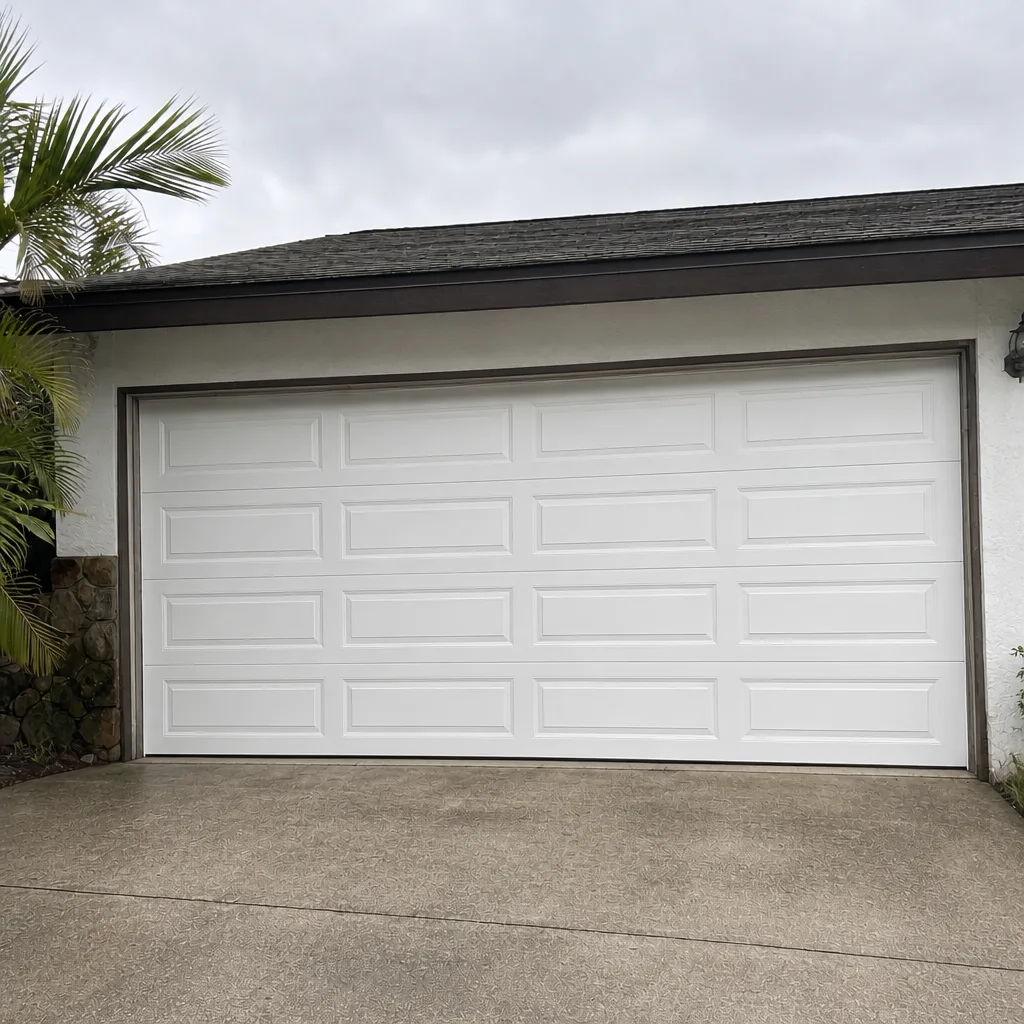
See the difference
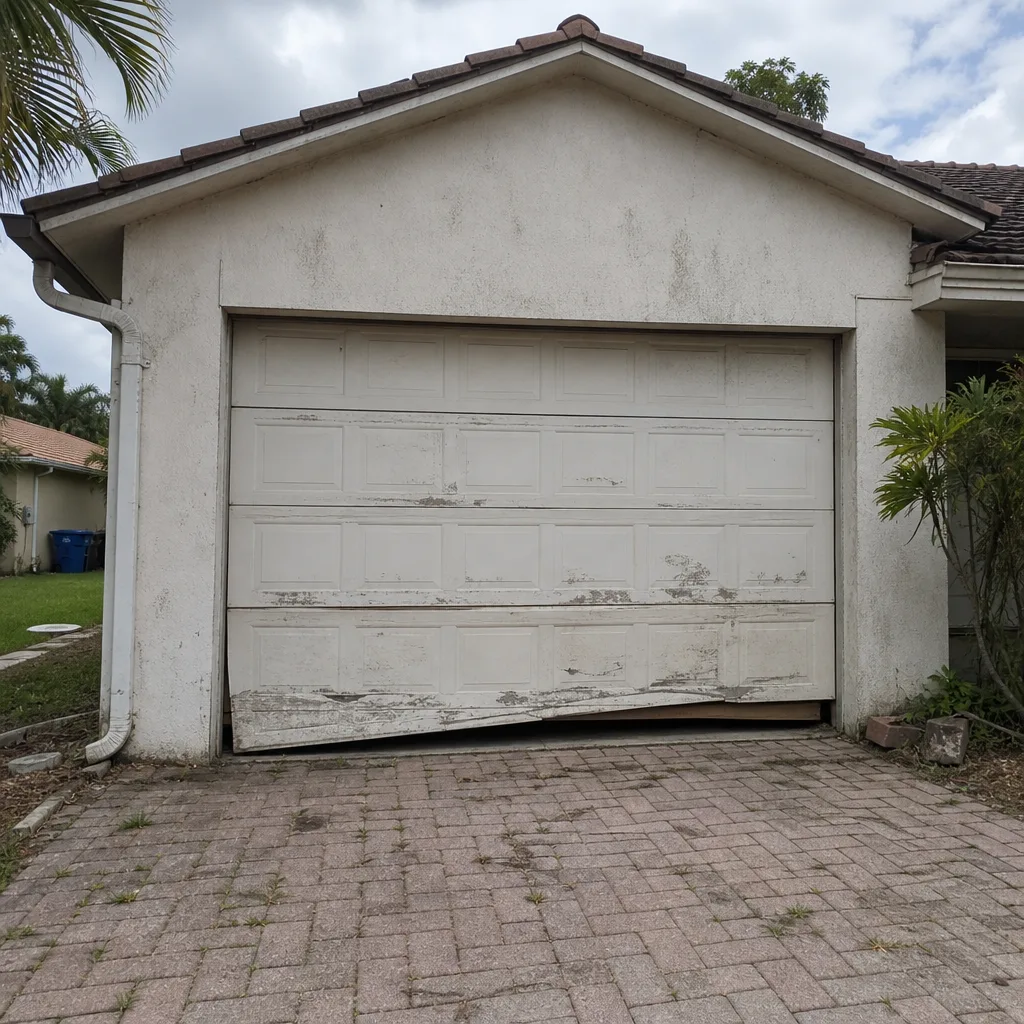 Before
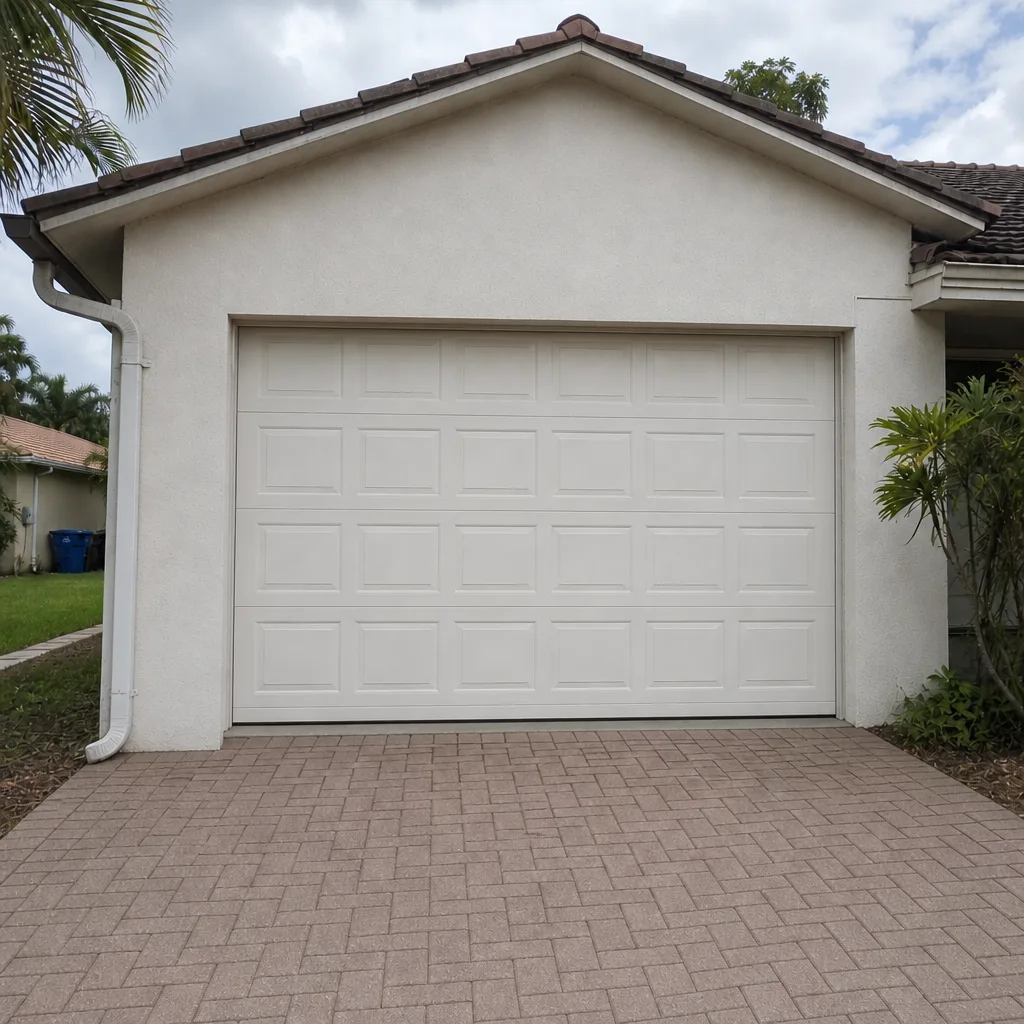 After
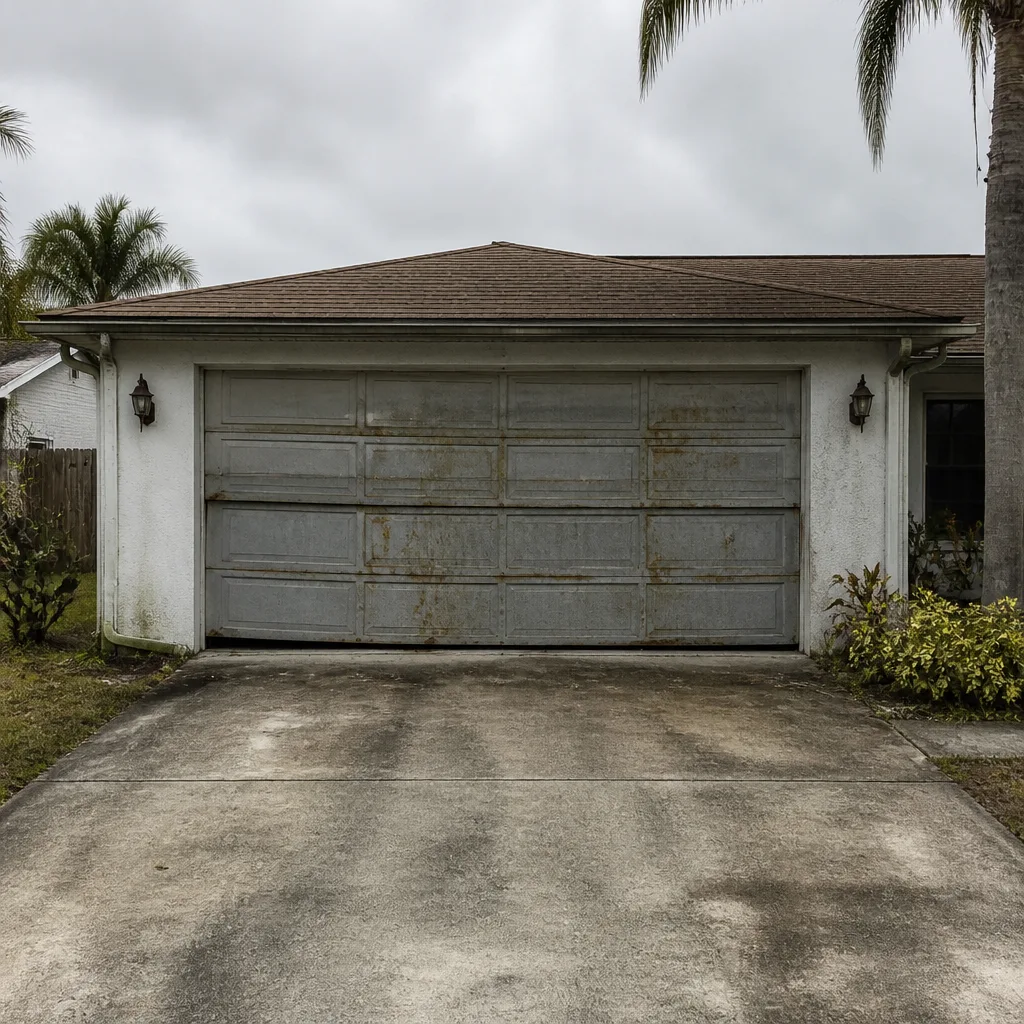 Before
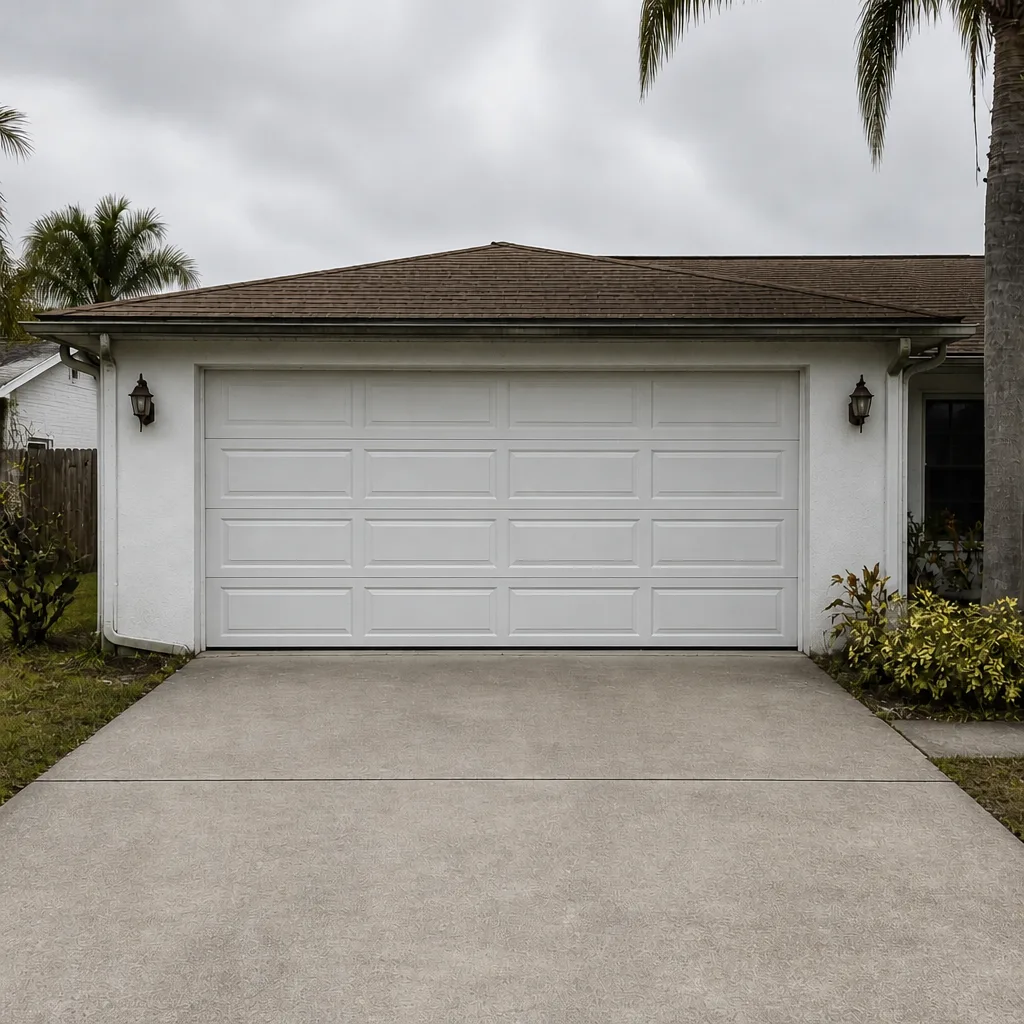 After
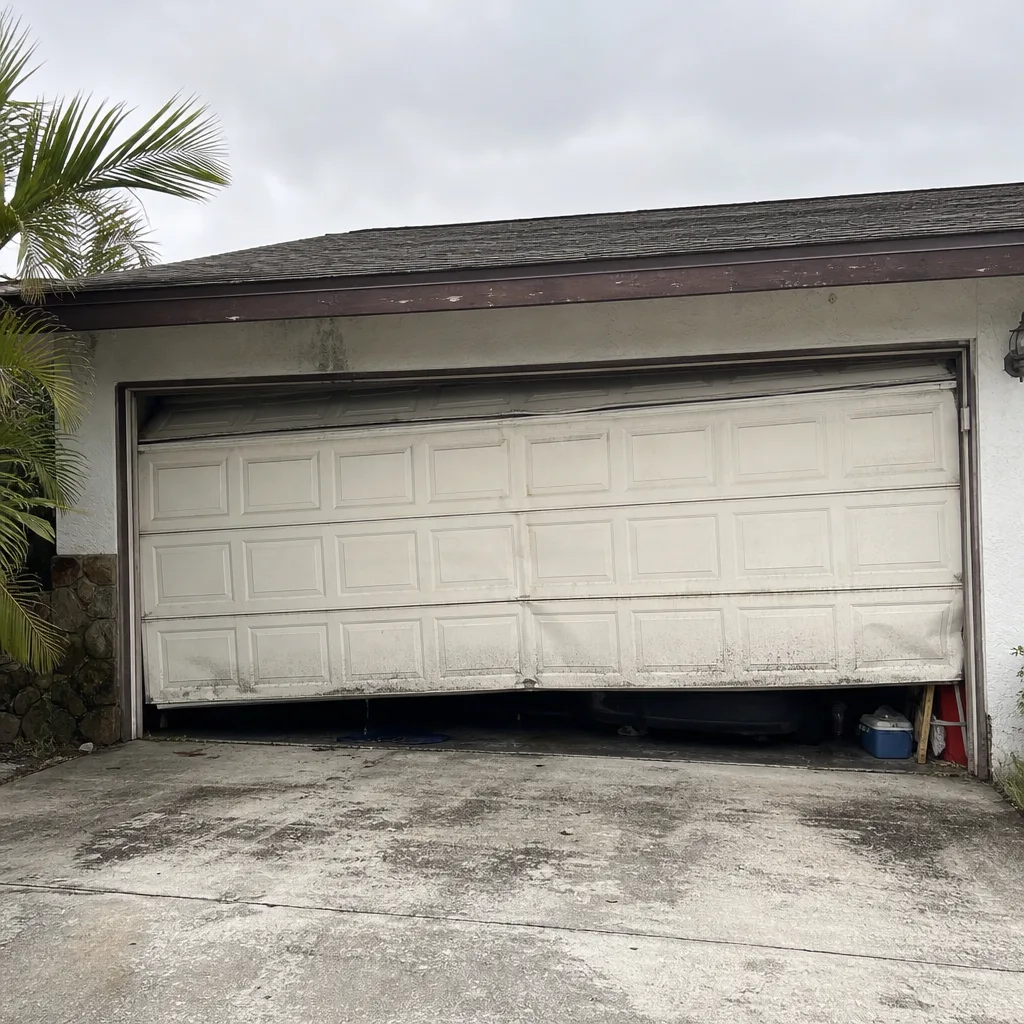 Before
 After
When to Call a Professional
Call a professional when a spring is visibly broken, a cable is off its drum or frayed, a track is bent, a panel is cracked or separated, the opener takes water, or the door moves unevenly by hand. Call before a storm if the door won’t latch and the cause isn’t a simple sensor misalignment. Call after a storm before operating a door that took impact or wind load. And call if the manual release won’t re-engage or the trolley won’t reconnect. None of these are safe to work around, and in Coral Springs, the trained technician is the cheaper path than a panel replacement. Coral Springs Garage Door Repair Co offers free estimates in Coral Springs. Call (877) 510-2936 and we’ll quote the price before any work starts, so the estimate you approve is the price you pay.
Frequently Asked Questions
Pull the red manual release cord hanging from the trolley on the opener rail, then lift the door by hand. The release disconnects the door from the opener so it moves freely. Check the springs and cables first; if anything is broken, don’t lift the door, because it may be too heavy or come down unevenly. Call (877) 510-2936 if you’re not sure what you’re seeing.
Check the photo-eye sensors first, clean the lenses and confirm they’re aligned and the indicators are solid. Clear the door’s path and try closing it by hand with the release pulled. If it still won’t close, secure the opening with towels or a temporary seal and don’t leave the door open through the storm. Call before the storm if you can, and we’ll tell you whether it’s a repair or a sensor adjustment.
That depends on the door, the spring type and whether it’s one spring or a matched pair, so we quote it per job. The written estimate you approve before work starts is the final price. Call (877) 510-2936 for a free estimate. Spring repair is safety-critical, so don’t operate a door with a broken spring in the meantime.
Only after a visual inspection from the ground. Check springs, cables, tracks and panels for damage, then run the door once by hand with the release pulled before using the opener. If it grinds, binds or sounds different than before the storm, stop and call a technician. Call (877) 510-2936 for a free estimate if you find damage.
It’s one of the most useful upgrades for South Florida, because outages here tend to last days rather than hours. Choose a backup rated for multi-day use, confirm the battery is replaceable, and test it once on a calm day. A backup you’ve never tested is not a backup. Call (877) 510-2936 for a free estimate on opener repair or replacement.
We work on the major residential brands, including LiftMaster, Chamberlain, Genie, Clopay, Amarr, Wayne Dalton, Craftsman and Raynor. That covers both the door body and the opener, so one call handles the repair. If your brand isn’t listed, call and we’ll confirm. Call (877) 510-2936 for a free estimate.
The Bottom Line
The garage door emergency in Coral Springs is usually the one you didn’t prepare for. The spring that failed in August, the door that wouldn’t latch as a storm approached, the battery that showed a charge and then didn’t lift the door. The fix is preparation, not luck. Practice the manual release, run the pre-season checklist before June 1st, inspect the door after every storm, test your backup battery, and call a trained technician for springs, cables and structural damage. That’s the whole guide in four sentences. The rest is detail, and the detail is what keeps the door working when it matters.
If you’re ready to schedule a check or you’re dealing with a door that’s already giving you trouble, call Coral Springs Garage Door Repair Co at (877) 510-2936 for a free estimate. We work on the brand already in your garage, quote the price before any work starts, and cover the door and the opener as one scope.
Written by the team at Coral Springs Garage Door Repair Co.