Last updated November 22, 2026
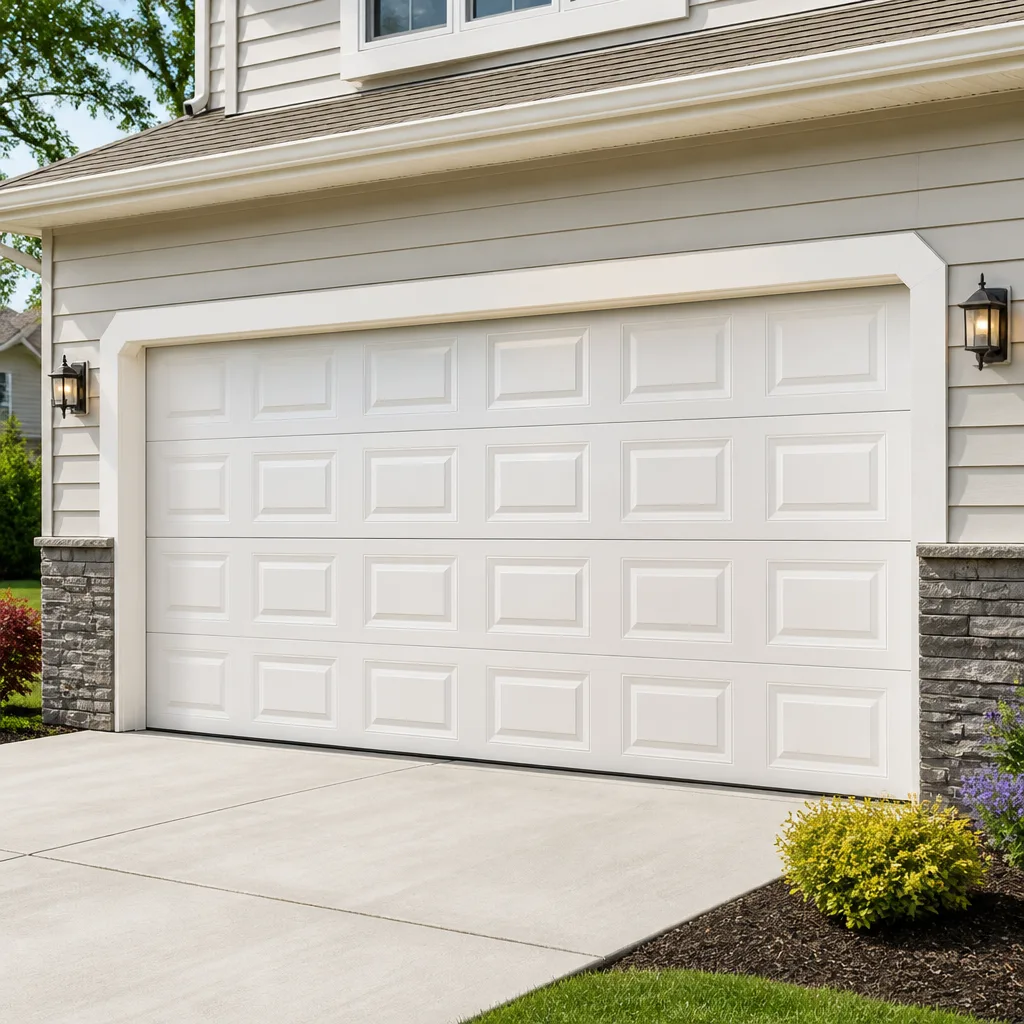 Raised-panel steel
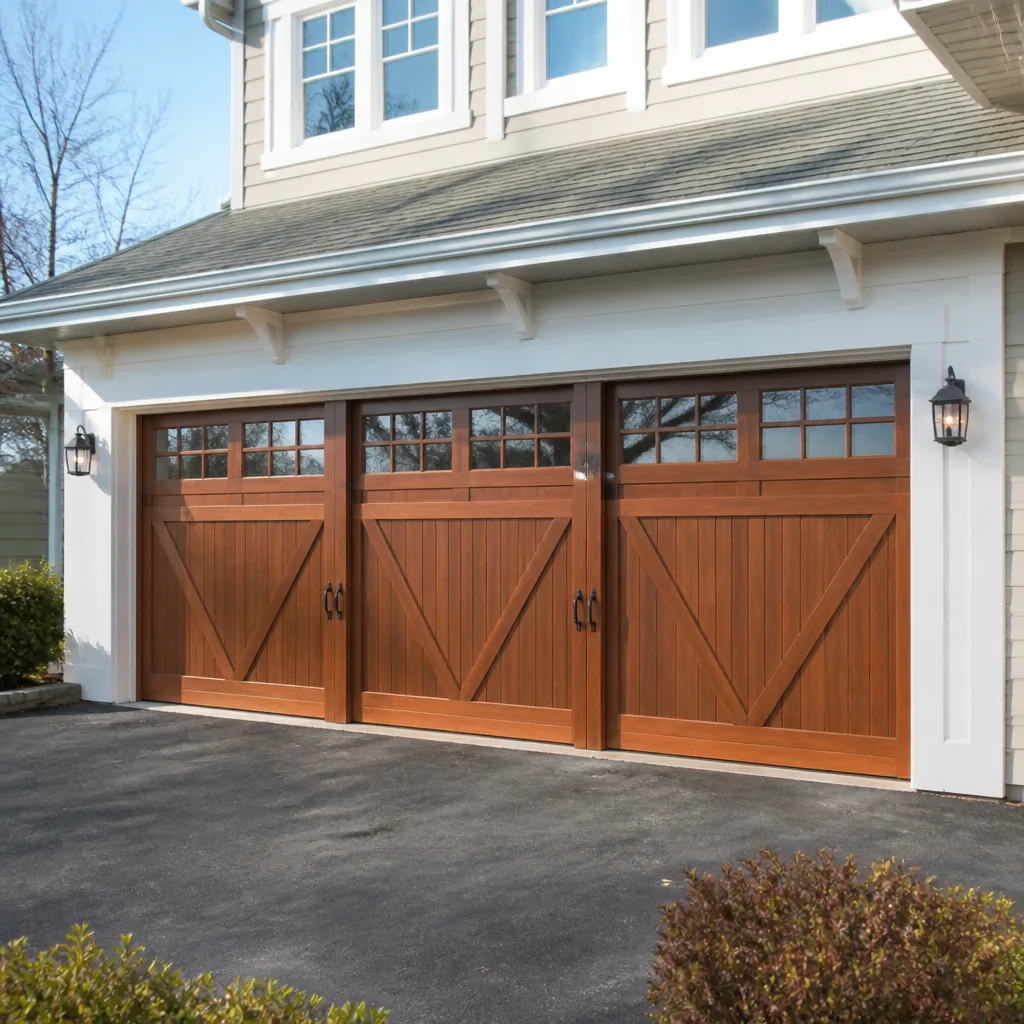 Carriage house
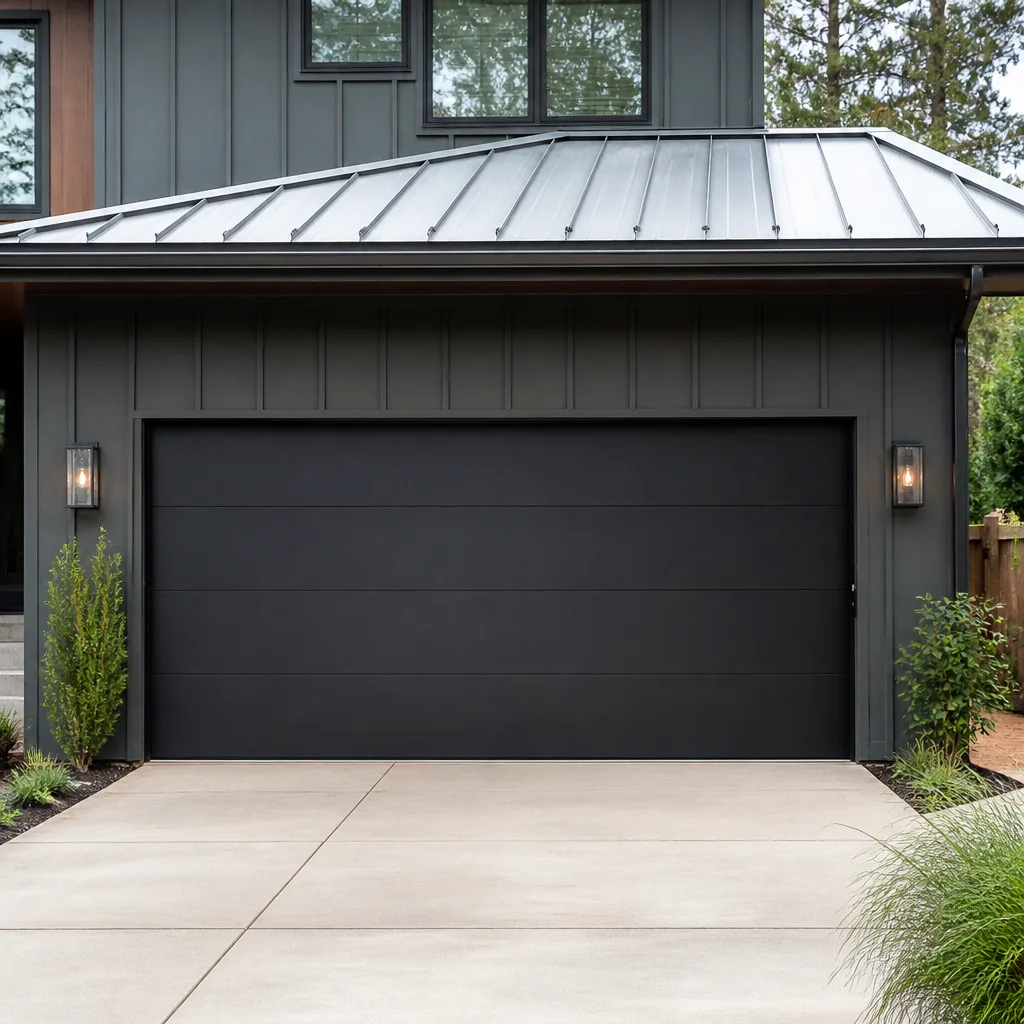 Modern flush
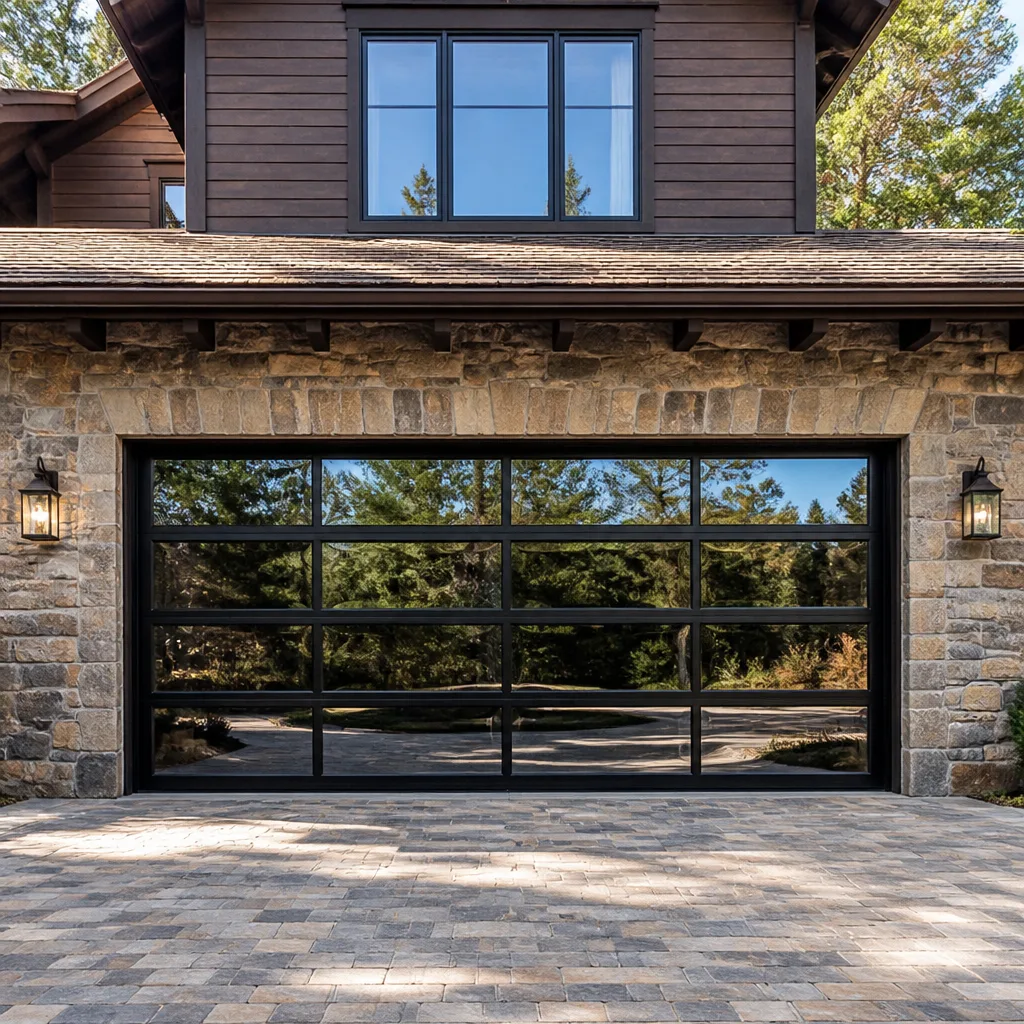 Full-view glass
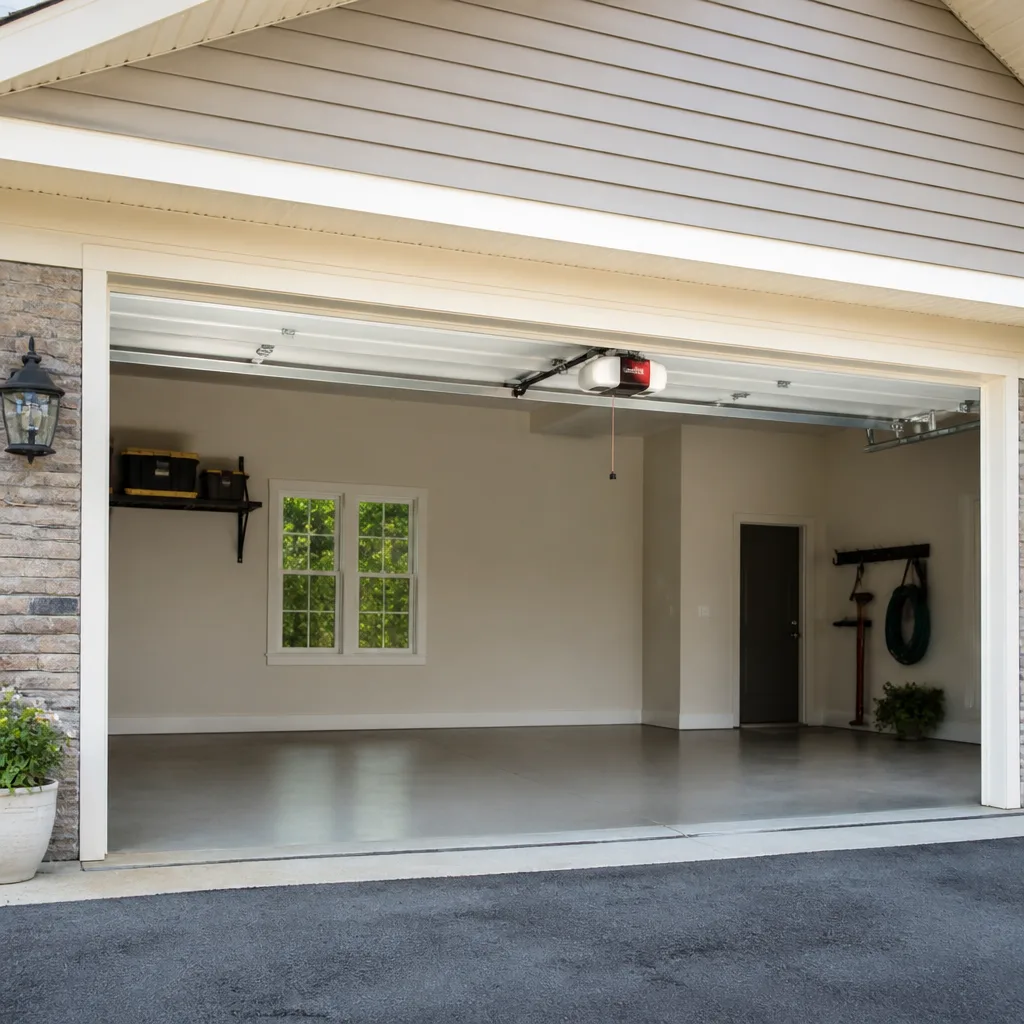 LiftMaster openers
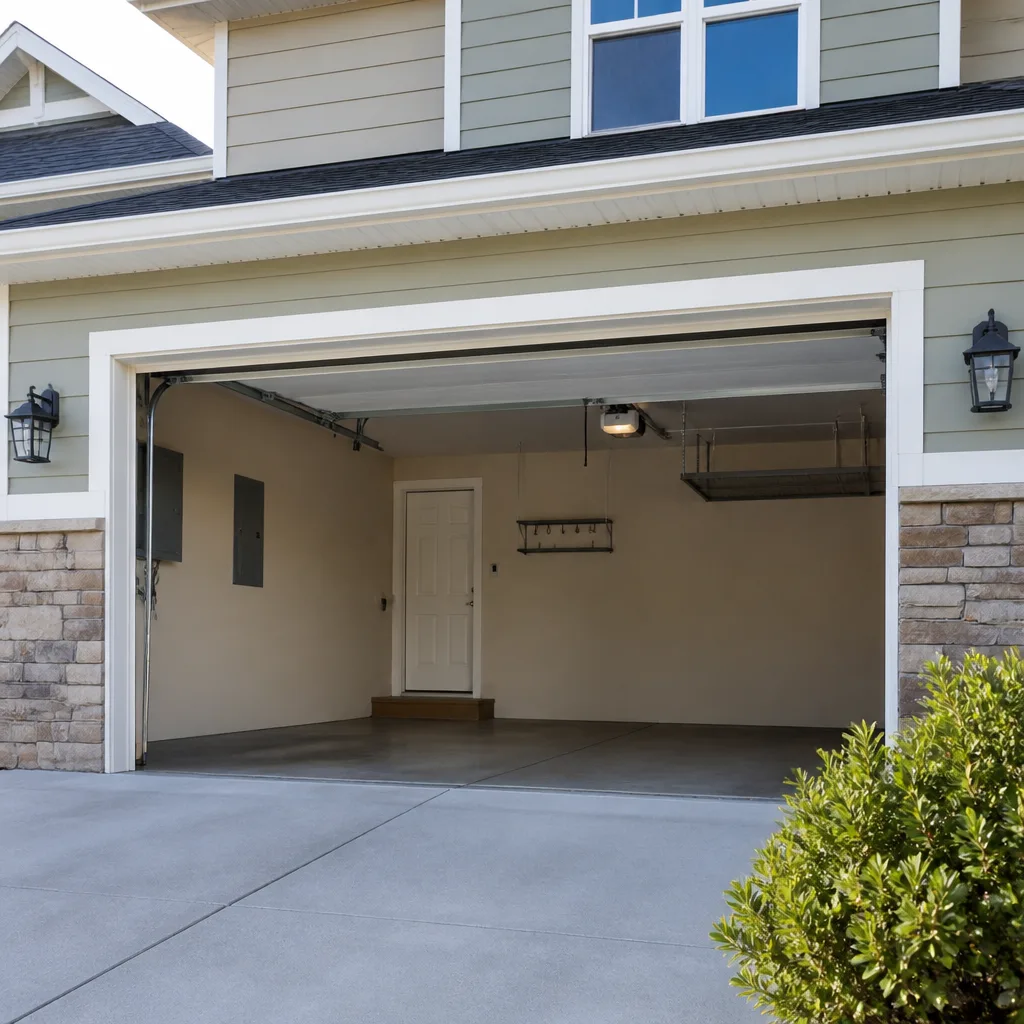 Chamberlain openers
Full 25-point door and opener safety check with every visit - springs, cables, rollers, tracks, and your LiftMaster or Chamberlain opener included
You get a price before we start. It does not change when the pro arrives.
Get your free estimateGarage Door Repair Maintenance Checklist for Coral Springs Homeowners
The most common maintenance mistake Coral Springs homeowners make is lubricating hinges and rollers while ignoring the steel cable ends where rust-driven fraying actually starts. A hinge that squeaks is loud. A cable end that has quietly corroded through is silent until it lets go. That’s the pattern we see across Coral Springs garages: the visible moving parts get attention, and the load-bearing steel that holds a door’s weight gets none. South Florida’s humidity runs the maintenance schedule here, not the calendar. This checklist is built around the corrosion, moisture swings, and storm-season timing that garages in Coral Springs actually live with. You’ll get the checks that matter, how to run them, and what each result tells you.
Quick Answer
The core of garage door maintenance in Coral Springs is monthly inspection of cable ends and bottom brackets for rust, quarterly lubrication of the correct heat-rated parts, a spring balance test, and a pre-hurricane-season check of the weather seal, manual release, and opener backup power. Most of these checks take ten minutes and cost nothing. The failures they catch are the expensive ones.
Styles & brands we work with
- Raised-panel steel
- Carriage house
- Modern flush
- Full-view glass
- LiftMaster openers
- Chamberlain openers
Table of Contents
- Monthly: The Cable-End and Bottom-Bracket Rust Check
- How to Test Spring Balance Without Tools
- Which Lubricants Survive Florida Heat
- Opener Sensitivity Calibration: The Check Almost Nobody Runs
- Pre-Hurricane-Season Checklist
- Weather Seals, Tracks, and Hardware Between Storms
- Reading the Signs: When a Noise Is Just a Noise
- The Full Year-at-a-Glance Schedule for Coral Springs
Monthly: The Cable-End and Bottom-Bracket Rust Check
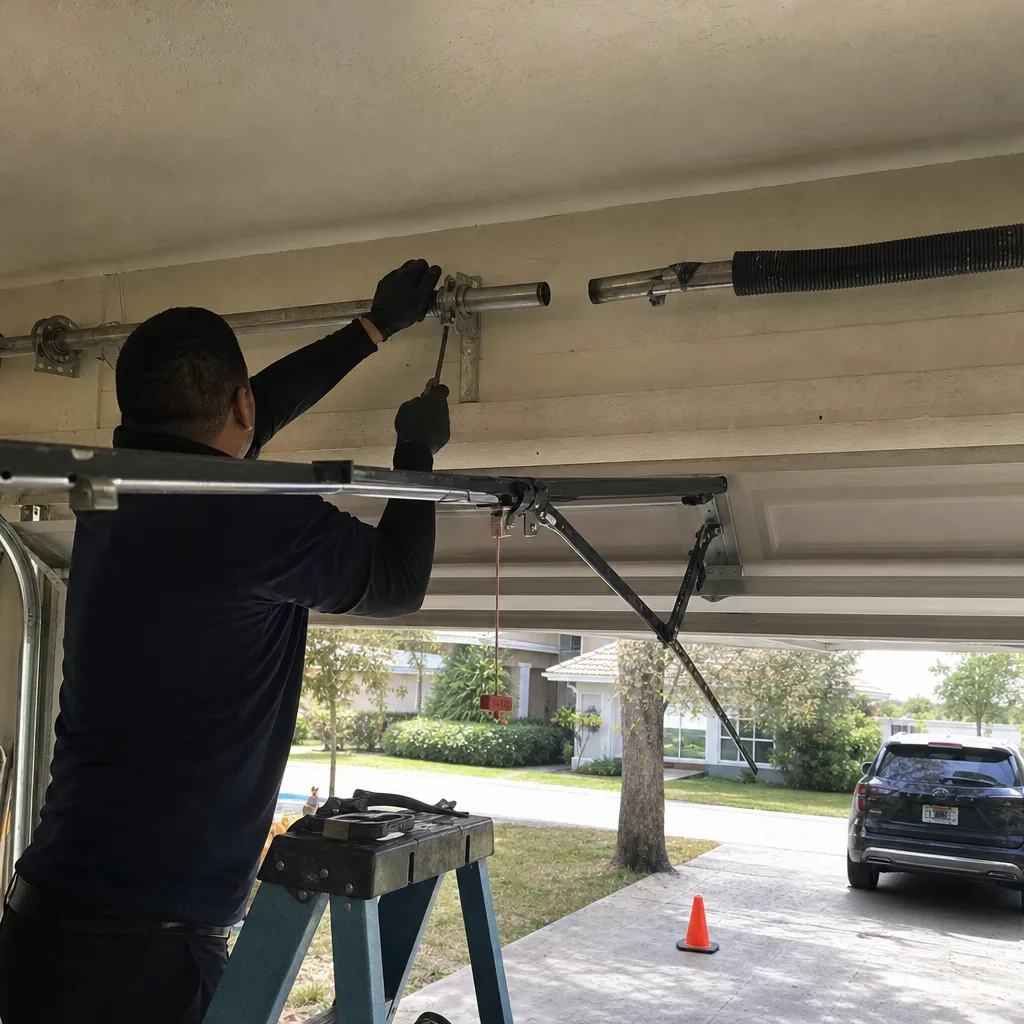
Monthly garage door inspection in Coral Springs starts at the two places most homeowners never look: the steel cable ends and the bottom brackets that anchor them. These parts live in the most humid, least ventilated corner of a lot of Coral Springs homes, and they carry the full weight of the door. Rust starts at the cable’s crimped end and inside the bracket, not on the visible strand.
Here’s how to run the check safely, without tools:
- With the door fully closed and the opener disengaged, stand inside the garage and look at each bottom bracket where the cable terminates.
- Use a flashlight to look for orange or brown discoloration, fuzzy texture on the cable strands, or whitish residue around the crimp.
- Look along the vertical run of each cable for frayed or broken individual wires at the ends and at the drums.
- Check the bracket for loose fasteners by eye only. Do not loosen, tighten, or handle the bracket under tension.
- Write down what you see and when. Rust returns in the same spot, so a log catches it early.
Never touch a cable or bottom bracket while it’s under tension. Both are load-bearing parts, and a cable that lets go can whip. If you see rust or fraying, it’s time to call us rather than investigate further. A professional can assess whether the steel is still sound or needs replacement, and our garage door repair service covers exactly this kind of assessment.
How to Test Spring Balance Without Tools
You can check your garage door’s spring balance by hand in about a minute, and the result tells you how much spring life you have left. Do it with the door closed and the opener disconnected from the door.
- Pull the manual release cord so the opener is disengaged. The door should be free to move by hand.
- Lift the door halfway to shoulder height and let go.
- A healthy door should stay where you put it, drifting only slightly before settling.
- If it slams up, the springs are overwound or too strong. If it sags down or drops, they’re losing tension.
A door that falls under its own weight is telling you the springs are toward the end of their service life, and the opener has been compensating for it. That’s a problem, because the opener is not built to lift a door on its own. It’s built to move a balanced door. Once the springs fade, the opener motor and drive wear double. In our experience, catching a softening spring early is the difference between a repair and a motor replacement.
Spring replacement is the most dangerous repair in the trade. Torsion springs store enormous energy, and a winding bar slip can cause serious injury. We don’t recommend DIY spring work, and we don’t hand out the steps. What we do is test, measure, and set the correct tension. When the balance test points to worn springs, our garage door spring repair service is the right call. Leave the door closed and call us rather than trying to use it.
Which Lubricants Survive Florida Heat
The right lubricant in Coral Springs is a lithium-based or silicone spray rated for high temperatures. Not petroleum jelly, not cooking oil, and not heavy grease unless the manufacturer specifies it. Heat changes how lubricants behave, and a garage in South Florida gets hot enough to separate a light oil and bake it into dust.
What we see happen in Coral Springs garages:
- Light household oils dry out and leave a sticky film that traps grit on the tracks.
- Heavy grease thickens in cool weather and pushes the opener’s motor to work harder.
- Lithium-based and silicone sprays hold up tolerably well and don’t attract as much debris.
- Parts that need lubricant are hinges, rollers, the torsion spring shaft, and the opener’s chain or screw drive.
- Parts that should never be lubricated are the tracks, the drive rail, and the bottom rubber seal.
That’s most of the oil question, but there’s one more: don’t lube the tracks. Clean them with a dry rag instead. A little oil on the tracks collects grit and accelerates roller wear, which is the opposite of the goal. Lubricate two or three times a year rather than monthly, and wipe any excess with a clean cloth. The rollers themselves matter too: nylon rollers last longer in heat than steel rollers, and a quick inspection during lubrication is the easiest way to spot one that has worn flat. If you hear grinding after a proper lubrication, the roller or the hinge is worn, and that’s a call.
Opener Sensitivity Calibration: The Check Almost Nobody Runs
Modern openers reverse when they meet resistance, and that sensitivity setting is something most homeowners never test. When it drifts, the door may reverse unexpectedly, or worse, not reverse when it should. Both are signs to act. The safety reverse test is simple and worth doing every month.
Here’s how to check both sensitivity and the safety reverse:
- Open the door fully, then place a flat object about an inch and a half tall under the door’s path.
- Close the door using the wall control. It should stop and reverse on contact with the object.
- Stand near the door’s midpoint and wave your foot into the photo-eye beam. The door should reverse immediately.
- If the door fails either test, find the sensitivity adjustment on the opener housing and follow the label.
- Repeat the test after any adjustment. Test again after a power outage resets the opener.
The photo-eye beam and the force setting are two separate systems, and both matter. A door that reverses on its own or fails to reverse on contact should not be used until it’s adjusted correctly. We work on LiftMaster, Chamberlain, Genie and Craftsman openers in Coral Springs homes every week, and most calibration problems come down to a misadjusted force setting, a dusty photo-eye lens, or a misaligned safety sensor. Our garage door opener repair service is built around getting the operator layer right, whether it’s the opener or the door itself causing the fault.
Pre-Hurricane-Season Checklist
Coral Springs garage doors face a specific seasonal stress test: the pre-hurricane-season window, which runs you through the checks that matter most before storm season arrives. This is when you find and fix the small problems that become big problems in a storm. The checklist below is what we walk Coral Springs homeowners through each year.
- Weather seal integrity: Run your hand along the bottom seal with the door closed. Gaps, tears, and flattened sections let driven rain in and should be replaced before the season.
- Manual release test: Pull the cord, lift the door by hand, and reengage the opener. The cord should move freely and the latch should reengage cleanly. If the door won’t disengage, you’ve lost your emergency override.
- Backup power verification: If the opener has a battery backup, test it by tripping the breaker at the panel and confirming the door still moves. A dead backup battery is invisible until the power goes out.
- Track and bracket inspection: Look for loose anchor bolts and bent track sections. A reinforced door is only as strong as its mounting hardware.
- Photo-eye and reverse test: Confirm the safety systems work, as above. Storm season is when you’ll want them reliable.
Do this pre-season check a few weeks before the season’s typical start, so there’s time to order any parts you need. The battery backup test is the one most people skip, and it’s also among the most useful. If your opener runs on a LiftMaster or Chamberlain unit with a backup, test it the same way. If it doesn’t hold the door, the battery or the operator needs service, and waiting until the storm arrives is the worst time to find out.
Weather Seals, Tracks, and Hardware Between Storms
Beyond the pre-season blowout, there’s the routine maintenance Coral Springs garages need through the rest of the year. The same humidity that drives the rust check also wears on seals, hardware, and finish. These are the monthly and quarterly items that keep the whole door together.
- Weather seal inspection: Check the bottom seal, the side seals, and the top. Replace any piece that’s cracked, torn, or no longer making contact. Seals wear from UV and heat as well as use.
- Track alignment: Look down each track with the door closed. The gaps on either side should be even and the track should be straight. A bent section snags rollers and puts strain on the opener.
- Hardware torque (by eye): Look for loose hinge screws, bolts, and lag anchors. Don’t miss the brackets that hold the tracks to the wall.
- Panel and finish check: Look for bubbling, rust spots, or separation on the door panels. In Coral Springs, trim and paneling can take on moisture over time. Catching finish issues early prevents a bigger repair.
- Panel balance and door alignment: With the door half-open, look for uneven gaps at the sides. A door that’s out of square runs rough and wears faster.
Seals are cheap and easy to replace, so don’t let a torn one ride. A gap in the bottom seal lets in the rain, and it lets the AC out. If the panel finish is bubbling along the bottom, it’s often a sign of moisture around the bottom bracket, so look at the rust check again. When the work is beyond standard homeowner maintenance, we handle panel and hardware repairs as part of our full scope. Our technicians have up to 14 years of experience and handle Clopay, Amarr, Wayne Dalton and Raynor doors as readily as the opener labels on the wall.
Reading the Signs: When a Noise Is Just a Noise
Every garage door makes some noise, and not every squeak means a call. The trick is telling the ordinary sounds from the ones that point to wear. Here’s how we sort them.
- Squeak or chirp at a hinge: almost always lubrication, and often solved by applying the right spray. If it returns within a week, the hinge or roller is worn and should be replaced.
- Rattle at the panels: loose hardware or a section that needs tightening. Usually routine.
- Grinding or scraping from the opener: a gear, sprocket, or drive problem. This one gets worse, not better. Turn the opener off at the wall and call.
- Bang or snap when the door starts moving: a spring issue. Stop using the door.
- Popping or cracking during the open cycle: often the springs, sometimes a cable. Stop using the door.
The rule we give Coral Springs homeowners: noise from the door body that goes away with lubrication is ordinary. Noise from the opener, or any bang or snap from the springs, is a signal to stop and get it checked. A door that sounds wrong can still be safe to leave closed until a technician looks at it. A door that fights back can fail the next time you use it. When in doubt, call.
The Full Year-at-a-Glance Schedule for Coral Springs
Here’s the whole routine in one place, shaped for the Coral Springs seasons rather than a generic calendar. This is the schedule we recommend to every homeowner we work with.
- Monthly: Run the safety reverse test and the photo-eye test. Check the cable ends and bottom brackets for rust with a flashlight. Listen for new sounds.
- Every three months: Lubricate hinges, rollers, the spring shaft, and the opener’s chain or screw drive. Wipe down the tracks. Inspect track alignment and check the hardware by eye.
- Before hurricane season: The full pre-season checklist: seals, manual release, backup power, track anchors, photo-eye and reverse test. Plan a few weeks ahead so any replacement parts can be sourced.
- Twice a year: Run the spring balance test. Check the bottom seal and side seals for wear or gaps.
- Whenever something changes: A new noise, a slow reversal, a door that won’t stay put. These are the calls that catch problems before they fail.
The key insight is that Coral Springs garages have two maintenance rhythms: the year-round humidity and the storm-season window. A checklist built for a dry northern climate misses both. The rust check, the seal check, and the backup power test are what keep a South Florida garage door reliable. Keep a small notebook in the garage with the date of each check. It’s the fastest way to spot a part that keeps failing.
Common Mistakes to Avoid
- Lubing hinges but ignoring the cable ends. The visible parts get the maintenance and the load-bearing steel gets none. Rust-driven cable fraying is the real failure point in a humid Coral Springs garage.
- Using petroleum jelly or cooking oil as lubricant. These dry out and gum up in heat. Use a lithium-based or silicone spray rated for high temperatures.
- Skipping the annual safety reverse test. The photo-eye and force settings drift. A door that fails the reverse test is a safety problem, not a nuisance.
- Ignoring the balance test after a change in how the door feels. A door that’s gotten heavier has been asking for a spring check for a while.
- Letting the manual release sit untested. If the cord doesn’t free the door, you’ve lost your emergency override when the power’s out and it matters most.
- Waiting until hurricane season to check seals and backup power. The season amplifies every small gap and every dead battery.
- Attempting spring or cable work by hand. This is the one thing on the list you shouldn’t do yourself. Stop and call a professional.
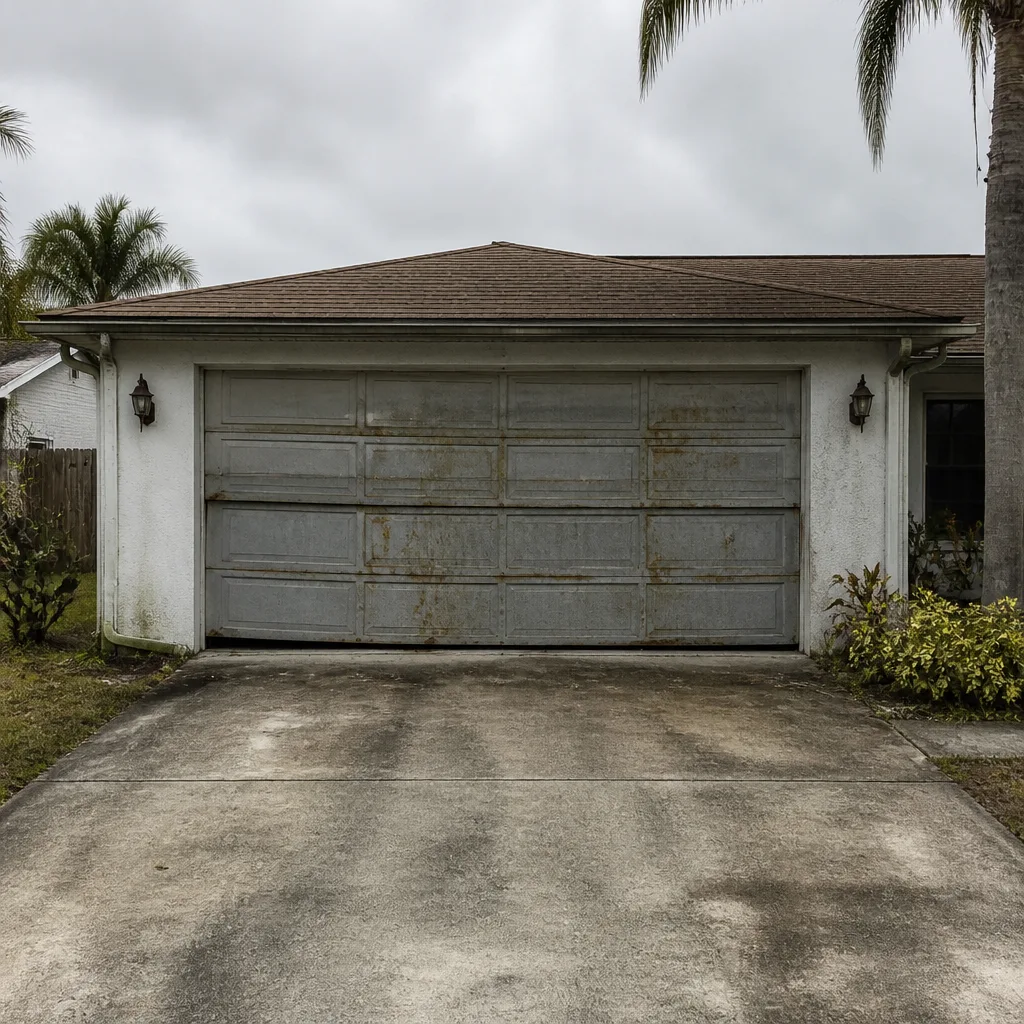
See the difference
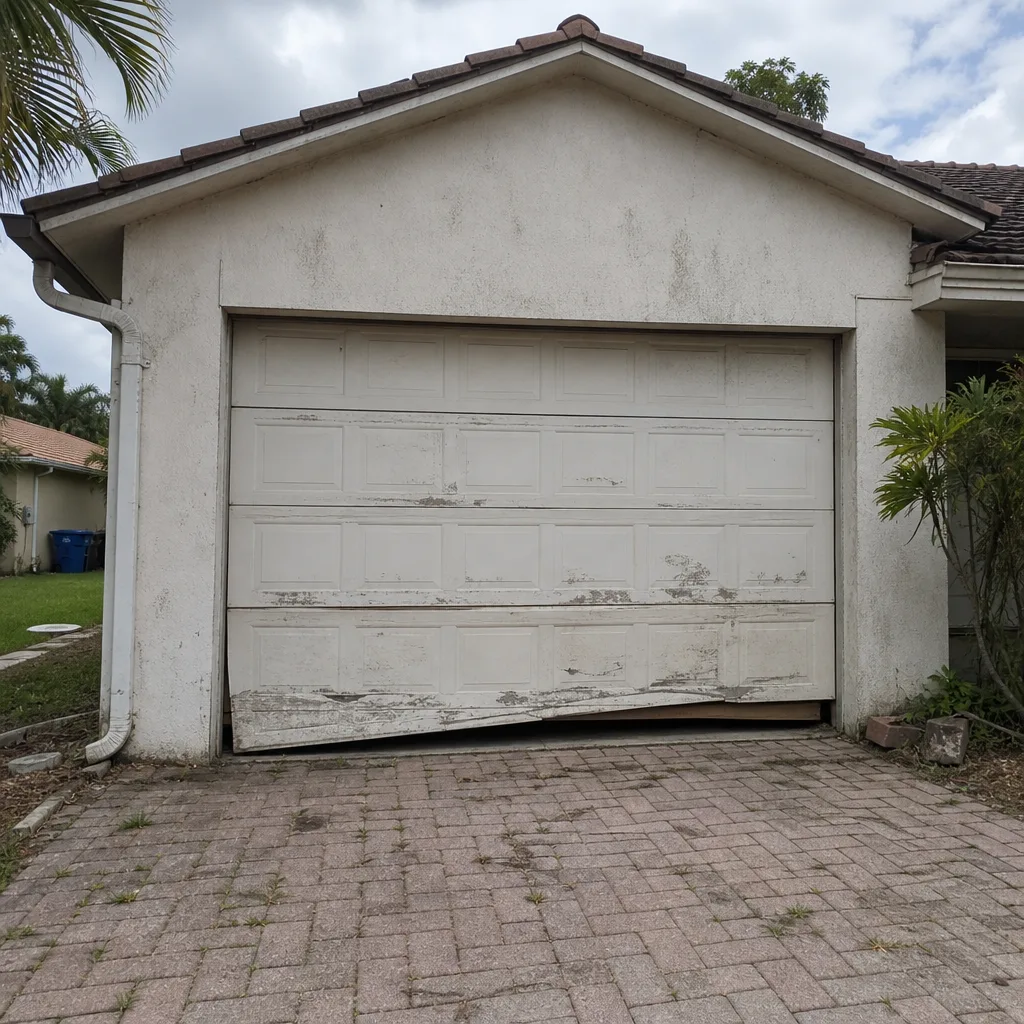 Before
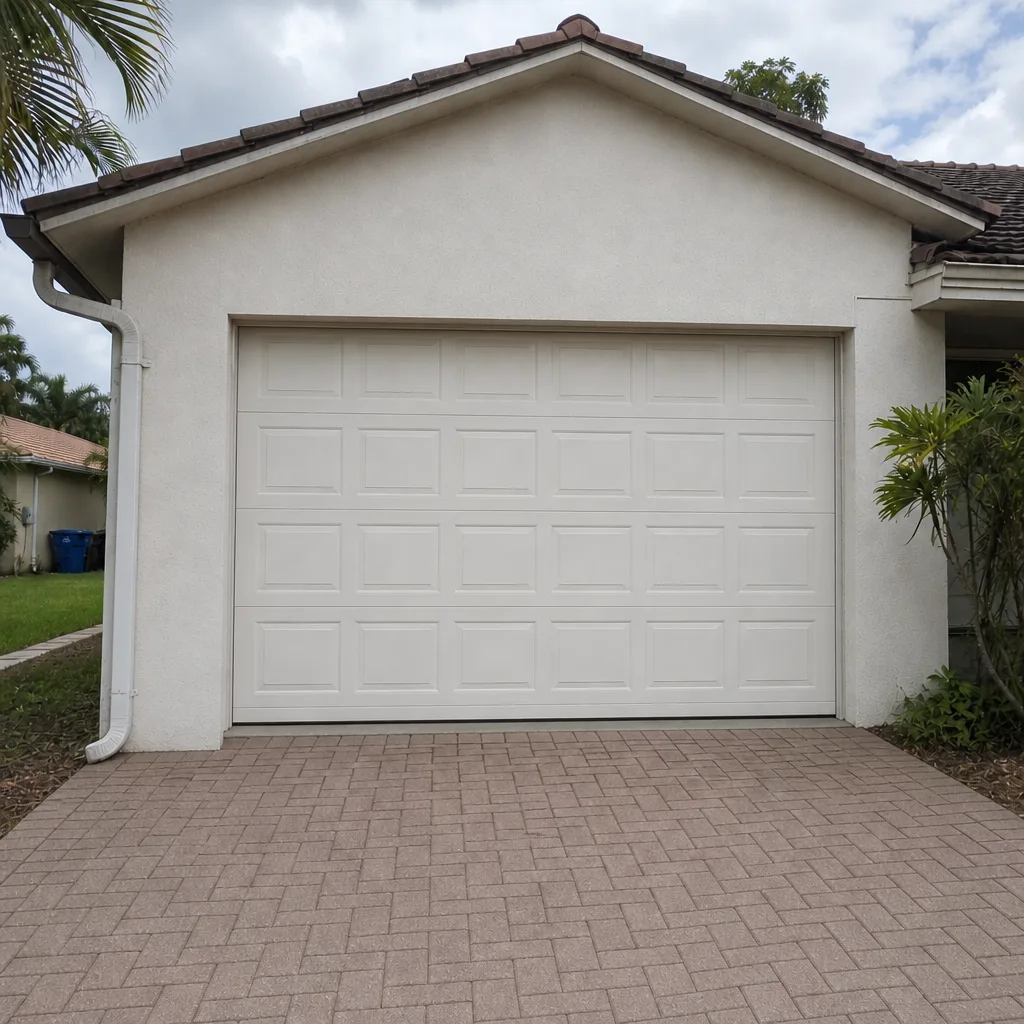 After
 Before
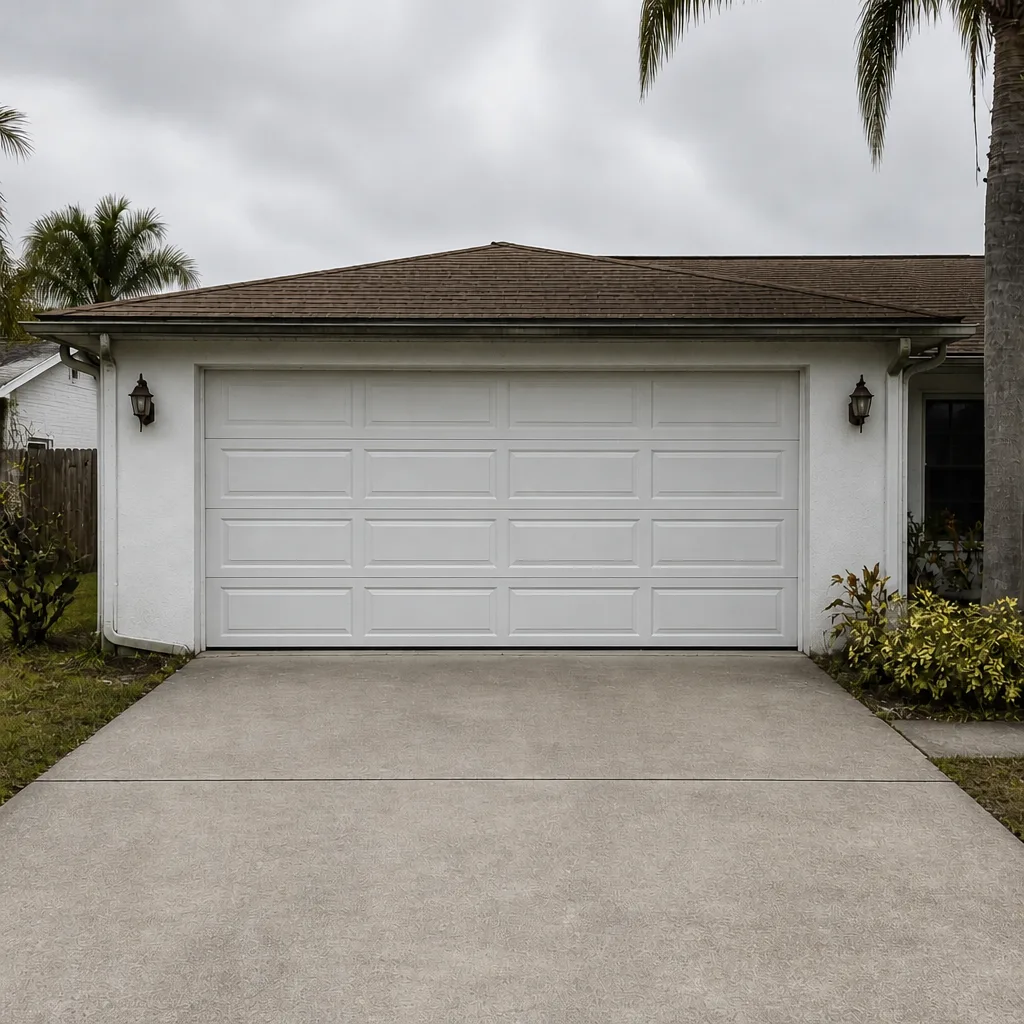 After
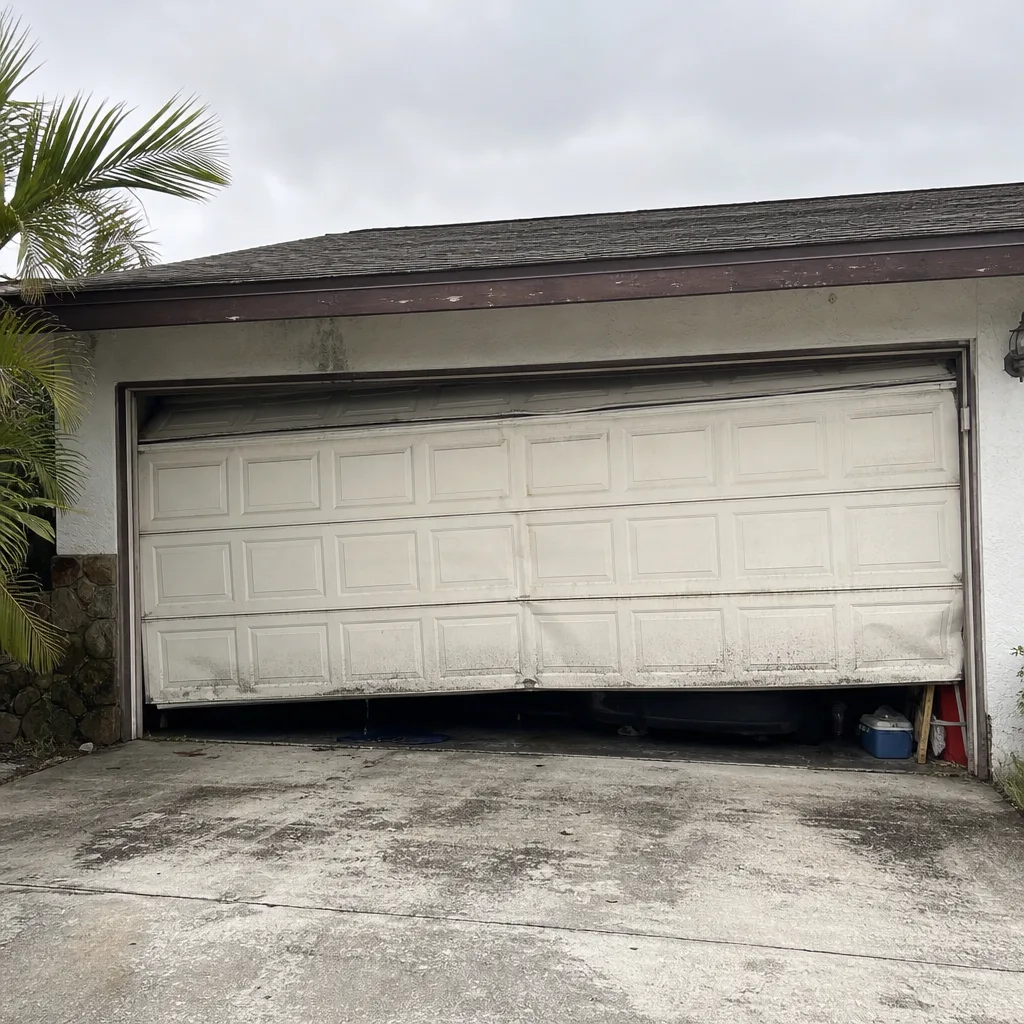 Before
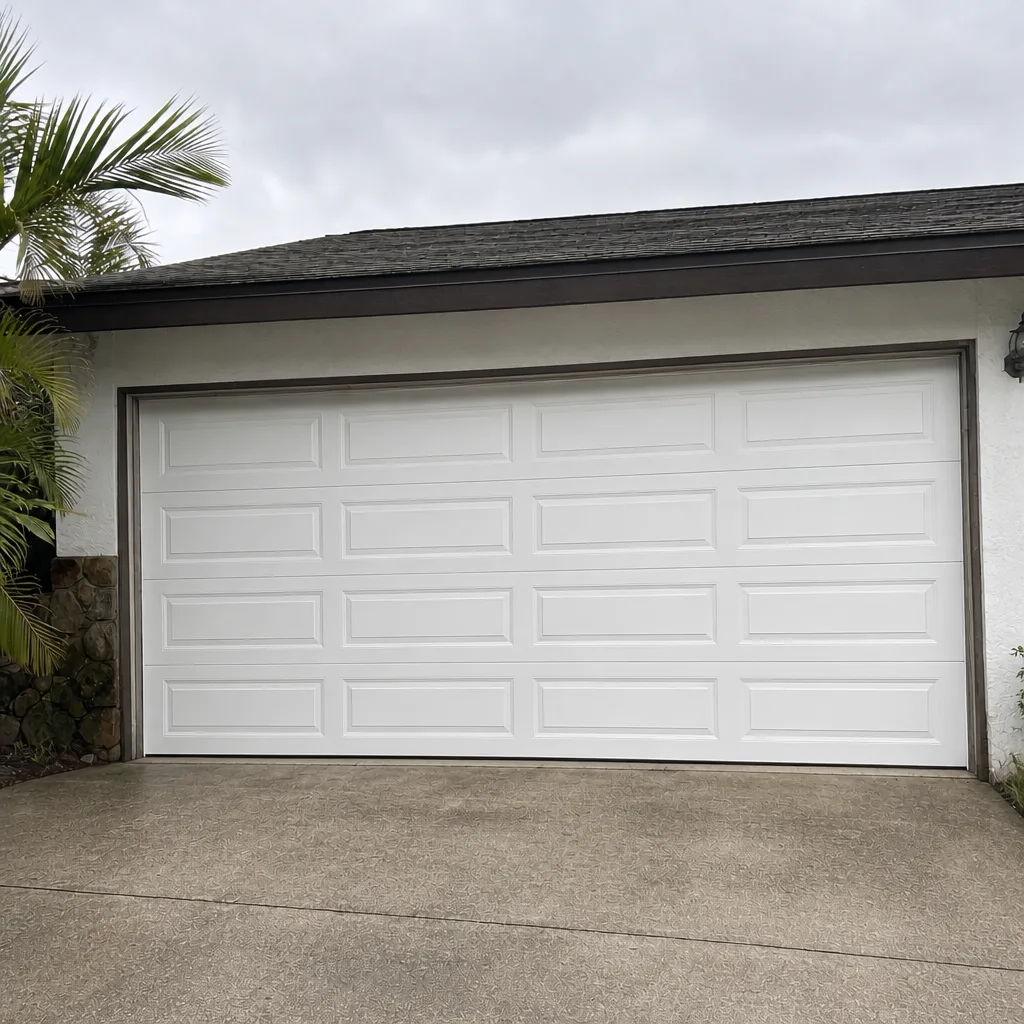 After
When to Call a Professional
Call a professional for anything involving springs, cables, or bottom brackets, and for any sound that makes you uncomfortable. Call when the door won’t stay put during the balance test, when you see rust or fraying at a cable end, when the door reverses unexpectedly or fails the safety reverse test after you’ve checked the photo-eye lens, when the opener grinds or the door bangs, and when a hurricane-season check turns up a part you can’t replace. It’s also worth a call whenever you’re unsure, because a short conversation is cheaper than a failed door. Coral Springs Garage Door Repair Co offers free estimates in Coral Springs. Call (877) 510-2936, and we’ll walk the checklist with you or send a technician to rule things out.
Frequently Asked Questions
A full homeowner inspection should run monthly, with lubrication and hardware checks every three months, and a dedicated pre-hurricane-season walkthrough each year. The monthly checks are the quickest; most take about ten minutes. Coral Springs garages get enough humidity that the rust and seal checks should never be skipped for long.
Yes. Torsion and extension springs store enough energy that a slip or sudden release can cause serious injury, so spring replacement is not a DIY job. Inspect for rust and run the balance test, but leave the actual spring work to a trained technician. If the door bangs, snaps, or won’t stay in place, stop using it and call us.
The cable-end and bottom-bracket rust check is the one that catches failures early. Rust starts where you can’t see it, at the crimped cable ends and inside the bracket, and it’s the steel that carries the door’s weight. Look for discoloration and fuzzy texture with a flashlight, and don’t handle the parts while they’re under tension.
Run the balance test: disconnect the opener, lift the door halfway, and let go. A healthy door stays put. A door that sinks or drops has springs that are losing tension, and the opener is working harder to compensate. That’s the point to call for a spring assessment before the operator wears out too.
Check the weather seal for tears and gaps, test the manual release by pulling the cord and lifting the door, verify the opener’s backup power by tripping the breaker, and inspect the tracks and anchors for looseness. Do it a few weeks ahead so replacement parts can be ordered. The backup power test is the one most homeowners skip.
If the door fails the safety reverse test after you’ve cleared and realigned the photo-eye sensors, yes. An opener that won’t reverse on contact is a safety issue, and the force setting needs professional attention. We service LiftMaster, Chamberlain, Genie and Craftsman openers and can get the calibration right. Call (877) 510-2936 for a free estimate.
The Bottom Line
Coral Springs garage doors have their own maintenance rhythm, driven by humidity and the storm-season calendar rather than a generic northern checklist. The pieces that matter most are the monthly cable-end rust check, the spring balance test, the right heat-rated lubricant, the safety reverse test, and the pre-hurricane-season walkthrough. Do the small checks consistently and the big failures stay rare. When a check turns up something you’re not comfortable with, especially anything involving springs or cables, stop and call. Coral Springs Garage Door Repair Co offers free estimates. Call (877) 510-2936 for a free estimate, and we’ll help you work through the checklist or come out to look. Our Coral Springs Garage Door Repair Co team handles the full door and the opener, and we’re glad to talk through what you’re seeing.
Written by the team at Coral Springs Garage Door Repair Co.