Last updated November 22, 2026
 Raised-panel steel
 Carriage house
 Modern flush
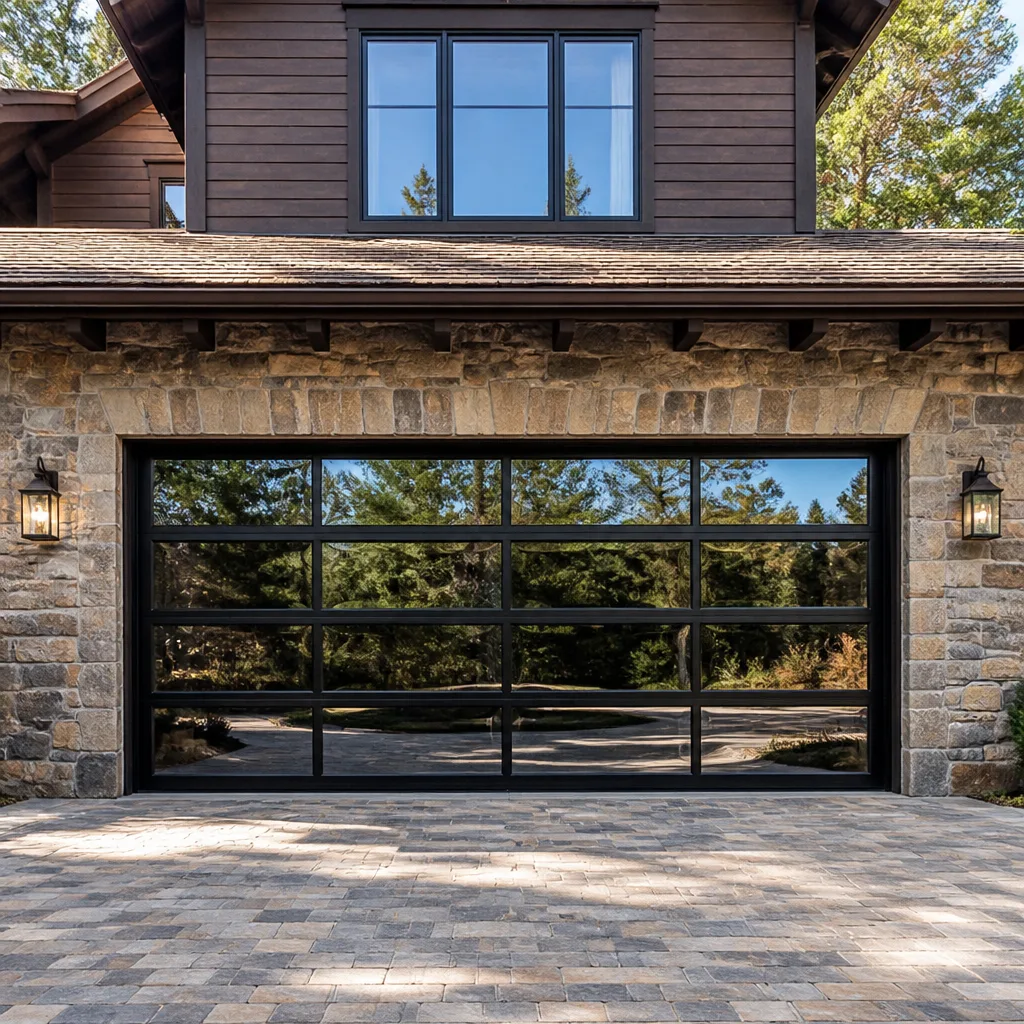 Full-view glass
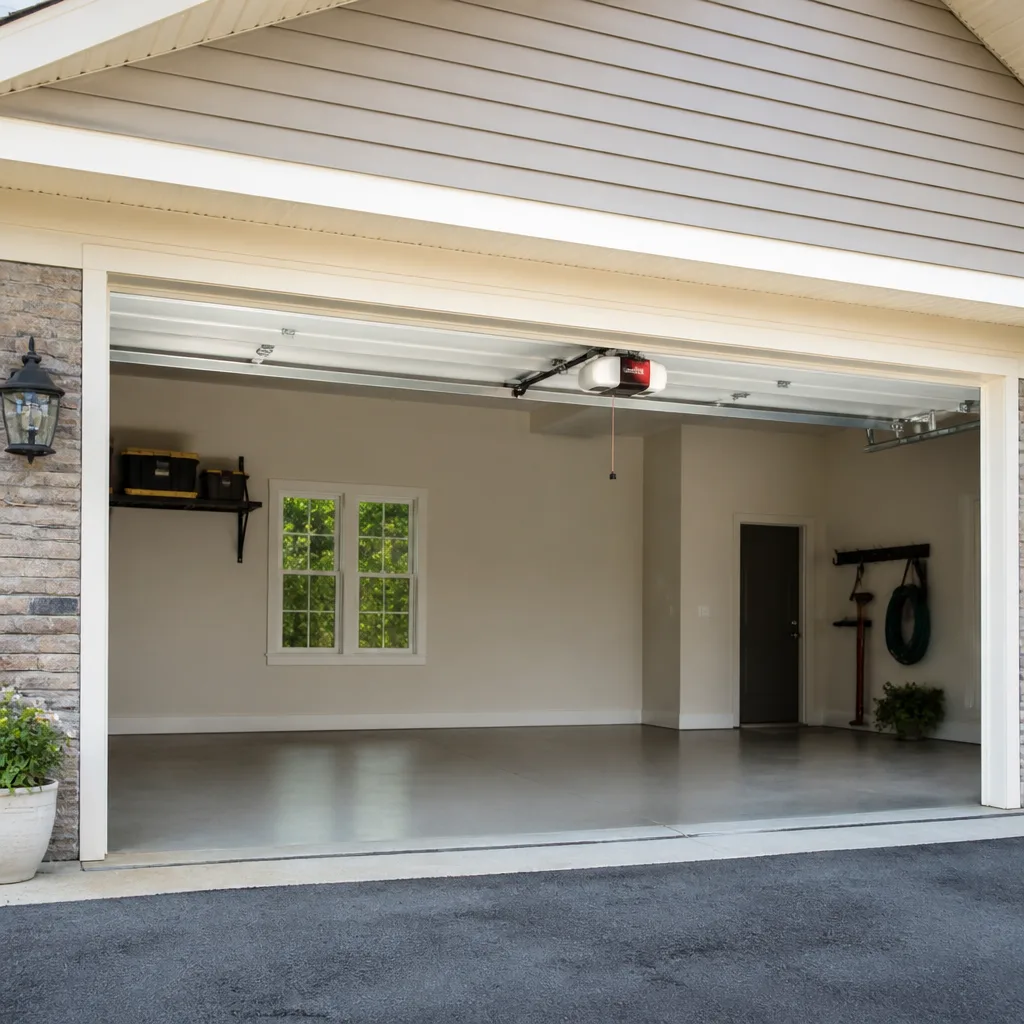 LiftMaster openers
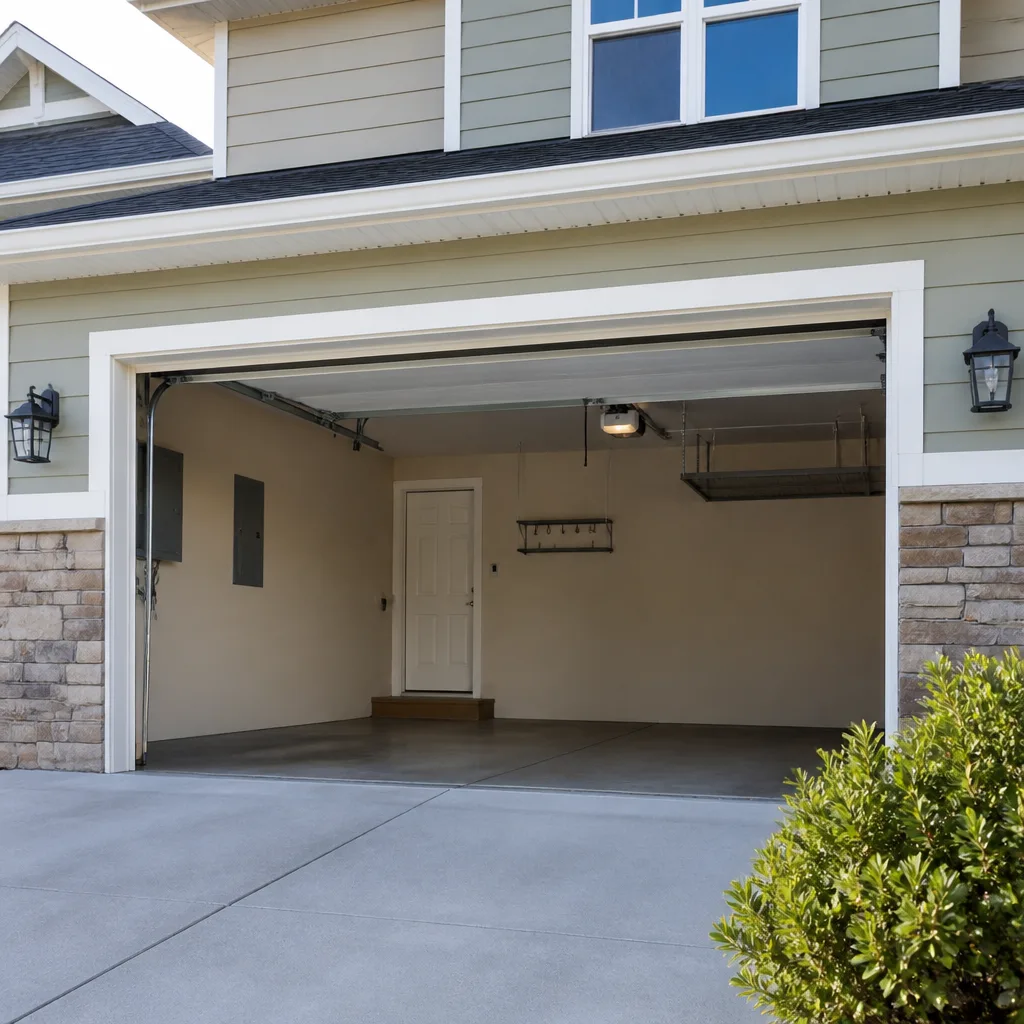 Chamberlain openers
Full 25-point door and opener safety check with every visit - springs, cables, rollers, tracks, and your LiftMaster or Chamberlain opener included
You get a price before we start. It does not change when the pro arrives.
Get your free estimateGarage Door Warning Signs: A Coral Springs Homeowner’s Reference Guide
A garage door that hesitates for two seconds before it moves isn’t “getting old.” It’s telling you the spring tension is off-balance, and that’s a repair with a predictable failure window. Most garage door failures in Coral Springs announce themselves days or even weeks in advance, through sounds, movement patterns and visual cues that homeowners wave off as normal wear. The door still opens. So nothing is wrong, right? Not quite. A worn torsion spring, a fraying cable or an opener straining against a door that’s gone heavy are all early warnings, and each one has a mechanical cause you can actually read. In this guide we walk through the sounds, the movement, the rust and the opener behavior, then give every symptom an urgency rating so you know what to watch and what to stop using today.
Quick Answer
The main garage door warning signs are unusual noise (grinding, popping, squealing, rattling), uneven or hesitant movement, sagging corners, rust or fraying on springs and cables, and an opener that runs longer or gets hot. A sudden loud bang followed by a door that won’t lift means a broken spring: stop using the door and call a professional. Slower, quieter changes are usually safe to monitor, but they still point to a specific part that needs attention.
Styles & brands we work with
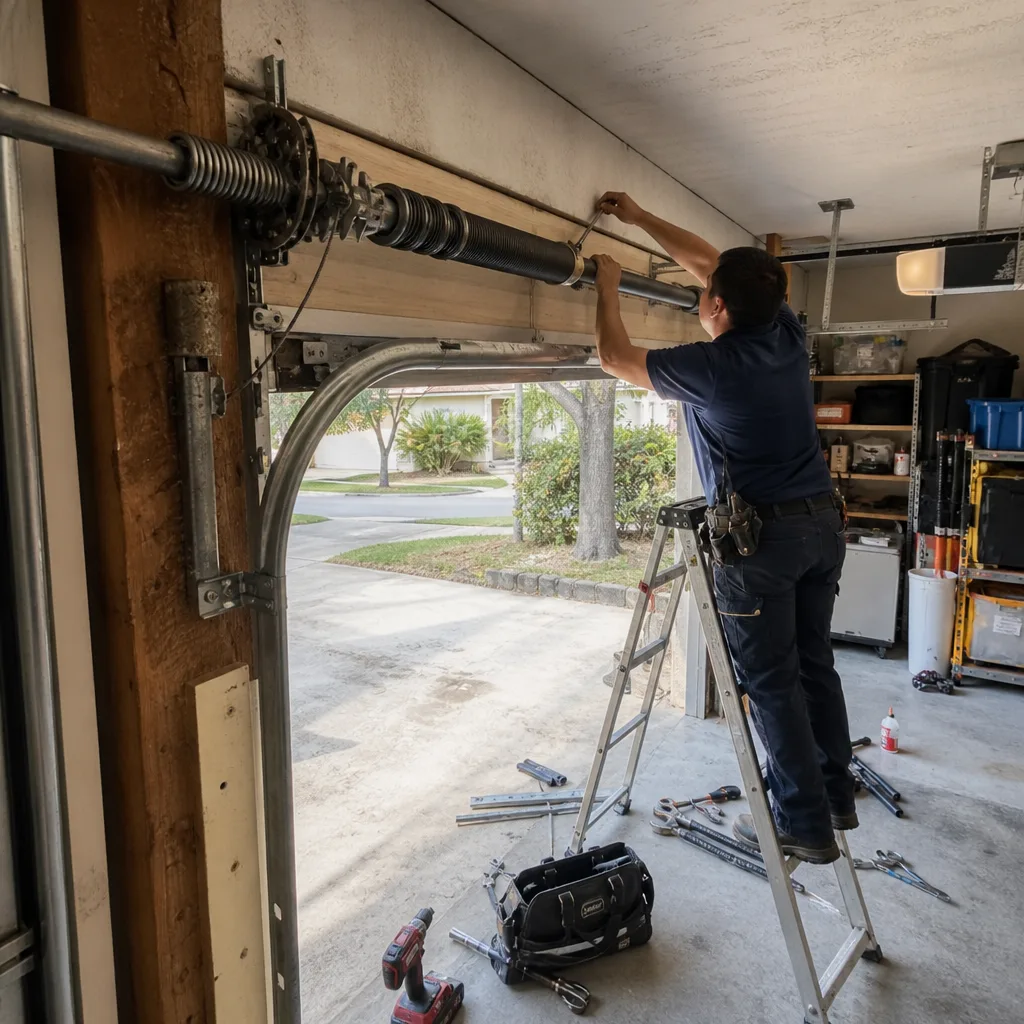
- Raised-panel steel
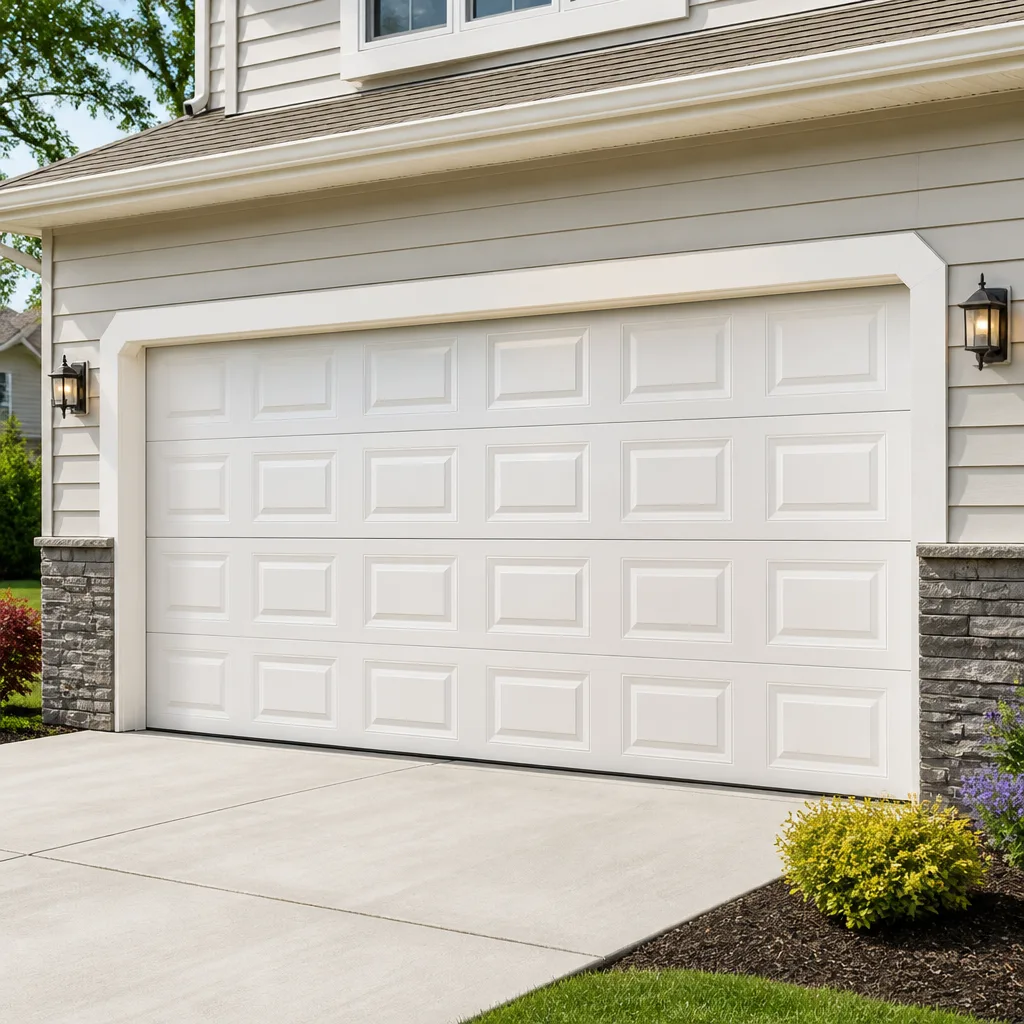
- Carriage house
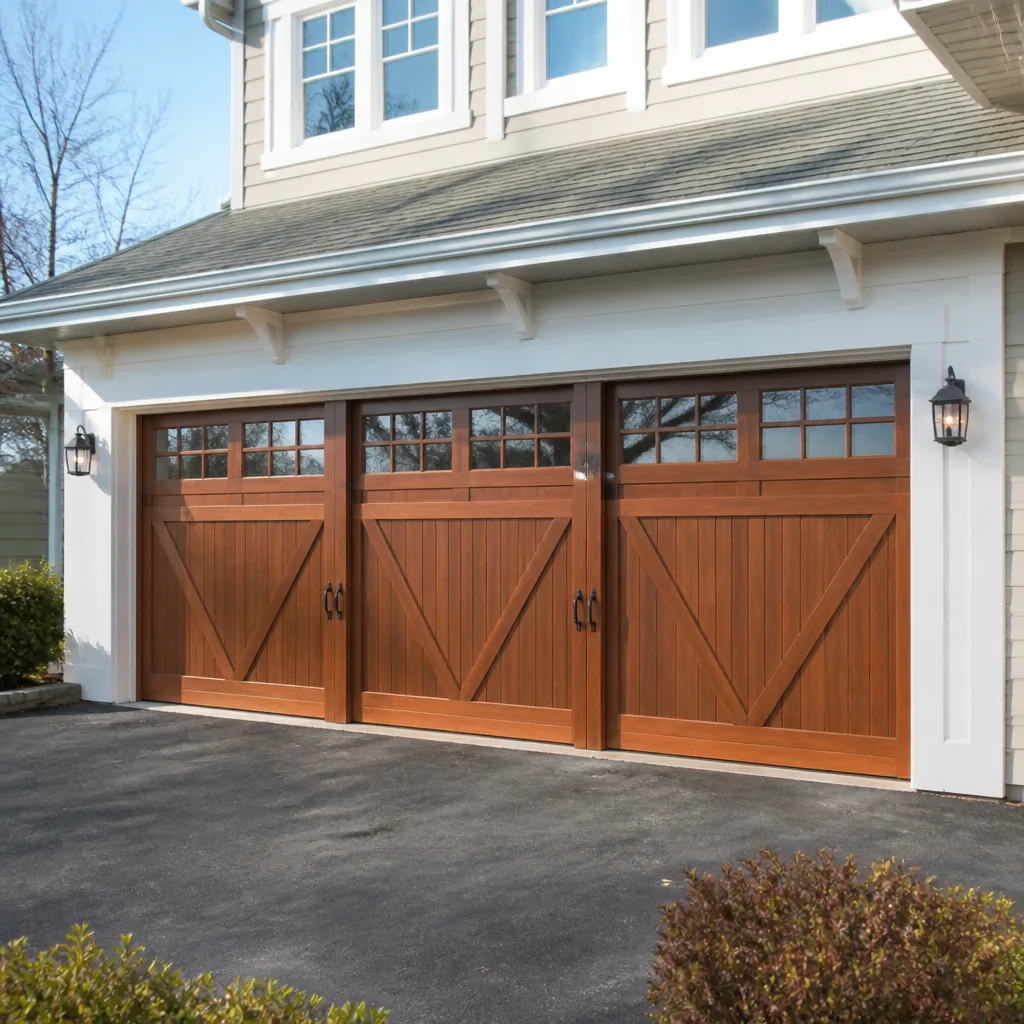
- Modern flush
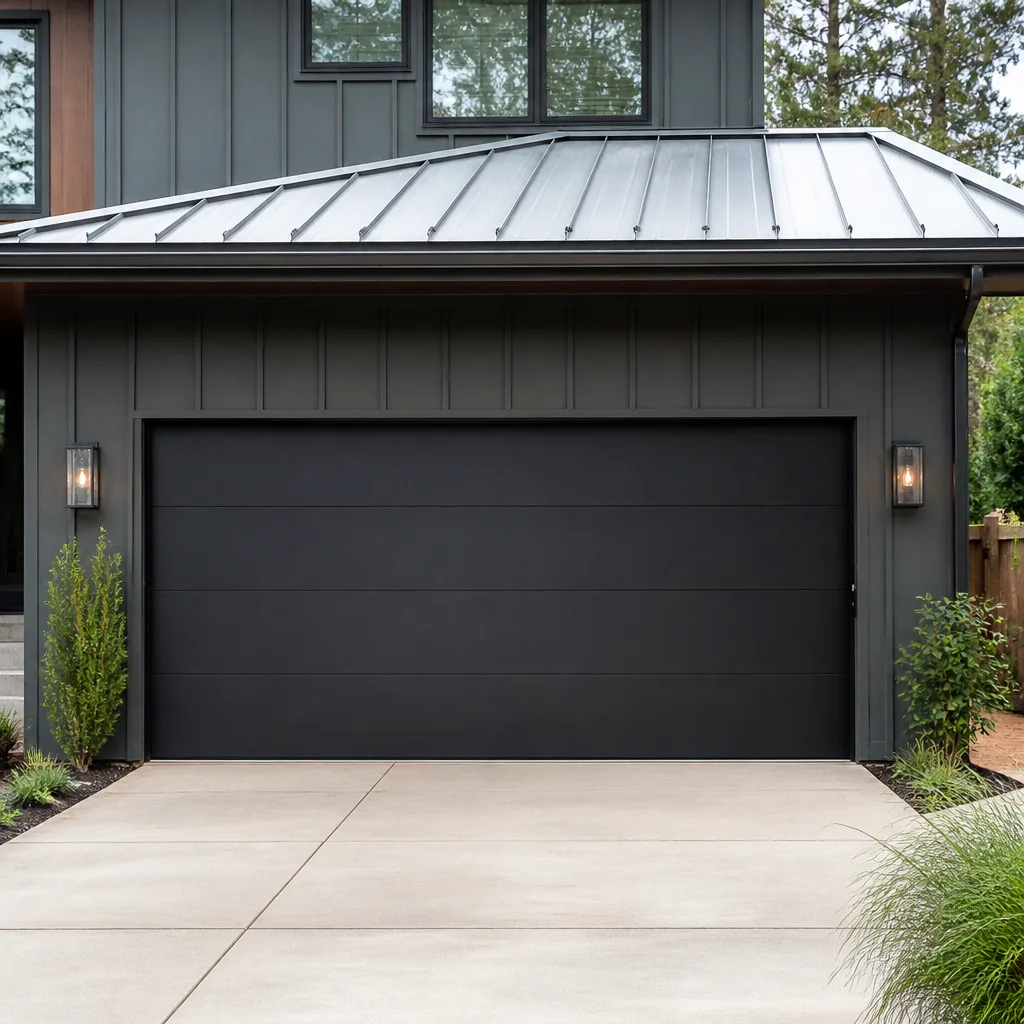
- Full-view glass
- LiftMaster openers
- Chamberlain openers
Table of Contents
- What Your Garage Door’s Sounds Are Telling You
- Movement Patterns That Point to a Specific Part
- Rust and Fraying: The Visual Signs That Come Before a Snap
- When It’s the Opener Behaving Badly (and When It Isn’t)
- Why Coral Springs Heat and Humidity Age a Door Differently
- Watch-and-Monitor vs. Stop-Using-the-Door-Now
- A Simple Monthly Walk-Around Checklist
- Brand Matters Less Than the Diagnosis
What Your Garage Door’s Sounds Are Telling You
Every garage door noise has a mechanical cause, and the type of sound tells you which part is complaining. In our experience across Coral Springs, homeowners tend to lump all of it into “the door is loud,” but a grinding sound and a popping sound come from completely different places and carry very different urgency.
Here’s how we read the four most common sounds:
- Grinding usually means metal is rubbing where it shouldn’t: dry rollers binding in the track, worn hinges, or a torsion tube that’s lost lubrication. It’s rarely sudden-failure territory on its own, but grinding left alone wears the parts faster.
- Popping is the sound of a torsion spring winding or unwinding unevenly, or a cable jumping its drum. This one deserves attention soon. A popping torsion system is a spring under load that isn’t behaving predictably.
- Squealing points to friction in the moving parts: rollers, hinges, the opener’s rail or the door’s bearings. It’s the easiest to address and the one most often ignored for months.
- Rattling is loose hardware: bolts backing out, a track bracket vibrating, or panels that have worked loose in their hinges. Left long enough, rattling can let a panel shift out of alignment.
A single loud bang, followed by the door not lifting or the opener running without moving the door, is different from all of the above. That’s the sound of a torsion spring breaking, and it’s an immediate stop. For the mechanical repair itself, our garage door spring repair service is built around exactly this kind of failure.
Movement Patterns That Point to a Specific Part
Watch your door through one full open-and-close cycle and you can often diagnose the problem before it gets expensive. The way a door moves is a map of the parts doing the work. Uneven travel, slow reversal and sagging corners each point to something specific.
Here’s what each movement pattern usually means:
- Hesitation before it moves. The opener engages but the door sits for a beat. This is the off-balance spring tension we mentioned at the top. The springs aren’t carrying the door’s weight the way they should, so the opener has to work harder to get it started.
- Uneven travel side to side. One side rises faster than the other. Usually a cable tension problem or a binding track on one side. The door is fighting itself, and the opener takes the strain.
- Slow reversal when it meets an obstruction. If the door keeps pushing on something before it reverses, the safety reverse isn’t calibrated. That’s a genuine safety issue, especially in a home where a child or pet uses the garage.
- Sagging corners. A corner that droops or a panel that gaps at the top often means a bent track, a broken hinge, or a section that’s lost its structural connection. Left alone, sagging puts uneven load on the springs.
In Coral Springs, where a lot of homes use the garage as the everyday entry, the door gets cycled far more than it would at a house where everyone parks in the driveway. More cycles means faster wear on the spring system, and that’s exactly where these movement symptoms start.
Rust and Fraying: The Visual Signs That Come Before a Snap
The most dangerous garage door failures give you a visual warning first. Rust on cables and springs, and fraying at the cable ends, are the cues that show up days before a cable lets go. A snapped torsion cable can whip with real force, and a broken spring can send a door crashing down. That’s why we treat spring and cable work as a dedicated, safety-critical service rather than a general handyman task.
What to look at, and what you’re looking for:
- Cables. Look at the cables running down each side and around the drums. Frays, broken strands or a cable that’s sitting loosely on its drum are warnings. A cable that’s visibly slack is close to failing.
- Springs. Torsion springs run across the top of the door; extension springs run along the tracks. Look for rust, gaps between coils, or a spring that hangs loose. A gap in a torsion spring usually means a break.
- Track and hardware. Rust isn’t only cosmetic. Rusted hinges, brackets and rollers can seize, binding the door and forcing the opener to work against a stuck part.
- Panels and framing. Moisture and age can let panel seams separate, which affects how the door seats in the frame and how evenly it loads the spring system.
Homeowners in Coral Springs have a particular reason to look for rust: the humidity here keeps moisture in the air and on metal far more of the year than in drier places. Rusted hardware and cables that would take years to fail in a dry climate can move faster here.
When It’s the Opener Behaving Badly (and When It Isn’t)
Plenty of things homeowners blame on the opener are actually door-balance problems in disguise. An opener that runs longer than it used to, strains to lift the door, or heats up more than it should is often doing extra work because the springs have lost tension. Replacing the opener won’t fix a heavy door. Diagnosing the balance first usually will.
The opener-specific signs worth noting:
- Longer run time. The motor takes noticeably longer to complete a cycle. This usually means the door has gotten heavier to move, not that the motor has weakened.
- Increased motor heat. A motor that’s warm to the touch after a single cycle is straining. Repeated strain wears the motor and the gear assembly.
- Reversing for no reason. A door that reverses partway down is often tripping its safety sensor, or the force limits are set too tight for a door that’s binding.
- Clicking but not moving. The opener runs but the door stays put. That can be a broken spring (the opener can’t lift a door the springs aren’t supporting) or a stripped gear in the opener itself.
On LiftMaster, Chamberlain, Genie, Craftsman and other common openers, these behaviors show up the same way. If the diagnosis lands on the operator itself, our garage door opener repair covers the full electrical layer. When the door won’t move and the cause isn’t clear, our garage door repair team can trace it, and for a door that’s stuck open or shut, we offer emergency garage door service rather than leaving you until the next business day.
Why Coral Springs Heat and Humidity Age a Door Differently
Garage doors in Coral Springs live in a harsher environment than most homeowners realize. South Florida’s combination of heat and year-round humidity is hard on the parts that move, and it changes which warning signs you should watch most closely.
Three local factors matter most:
- High humidity keeps metal wet. Moisture in the air accelerates rust on cables, springs and hinges. Cables are the part to check most often; a rusted cable that’s starting to fray is a stop-and-call sign, not a routine lube job.
- Heat stresses the opener and lubrication. A garage that heats up through the day puts extra load on the opener motor and thins out lubricants on the moving parts. That’s part of why grinding and squealing show up faster here than in cooler climates.
- Rain and storms test the seals and the door’s seating. Wind-driven rain and humidity work on the door’s seals and framing, and any water that gets in drives corrosion from the inside.
None of this means your door is doomed. It means the schedule for checking it is shorter. A door in a dry climate might be fine with an annual inspection. A door in Coral Springs does better with monthly attention to the sounds and sights we’ve described, plus a professional look at the springs and cables before they give out.
Watch-and-Monitor vs. Stop-Using-the-Door-Now
The single most useful skill this guide can give you is a clear line between “keep an eye on it” and “don’t touch it.” Sorting warning signs by urgency is how you avoid both overreacting and getting caught by a failure you could have seen coming.
Stop using the door immediately if you notice any of these:
- A loud bang followed by a door that won’t lift, or a torsion spring with a visible gap.
- A visibly broken, frayed or hanging cable.
- A door that’s come off one track, or is hanging crooked from a corner.
- The opener running but the door not moving at all.
- A reversal that fails, so the door keeps pushing on an obstruction.
These are the situations where the danger is real. A spring or cable under load can fail violently. Never try to adjust, tighten or replace a torsion spring or cable yourself. That scope belongs to a trained technician with the right tools.
Schedule a service soon, and monitor until then, if you see:
- Popping or grinding that’s new or getting louder.
- Hesitation before the door moves, or uneven travel.
- A door that feels noticeably heavier when you lift it by hand.
- Rust on cables or springs without fraying or gaps.
- An opener running longer or getting hot.
When you’re not sure which side of that line you’re on, that’s the moment to call. We’ve seen plenty of Coral Springs doors where a sound that read as “minor” was a spring about to break.
A Simple Monthly Walk-Around Checklist
Five minutes once a month catches most of what we’ve described. Here’s the routine we’d suggest for any Coral Springs homeowner, in order, the way we’d do it:
- Listen. Open and close the door once with no other noise in the garage. Note any grinding, popping, squealing or rattling, and note whether it’s new.
- Watch the travel. Follow the door through a full cycle. Look for hesitation, uneven movement side to side, or sagging corners.
- Check the balance. With the door closed, pull the manual release and try to lift the door by hand about halfway. It should lift with modest effort. If it’s heavy, the springs are losing tension.
- Look at the cables and springs. At the sides and overhead. Any rust, fraying, slack or gap means stop and call.
- Test the safety reverse. Place a small object in the door’s path and confirm the door reverses when it meets it. If it doesn’t, that’s a safety issue to fix right away.
- Note the opener. Does it run longer than it used to? Is it hot after one cycle? Either points to a balance problem.
If you find a stop-sign issue during that walk-around, don’t run the door to “see what happens.” Call and let a technician take it from there.
Brand Matters Less Than the Diagnosis
A lot of homeowners assume they need a specialist for their specific door or opener brand. In practice, the warning signs we’ve covered read the same way across the leading residential brands. A hesitation in a Clopay door and a hesitation in an Amarr door both trace back to spring tension. A straining opener on a Wayne Dalton system and one on a Craftsman both usually point to a door that’s gone heavy.
What matters is that the technician knows the whole system, both the door body and the operator on top of it. We work on the brand already in your garage, whether that’s one of the common names or a make that’s less familiar, and we service the mechanical side (springs, cables, tracks, panels, hinges) alongside the opener. That’s the reason for a single call covering the door and the opener, rather than handing you off to a second company for the electrical half.
If the diagnosis comes back as a repair worth doing, for materials or for a component that’s reached the end of its useful life, our installation capability means the same team that diagnoses can repair or replace. No handoff, no waiting on a separate contractor. Our technicians have up to 14 years of experience with these systems, and we approach the diagnosis as a reading of the mechanism, not a sales pitch for new equipment.
Common Mistakes to Avoid
- Writing off hesitation as “normal aging.” A two-second pause before the door moves is an off-balance spring, not a fact of life. Ignoring it lets the opener take the strain and pushes the repair from a spring job to a spring-and-opener job.
- Trying to fix a torsion spring yourself. This is a spring under heavy tension, and it can injure you badly if it lets go. Spring and cable work is a call a professional job, every time.
- Blaming the opener for a door problem. Replacing the motor when the springs are worn just puts a new motor on a door that’s still heavy. Diagnose the balance first.
- Treating rust as cosmetic. In Coral Springs’s humidity, rust on cables and springs is a warning, not a look. A rusted cable is closer to snapping than a shiny one.
- Skipping the safety reverse test. It takes a few seconds, and it’s the difference between a door that stops and one that doesn’t. Check it monthly.
- Running the door after a loud bang or a visible break. If a spring has broken or a cable is frayed, cycling the door again is asking for more damage or worse.
- Waiting for the annual service that never comes. In this climate, a monthly five-minute walk-around catches more than a yearly appointment. Match the inspection to the environment.
See the difference
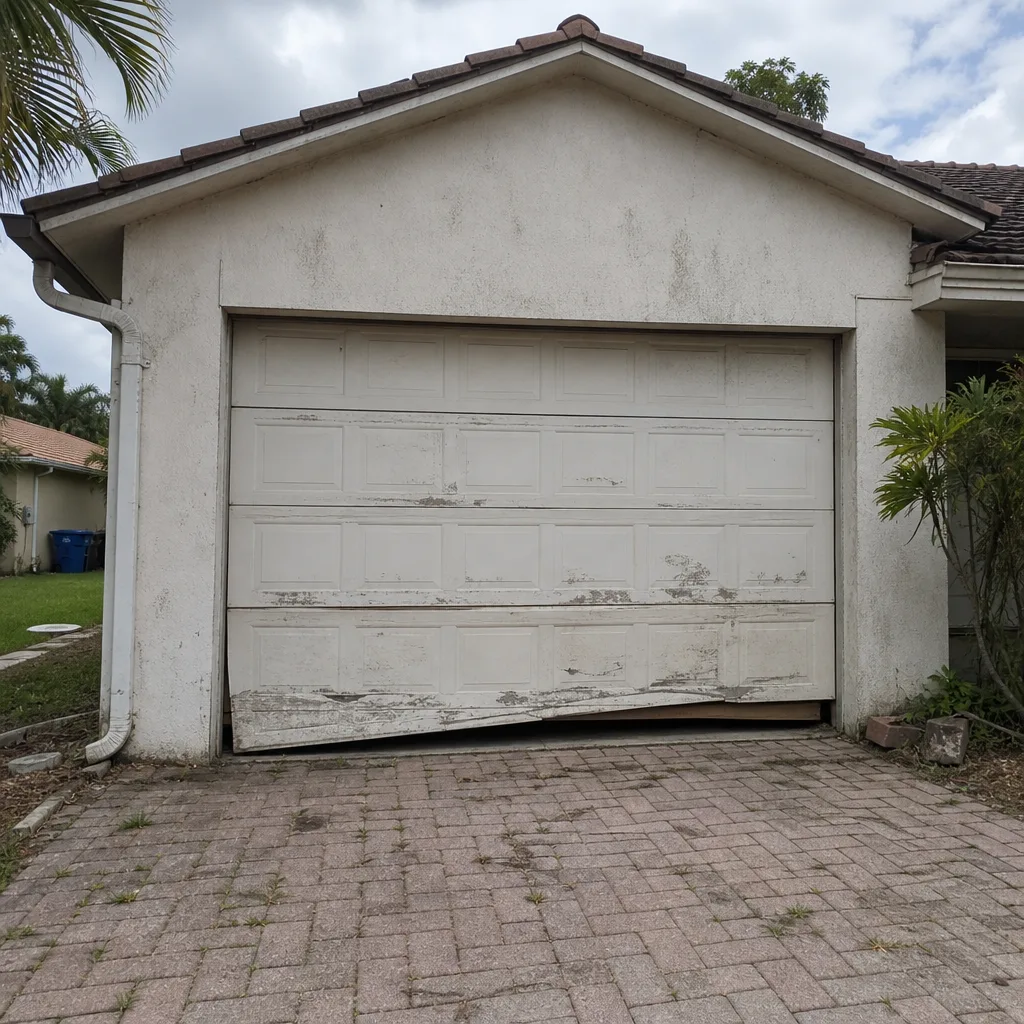 Before
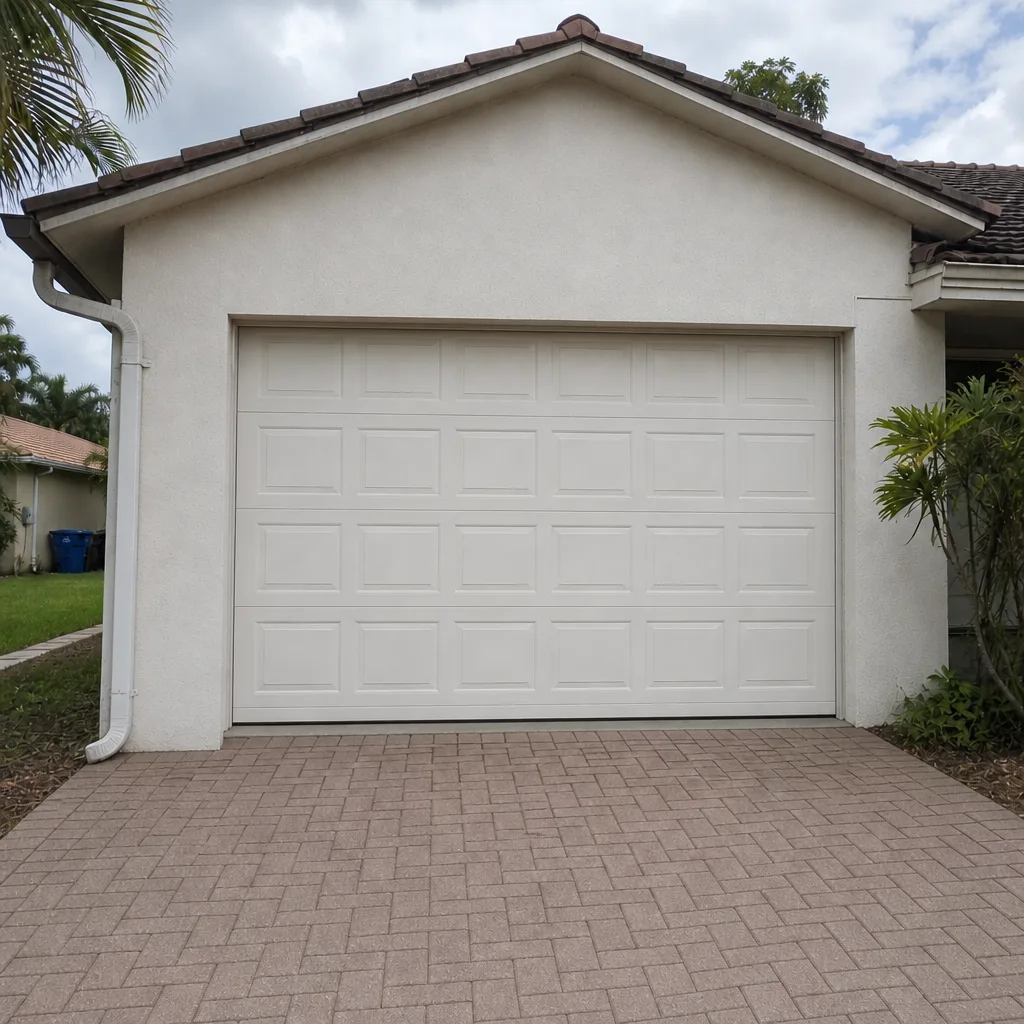 After
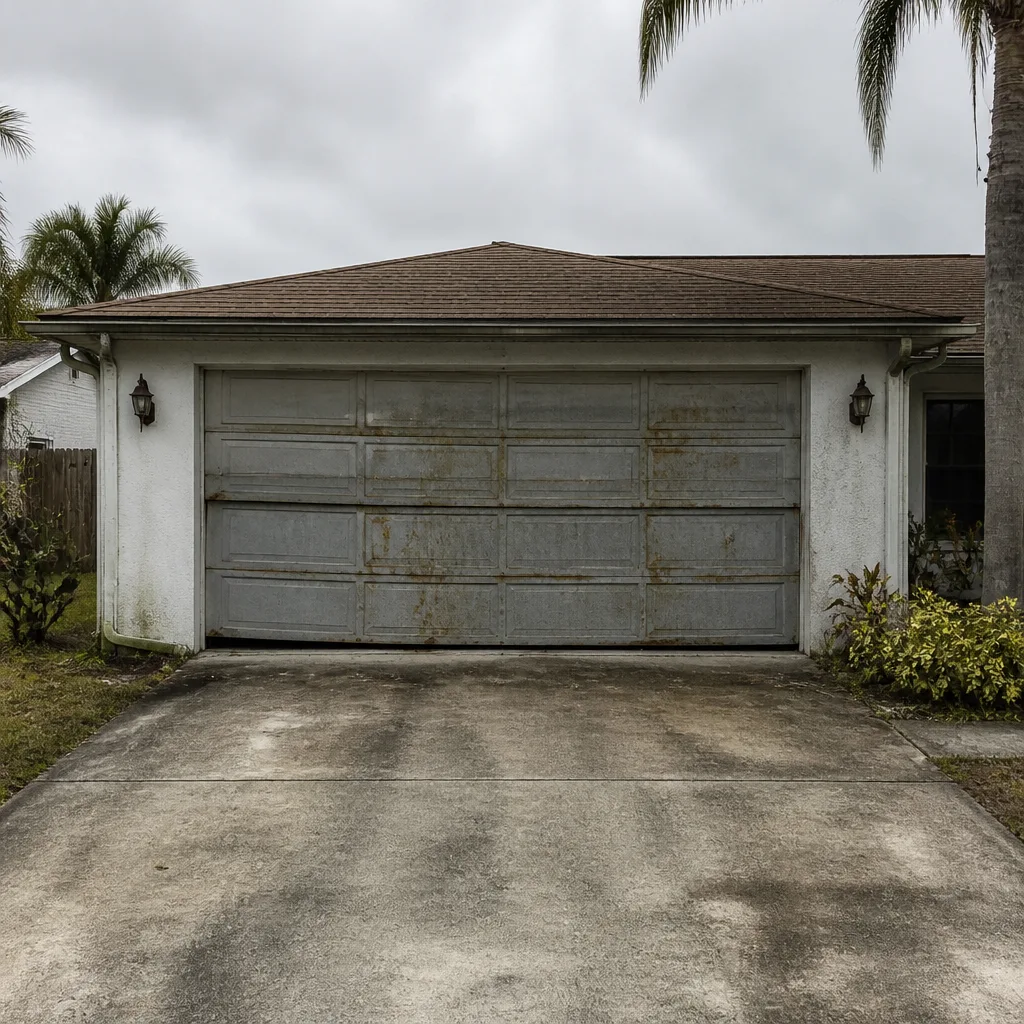 Before
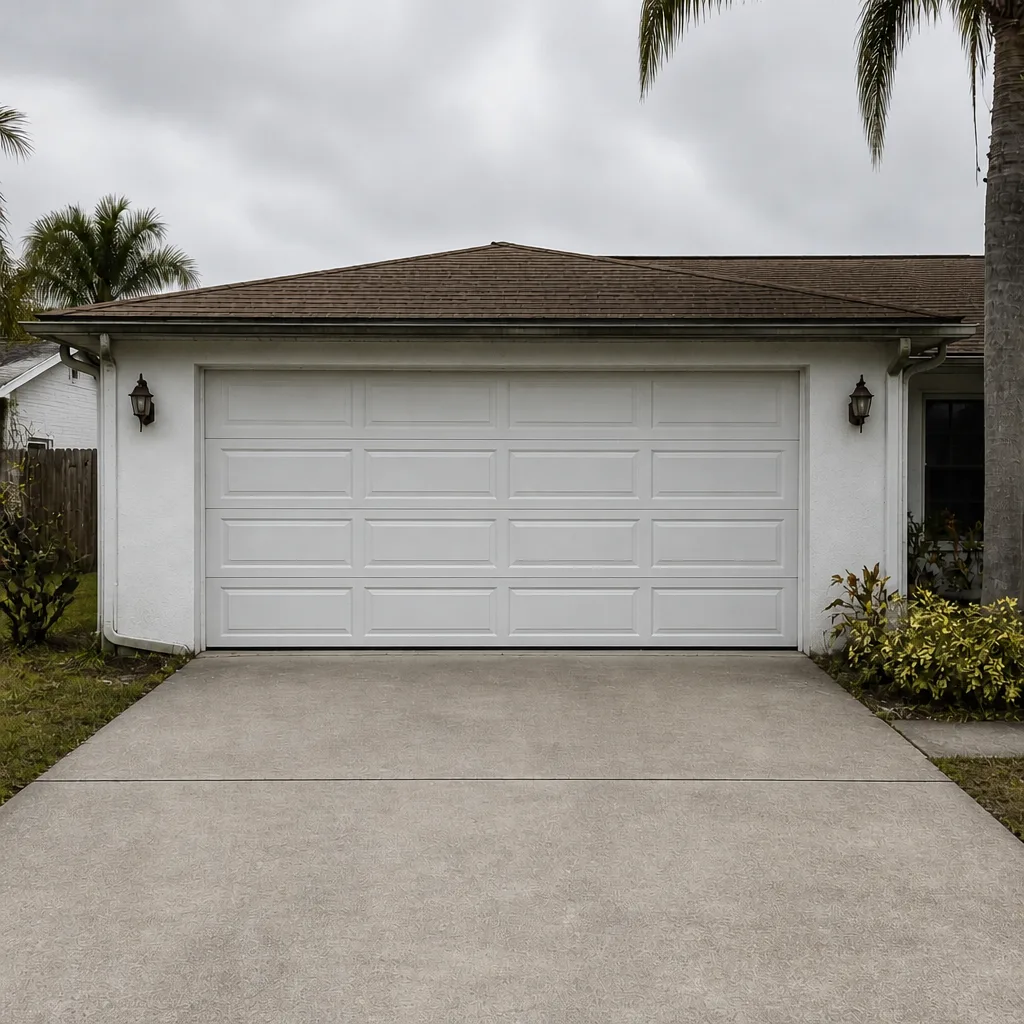 After
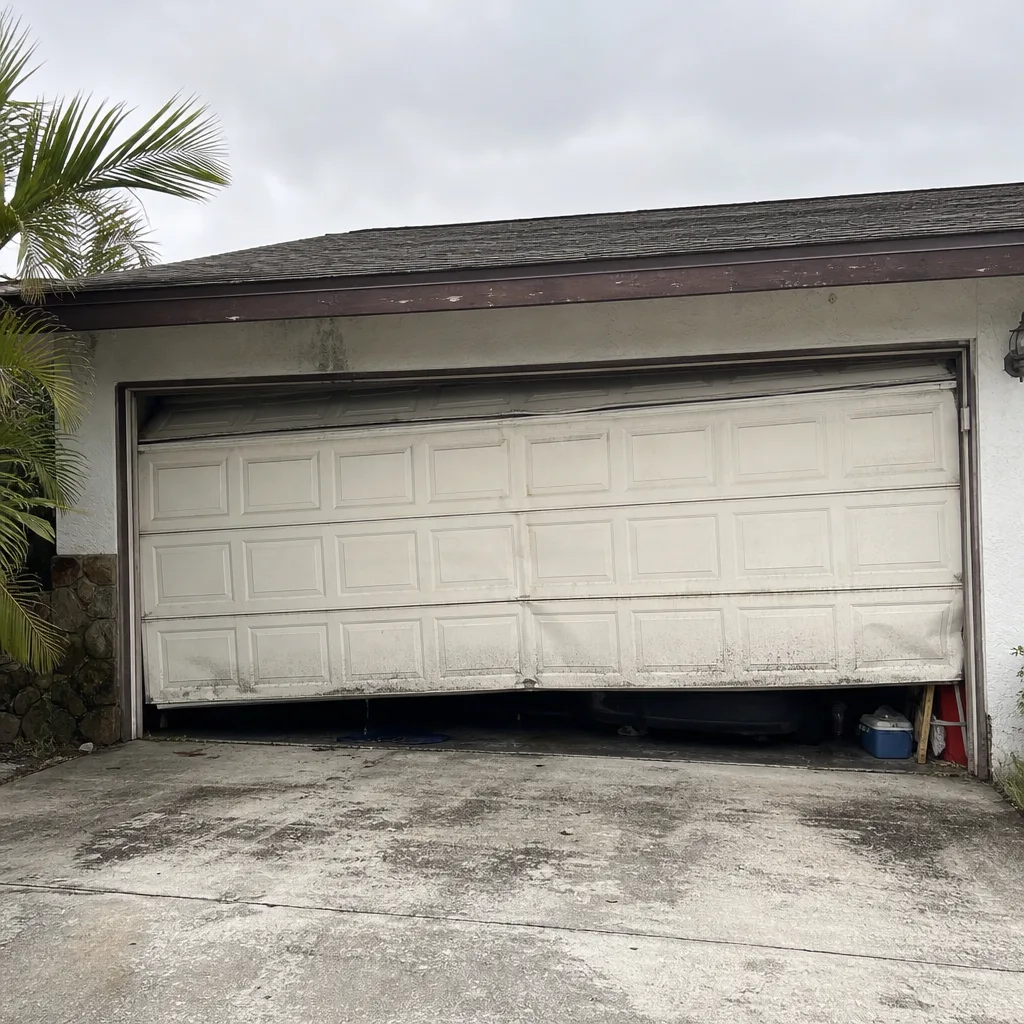 Before
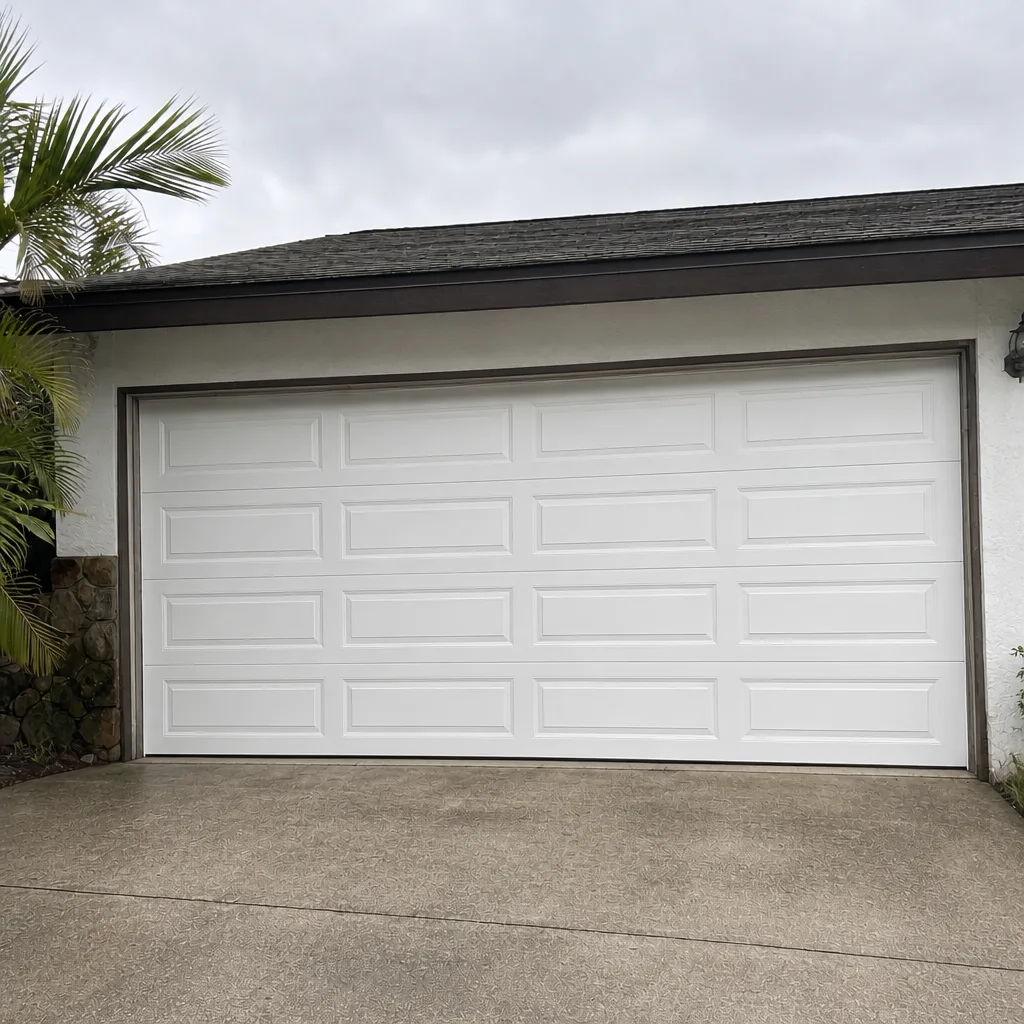 After
When to Call a Professional
Call a professional for anything involving the springs or cables, for a door that’s off its track, for a failed safety reverse, and for any opener issue that shows up alongside a heavy or uneven door. Those are the cases where a trained technician saves you the risk of a spring or cable letting go. A grinding roller or a squealing hinge is a repair worth booking soon, but it’s not an emergency. A door that won’t move, or one that’s stuck open or shut, is what we keep emergency garage door service for. Coral Springs Garage Door Repair Co offers free estimates in Coral Springs, and the local technician is licensed and insured as Florida requires. Call (877) 510-2936 and we’ll read the door for you.
Frequently Asked Questions
Hesitation before the door moves is the most common early sign, and it usually means the spring tension is off-balance. The door sits for a second because the opener is working against the door’s full weight. Call (877) 510-2936 for a free estimate if you notice it; it’s the cheapest problem to catch early.
Spring repair in Coral Springs typically runs in the range we quote per spring, and a matched pair usually gets replaced together, so the pair costs about twice a single spring. We give you a written price for your specific door before any work starts. Call (877) 510-2936 for an exact quote; estimates are free.
Yes. A door stuck open or shut is what our emergency service is for, and we don’t leave you waiting for the next business day. Call (877) 510-2936 and we’ll book you as fast as we can. For routine repairs, we schedule around you.
No. We quote the price and agree it with you before any work starts, and the written estimate is the price. If we find something that changes the scope, we tell you first and you decide. Call (877) 510-2936 for a free estimate.
The local professional we connect you with is licensed and insured as Florida requires. Our technicians have up to 14 years of experience working on residential garage doors and openers. Call (877) 510-2936 to book a visit.
It does. Coral Springs’s heat and humidity keep moisture on the metal parts, which speeds up rust on cables and springs and stresses the opener and its lubricant. That’s why a monthly check fits this climate better than a once-a-year one. Call (877) 510-2936 if you spot rust or fraying.
The Bottom Line
Most garage door failures in Coral Springs are a slow announcement, not a surprise. The hesitation, the grinding, the rust on a cable, the opener that runs a little longer: each one traces back to a specific part, and each one has an urgency level you can act on. The signs that mean stop are a broken spring, a frayed or hanging cable, a door off its track, or a failed safety reverse. The rest are a schedule-soon-and-monitor call. Match your inspection to this climate rather than a national average, keep the safety reverse test in your monthly routine, and when a warning sign crosses the line, stop running the door and call.
If you’ve spotted something on this list you’re not sure about, we’d rather you call than wait it out. Coral Springs Garage Door Repair Co handles the full system, from the door and springs to the opener, and works on the brand already in your garage. Call (877) 510-2936 for a free estimate, and one call covers the door and the opener. You can also start at Coral Springs Garage Door Repair Co to see what else we do. When a warning sign shows up, the sooner the door gets read, the simpler the fix.
Written by the team at Coral Springs Garage Door Repair Co.