Last updated November 22, 2026
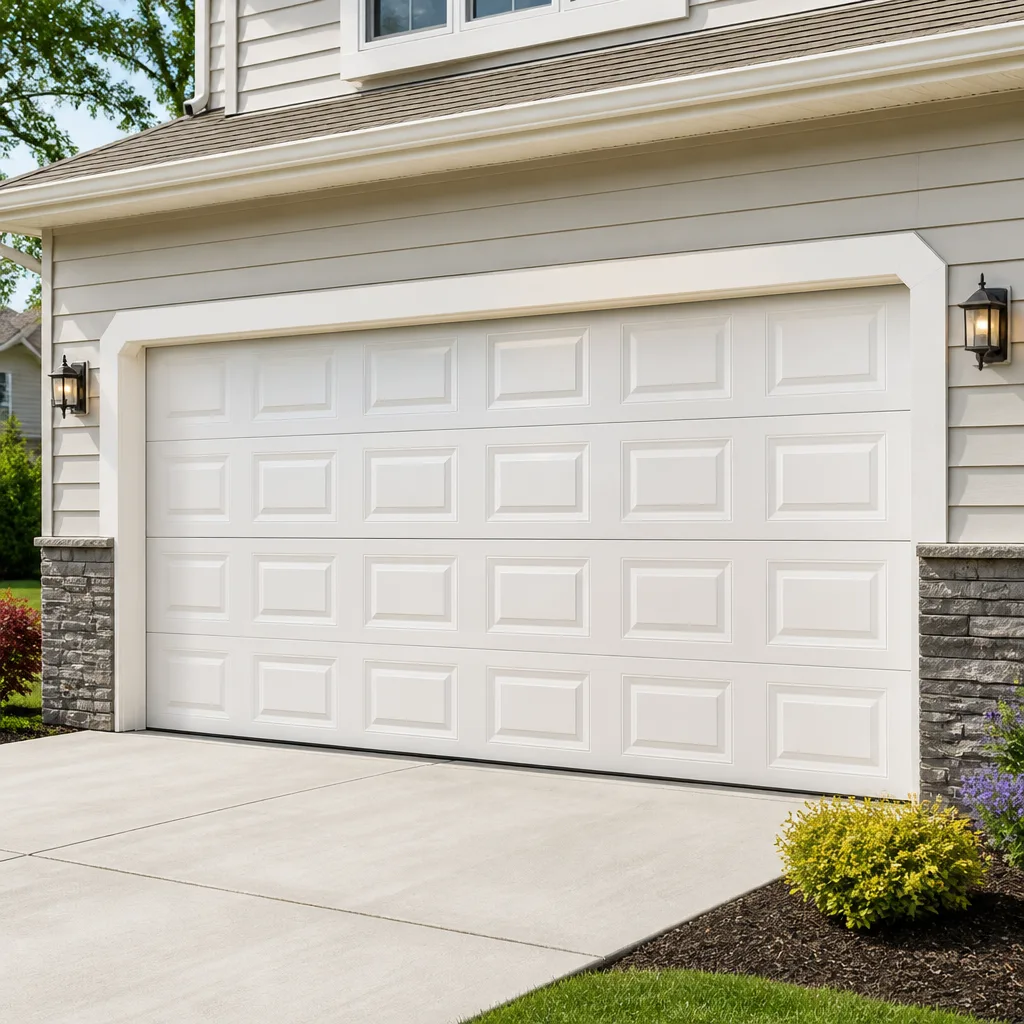 Raised-panel steel
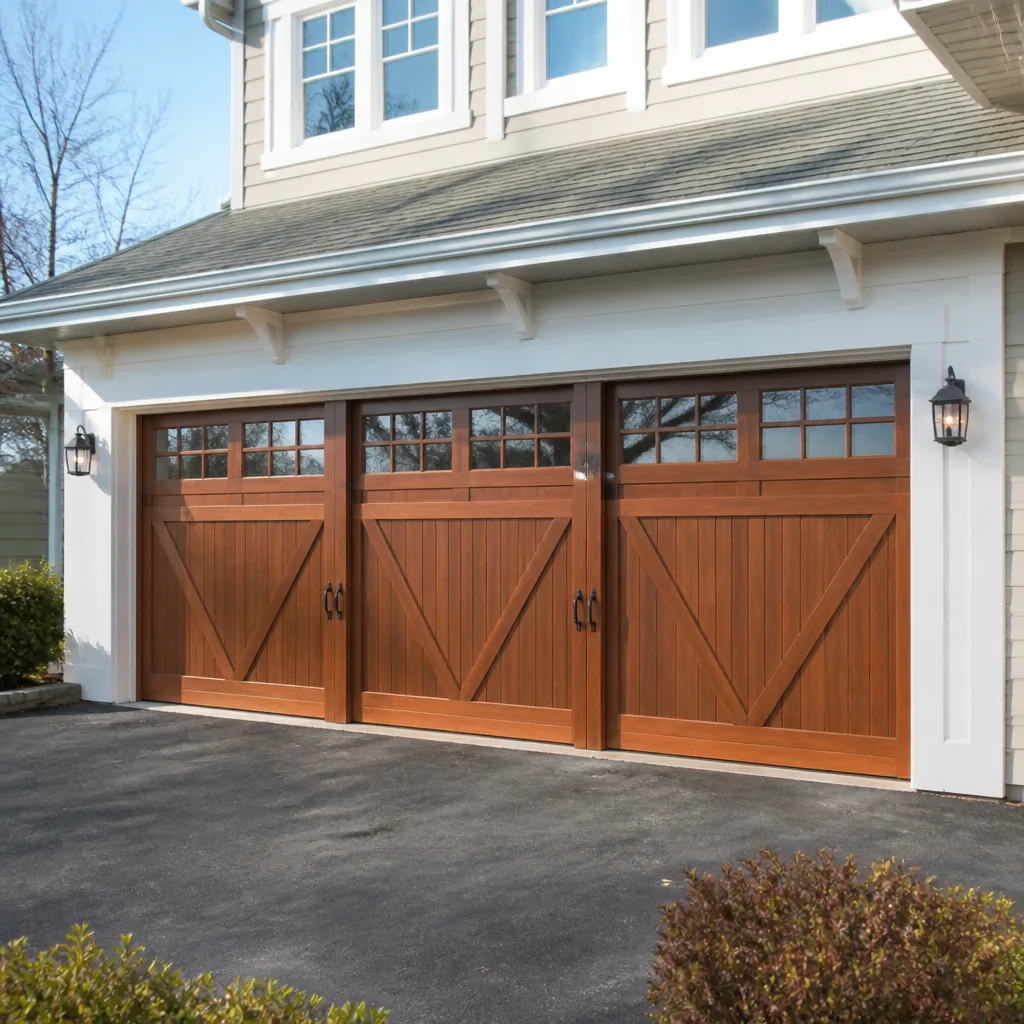 Carriage house
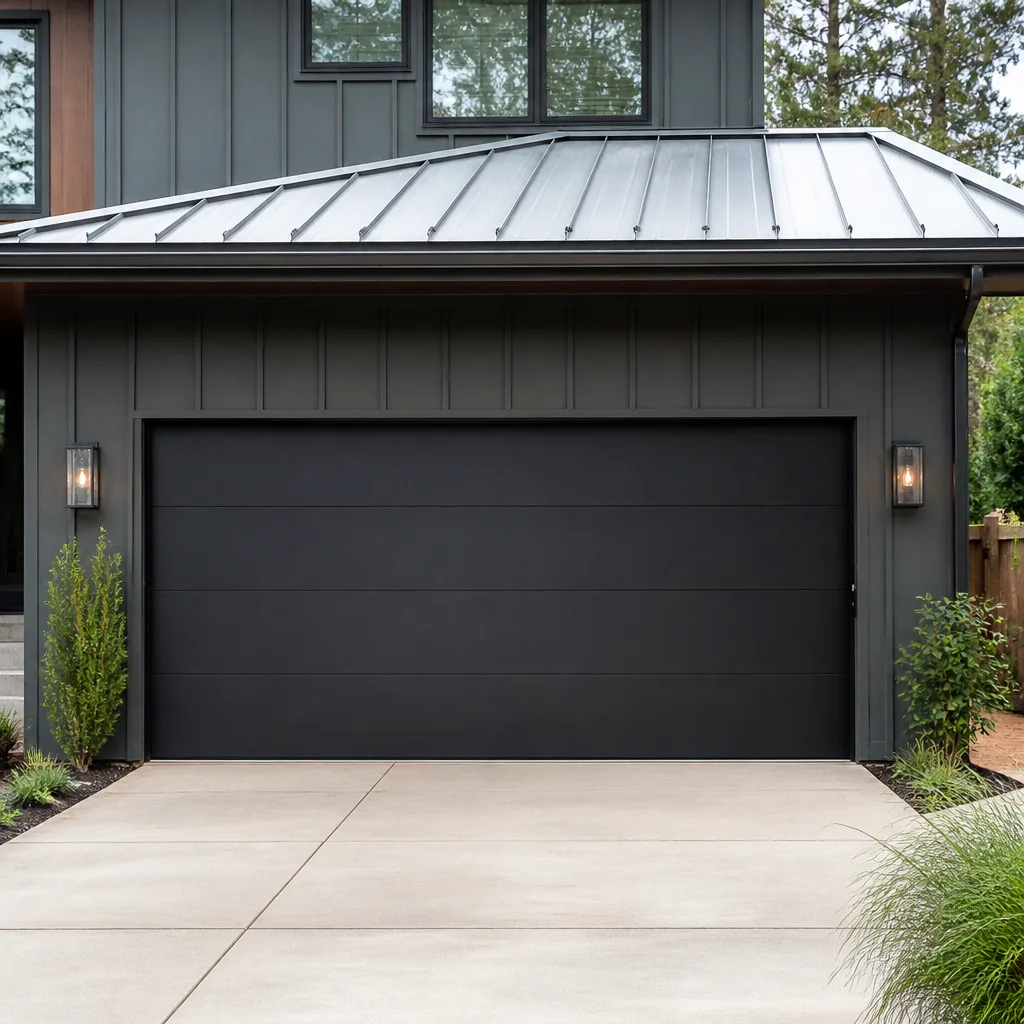 Modern flush
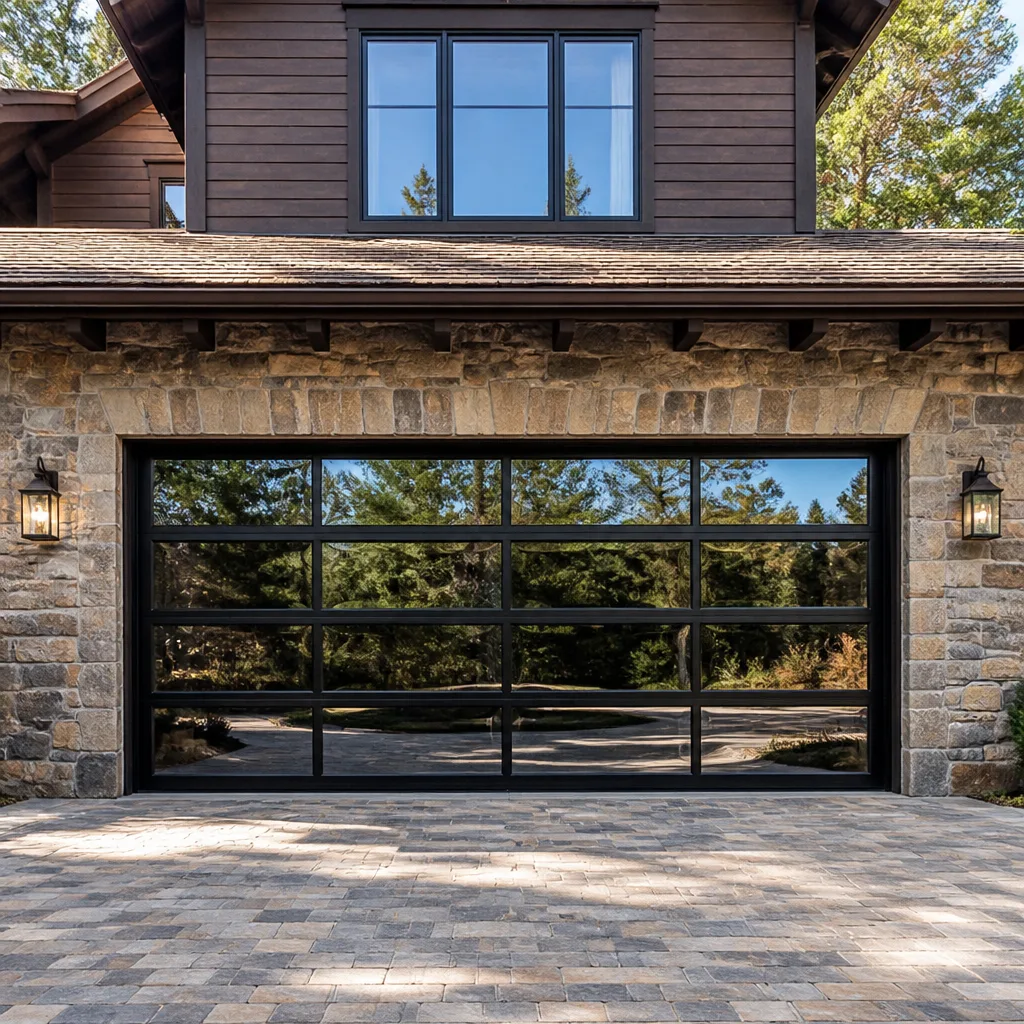 Full-view glass
 LiftMaster openers
 Chamberlain openers
Full 25-point door and opener safety check with every visit - springs, cables, rollers, tracks, and your LiftMaster or Chamberlain opener included
You get a price before we start. It does not change when the pro arrives.
Get your free estimateGarage Door Permits, Codes & Inspections in Coral Springs, FL: What You Need to Know
Most homeowners think of permits as paperwork for room additions and pool enclosures, not for the thing that opens and closes a dozen times a day. That assumption is expensive here. Coral Springs sits in Broward County, where the Florida Building Code applies with a level of wind-load scrutiny most of the country never sees, and a garage door replacement is a structural and life-safety component of the building envelope, not a cosmetic upgrade. A door installed without the required permit isn’t just a code violation: it’s a material fact you’re legally required to disclose to every future buyer, and it can complicate an insurance claim after a storm. This guide walks through when Coral Springs permits are required, what the code asks of your door, what the inspector actually checks, and how to confirm your door carries a valid product approval.
Quick Answer
In Coral Springs, a full garage door replacement requires a building permit under the Florida Building Code, and the completed job needs a final inspection before it’s closed out. Straightforward repairs to an existing door – a broken spring, a bent track, a worn roller, a failed opener – generally do not require a permit. The dividing line is whether you’re altering the opening or the door’s rated assembly, and the safest way to confirm your specific scope is to ask the City of Coral Springs building department directly before work begins.
Styles & brands we work with
- Raised-panel steel
- Carriage house
- Modern flush
- Full-view glass
- LiftMaster openers
- Chamberlain openers
Table of Contents
- When does a garage door need a permit in Coral Springs?
- Replacement, repair, or opener-only: the distinction that matters
- Florida Building Code Chapter 16 and wind-load ratings in Broward County
- What “product approval” means on a Florida NOA
- The inspection sequence: what the final actually checks
- How unpermitted work affects your insurance and your sale
- How to choose an installer who handles the permit correctly
When does a garage door need a permit in Coral Springs?
A garage door needs a permit in Coral Springs when the work replaces or alters the door assembly within the opening – the door, its tracks, its anchoring, or any component that affects the door’s rated performance. A repair that returns an existing, approved door to its original function typically does not, though the line isn’t always obvious to a homeowner, and it’s worth a phone call to the city to be sure. The code treats the garage door as part of the building’s wind-resisting envelope, so what triggers review is the change to that envelope, not the invoice total.
Here’s the practical breakdown of what usually needs a permit and what usually doesn’t:
- Full door replacement: Permit required. This is the most common permitted job.
- Changing door size or opening: Permit required, and often structural review, since the header and framing are involved.
- Switching from a non-rated door to a wind-rated door, or vice versa: Permit required, because the envelope’s rating changes.
- New tracks, new anchors, new torsion hardware on an existing door: Usually falls under repair. Confirm with the city if the anchor pattern changes.
- Spring replacement: A repair. No permit, but this is the most dangerous job in the trade and belongs with a trained technician.
- Opener replacement or repair: Generally no permit, since the opener isn’t part of the rated envelope.
For Coral Springs homeowners in communities like Eagle Trace, Heron Bay, and the older stretches near Riverside Drive, the practical question is the same regardless of neighborhood: does the work change the rated door assembly? If it does, expect a permit. Our own approach is to walk the scope with the homeowner and point out exactly which line the job falls on before anyone touches the door. For a straightforward repair that doesn’t involve the envelope, garage door repair covers springs, tracks, rollers, and panels without the permit process getting in the way.
Replacement, repair, or opener-only: the distinction that matters
The single most useful distinction in Coral Springs garage door permitting is between the door system and the operator. The door system – panels, tracks, springs, hinges, anchors – is part of the building envelope and falls under Florida Building Code review when it’s replaced. The opener is an appliance bolted to the ceiling. Replacing a noisy chain-drive opener with a belt-drive unit from LiftMaster, Chamberlain, or Genie doesn’t change the envelope, so it doesn’t trigger a permit. Replacing a 16-foot hurricane-rated door with a different door does.
Repairs sit in the middle, and this is where most questions come up. A torsion spring that snaps on a Sunday morning is a safety emergency, not a permitting event: nobody expects you to pull a permit to get a broken spring replaced. A bent bottom section from a backing-out incident is a panel repair. But once the work crosses into swapping out the whole door or changing the tracks and anchoring, you’ve moved from repair into replacement, and the permit applies. We’ve seen homeowners assume a “big repair” gets around this, and it doesn’t.
In our experience, the cleanest way to keep the categories straight is to ask one question: after the work is done, is the door still the same rated assembly that was permitted when the house was built, or is it a new one? If it’s new, it needs a permit. If it’s the same assembly brought back to working order, it usually doesn’t. That framing handles almost every case you’ll encounter in Coral Springs. When the answer is “it’s a new door,” the conversation moves to installation and permitting. When the answer is “the opener just died,” it moves to garage door opener repair, which is a much simpler scope.
Florida Building Code Chapter 16 and wind-load ratings in Broward County
The Florida Building Code’s Chapter 16 covers structural design, and for garage doors in Broward County it comes down to one thing: the door must be rated for the wind pressures it will actually see at its location. That rating is expressed in pounds per square foot and tied to the building’s design wind speed, which is set by geography and by the building’s exposure category – how sheltered or exposed the site is. A door rated for an inland, sheltered property may not be acceptable on a property with a more open exposure, and the code doesn’t let you average the two. The permit review exists to confirm that the door you’re installing carries the right rating for the opening it’s going into.
For Coral Springs homeowners, this matters in ways people don’t expect. The same model door can come in multiple wind-load variants, and the label on the door has to match what the permit application specified. Manufacturers including Clopay, Amarr, and Wayne Dalton publish rated assemblies with supporting documentation, and the paperwork has to be in the permit package. That’s one reason a garage door replacement is rarely a one-day, contractor-shows-up-with-a-door-in-a-truck project here: the right door has to be ordered, documented, and matched to the opening.
A short glossary of what you’ll see on a Coral Springs permit package:
- Design wind speed: The speed the code requires the building to resist, set by location and building type.
- Wind-load rating: The pressure, in psf, that the door assembly is rated to withstand.
- Product approval: The state-level document proving the door meets the code (see the next section).
- Exposure category: How sheltered the building site is, which affects the required rating.
- NOA: Notice of Acceptance, the Miami-Dade product approval system recognized across Florida.
If you’re pricing a door replacement in Coral Springs, the quote should reference the wind-load variant, not just the model name. If it doesn’t, ask. A written price that doesn’t specify the rating isn’t a complete price.
What “product approval” means on a Florida NOA
A Florida product approval is the state’s documented evidence that a specific product – in this case a specific garage door assembly – has been tested and certified to meet the Florida Building Code for its intended use. The Notice of Acceptance, or NOA, is the Miami-Dade version of that approval, and Florida recognizes it statewide. When you see an NOA number on a door’s documentation, it means the door, its anchoring, and its installation method have been evaluated together, not just the panels in isolation. For a Coral Springs garage door replacement, the NOA or the Florida product approval number is what the permit reviewer is looking for.
Verifying it takes more than trusting the sticker on the door. Here’s the sequence we use:
- Ask for the Florida product approval or NOA number for the exact door assembly being installed, not just the product family.
- Confirm the approval covers the size and wind-load variant you’re getting, since different widths and ratings carry different approvals.
- Check that the approval is current – Florida product approvals have expiration dates and are periodically revised.
- Match the approval number on the paperwork to the label on the door at installation.
- Keep the approval documents with your home records, because they matter at resale and after a storm.
We work with the door brand already in your garage, including installations that call for a specific manufacturer’s approved assembly, and confirming the NOA documentation is part of a proper Coral Springs replacement. It’s a five-minute check that saves an inspection failure and a lot of aggravation later. When the process is done right, the approval documents become part of your home’s paper trail, and any future buyer or insurer can see the door was installed to code.
The inspection sequence: what the final actually checks
A garage door final inspection in Coral Springs confirms the installed door matches the permitted scope and meets the code’s requirements for the opening. The inspector is verifying the assembly, the anchoring, and the documentation – not testing your opener’s remote range. What they’re looking for is evidence that the door in front of them is the door the permit described, installed the way the approved documentation requires. If those things line up, the final passes.
Here’s what typically gets checked, in the order it usually happens:
- Permit and plans on site: The inspector confirms the permit is pulled and the approved plans match the job.
- Door identity: The installed door’s label and approval number match the permit package and the product approval.
- Wind-load rating: The door’s rated assembly meets the code requirement for the opening’s location and exposure.
- Anchoring and attachment: The tracks and brackets are fastened as specified, since a rated door that’s under-anchored isn’t a rated door.
- Clearances and operation: The door opens and closes without binding, and the safety features on the operator function.
- Documentation: Product approvals and installation instructions are on file, and the permit gets closed out.
One thing that trips people up: the final inspection covers the door assembly, not the opener. If you’re replacing the door and adding a new smart opener from LiftMaster or Chamberlain at the same time, the opener is a separate item and typically isn’t part of the door permit. It’s worth confirming the scope of the permit with the city so the inspection doesn’t get held up over a component that was never part of it. When a Coral Springs job includes both, we make the division clear up front so nobody’s surprised at the final.
How unpermitted work affects your insurance and your sale
Unpermitted garage door work creates two separate problems, and they show up at different times. The first is insurance. After a storm, an adjuster looking at a damaged door will check whether it was installed to code and permitted. If the door wasn’t permitted or doesn’t match the approved assembly, a claim for that door can be reduced or denied, and the homeowner is left covering a replacement out of pocket. The second problem is resale. In Florida, sellers are required to disclose known material facts about the property, and unpermitted work on a structural or envelope component is exactly the kind of thing that has to be disclosed. Buyers’ inspectors find it. Deals get renegotiated over it.
The disclosure issue is the one that surprises people, because it doesn’t feel like a code problem when the door works fine. It’s a legal one. A garage door replacement done without a permit is a known code violation, and you can’t honestly answer “no” to a disclosure question that asks about unpermitted work. That puts the seller in a bad spot: disclose it, and the buyer negotiates down or walks; don’t disclose it, and you’ve misrepresented the property. Either way, the savings from skipping the permit evaporate.
For Coral Springs homeowners, the fix is straightforward: use an installer who pulls the permit as part of the job, and keep the inspection paperwork with your closing documents. The cost of the permit is a small fraction of a door replacement, and the paper trail is worth more than the fee. We’ve seen the alternative on both sides – a denied claim and a renegotiated sale – and neither is a place a homeowner wants to be. If you’re planning a replacement, treat the permit as part of the project, not an optional add-on.
How to choose an installer who handles the permit correctly
Choose an installer who pulls the permit, schedules the inspection, and hands you the closed-out paperwork without being asked. That’s the baseline. In Coral Springs, it’s also a good filter, because anyone who suggests skipping the permit is telling you how they handle every other part of the job. The questions below sort the field quickly.
Ask these before you sign anything:
- Will you pull the permit, or is that on me? (The installer pulls it.)
- Which wind-load variant is in the quote, and what’s the product approval number?
- Who schedules the final inspection, and will I get a copy of the paperwork?
- Does the quote cover the permit fee, or is it billed separately? Get the number in writing.
- Does the price change once the door’s on site? The written estimate sets the final price.
The best answer to all five is a written quote that spells out the permit, the door’s approval documentation, and the inspection step. A crew that handles full-spectrum work – repair through installation, springs through smart openers – is used to the permit process and can explain it without hand-waving. Our technicians have up to 14 years of experience, and we’ve handled the Coral Springs permit and inspection sequence enough to know where it goes wrong. If the door is older or the existing hardware is mixed, we work with what’s there rather than steering you into a full replacement you don’t need. For the overall service, see Coral Springs Garage Door Repair Co.
Common Mistakes to Avoid
- Skipping the permit on a full replacement. A replacement door is an envelope change, not a repair. Skipping the permit leaves you with a door that isn’t legal, isn’t insurable, and has to be disclosed at resale.
- Assuming an opener swap needs a permit. It usually doesn’t, because the opener isn’t part of the rated assembly. Spending the time on a permit you don’t need is a smaller mistake than the opposite, but it’s still wasted effort.
- Not checking the wind-load variant in the quote. Two doors with the same model name can carry different ratings. Confirm the variant and the product approval number in writing before you order.
- Replacing the door without the approval documents. The inspector needs them, your insurer may want them, and your buyer will ask for them. Keep them with your closing file.
- Letting a contractor tell you the permit is unnecessary. In Broward County, that’s a red flag about how the whole job will go, not a shortcut worth taking.
- Filing the final inspection paperwork in a drawer and forgetting it. The closed-out permit is the proof that the work was legal. Without it, you’re relying on memory and someone else’s records at the worst possible time.
- Treating spring failure as a minor repair. A torsion spring stores enough energy to cause serious injury. It doesn’t need a permit, but it needs a trained technician. That’s garage door spring repair, and it’s a safety-critical job.
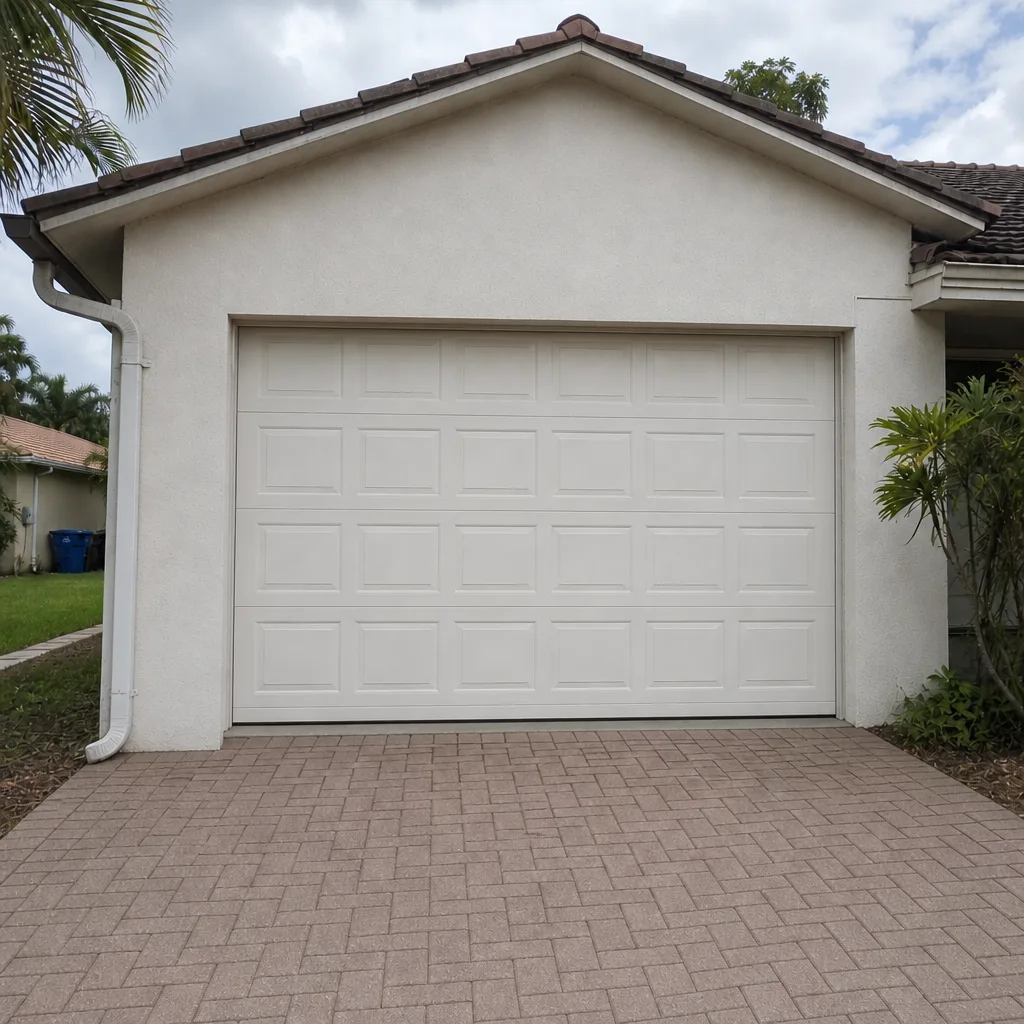
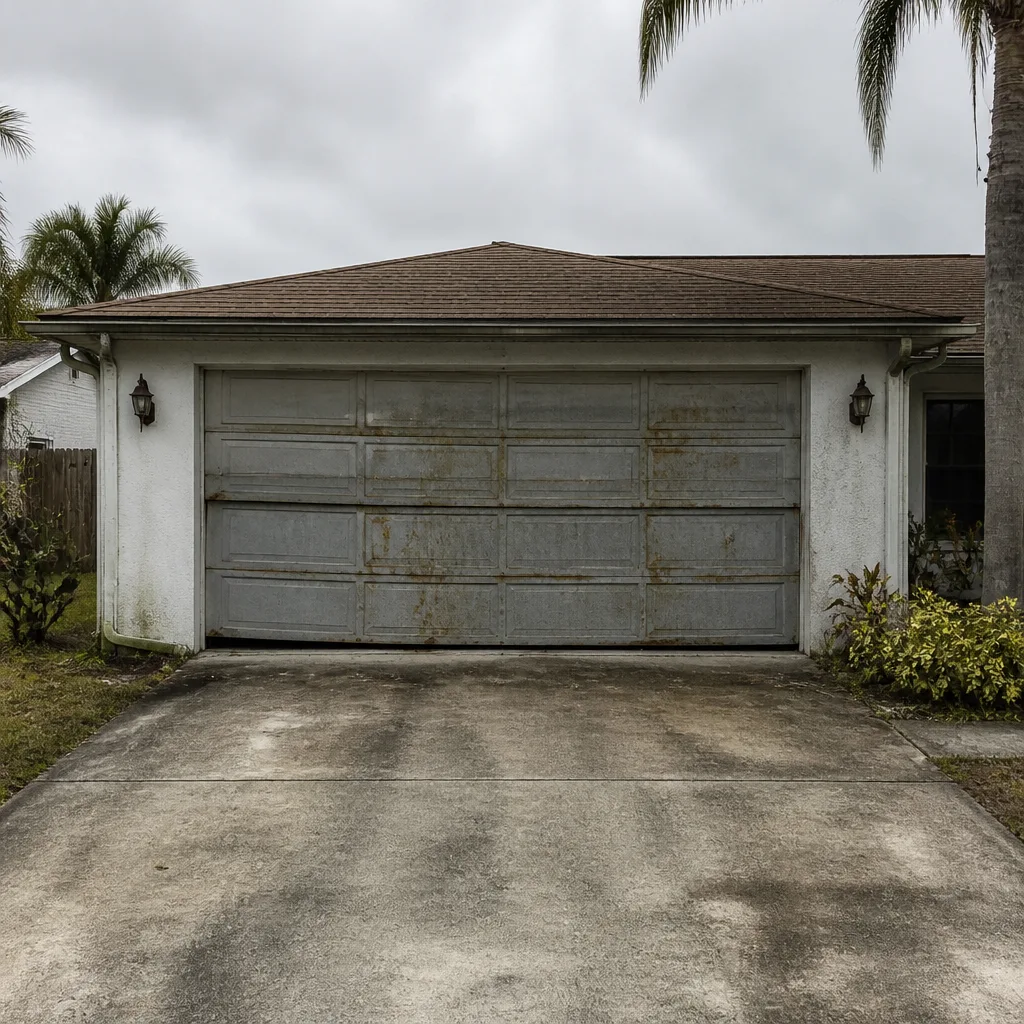
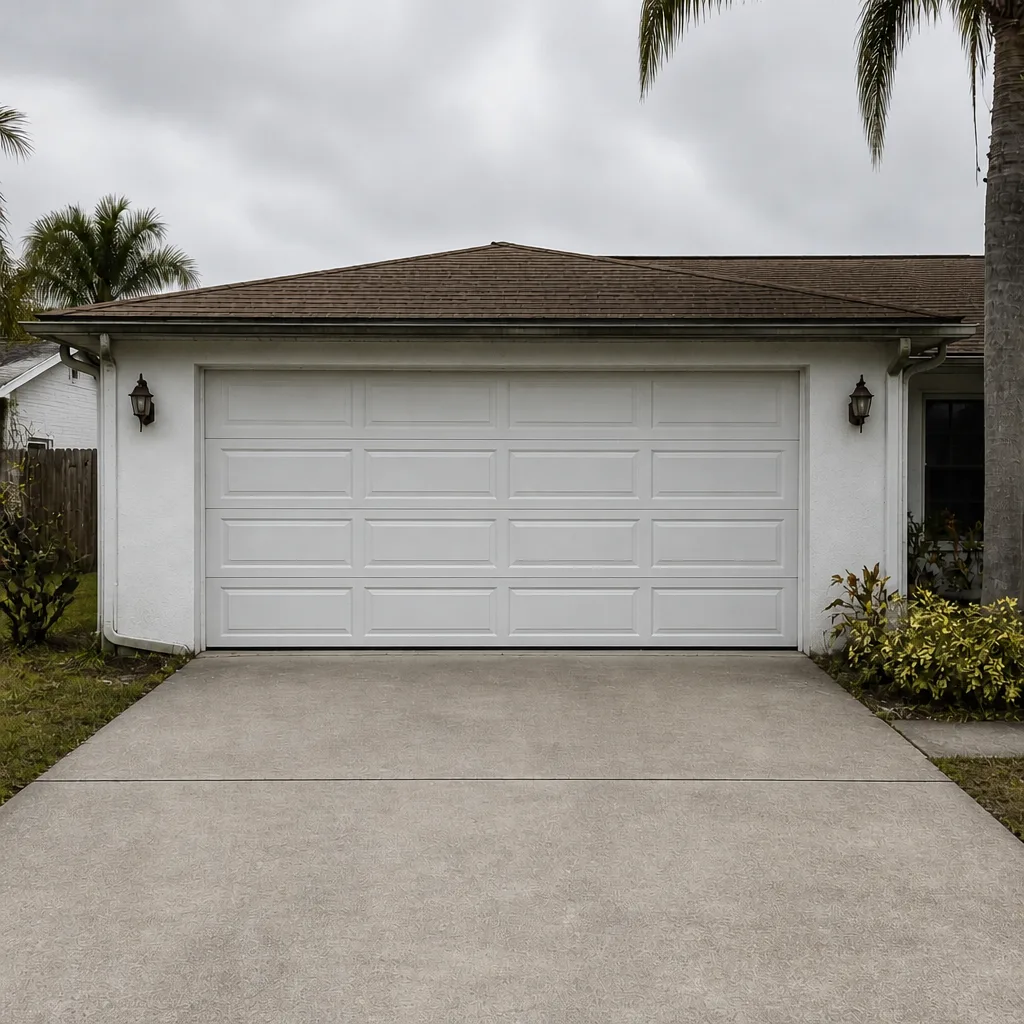
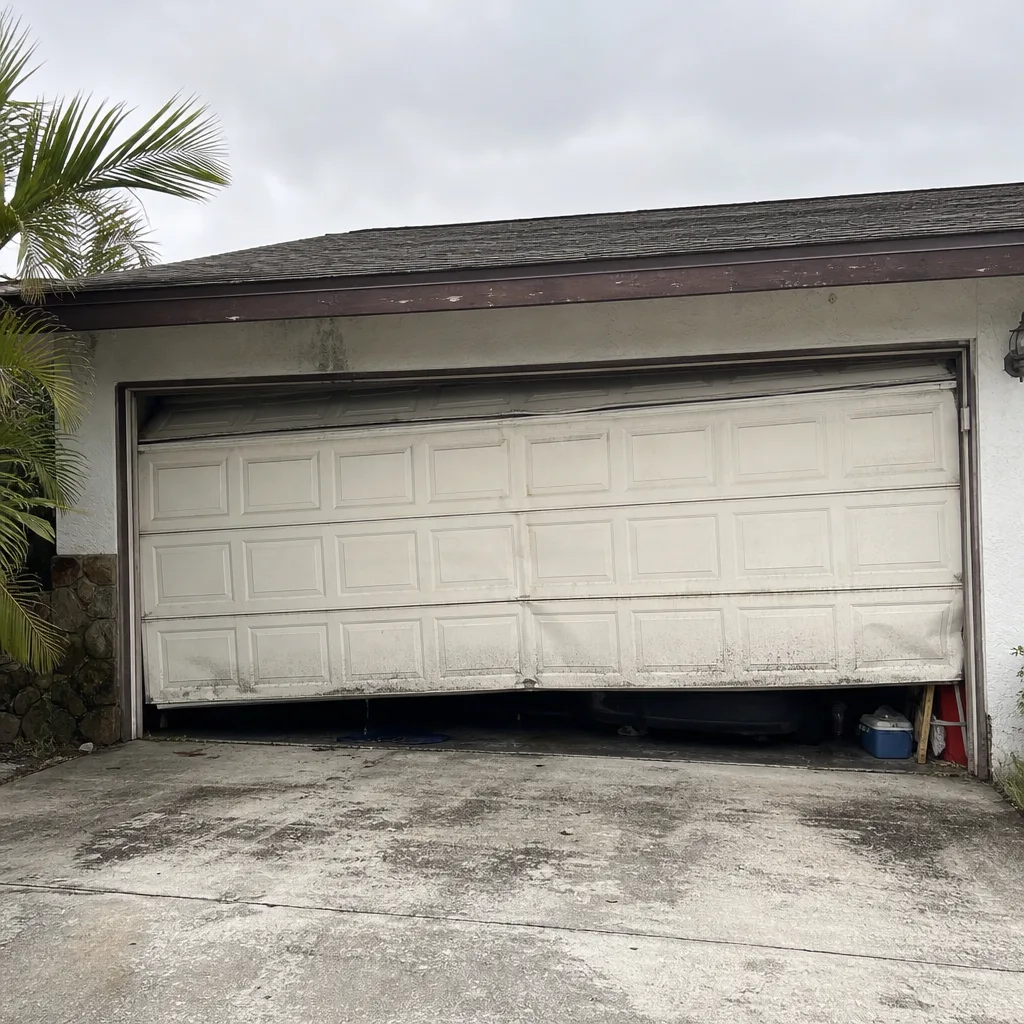
See the difference
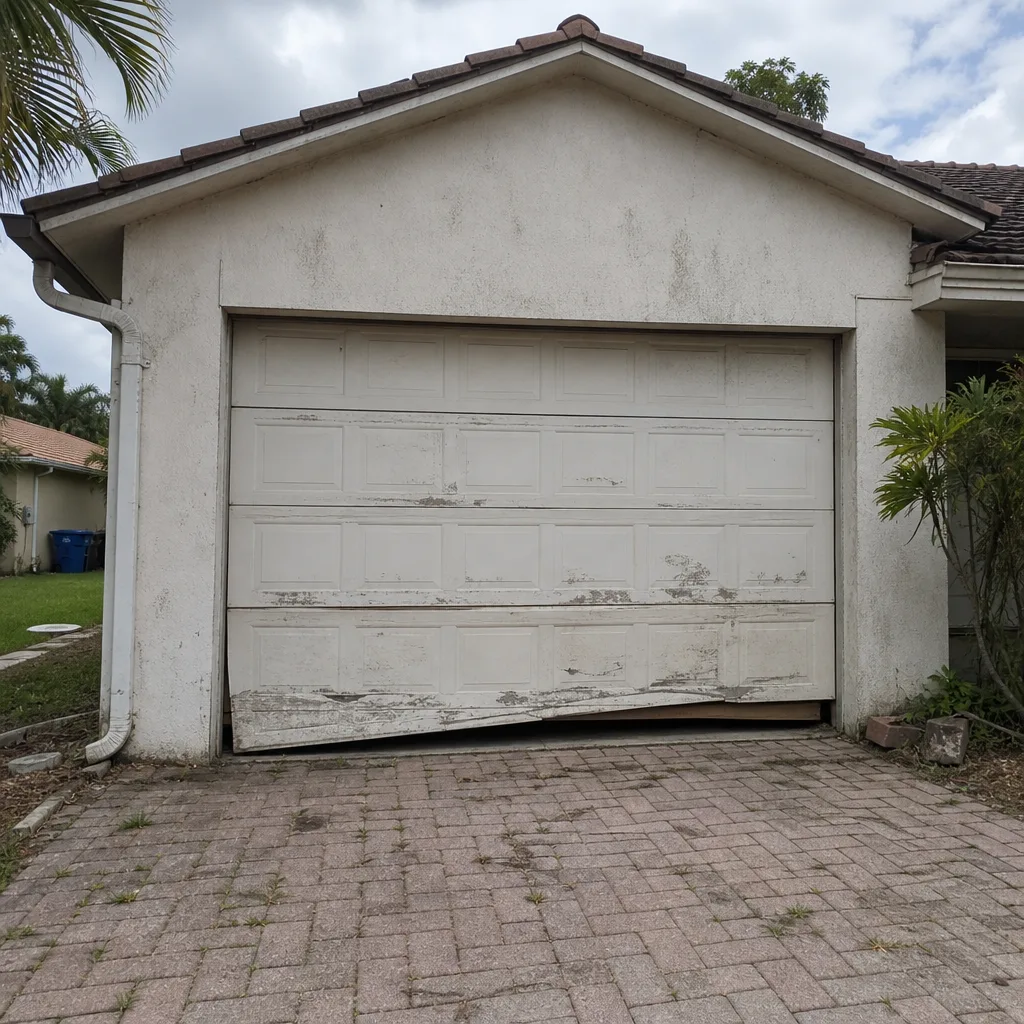 Before
 After
 Before
 After
 Before
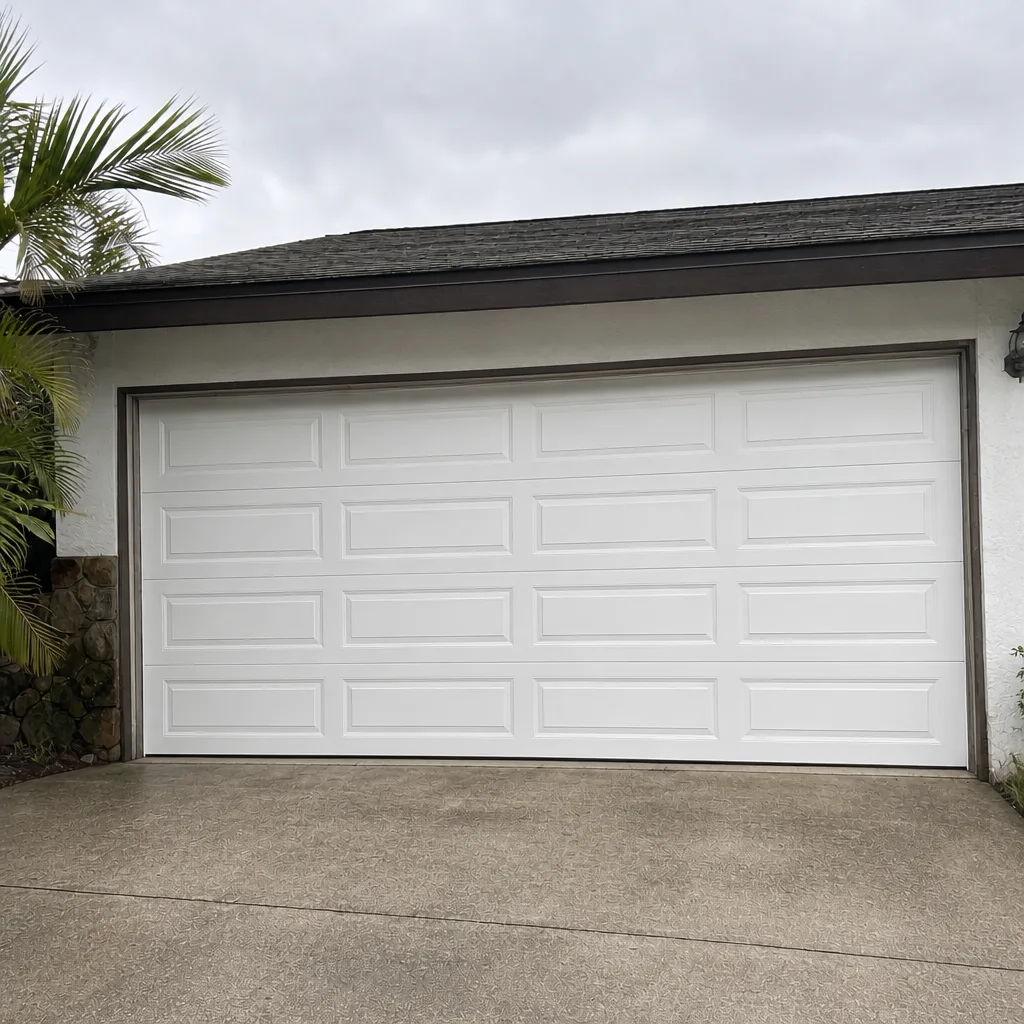 After
When to Call a Professional
Call a professional when the door is part of the building envelope and a mistake means a failed inspection or an insurance problem, and call one immediately when a spring has failed or a door is stuck open. A snapped torsion spring, a door hanging off its tracks, a snapped cable, or a door that won’t close are all jobs for a trained technician, not a weekend project. If you’re planning a replacement, the right time to call is before you order the door, so the permit and the wind-load rating are lined up from the start. Coral Springs Garage Door Repair Co offers free estimates in Coral Springs, and we can tell you which line your job falls on. Call (877) 510-2936.
Frequently Asked Questions
Yes. A full garage door replacement in Coral Springs requires a building permit under the Florida Building Code, and the job needs a final inspection before the permit is closed. The permit confirms the door carries the wind-load rating the code requires for your opening, so it’s not paperwork for its own sake. Call (877) 510-2936 for a free estimate – we pull the permit as part of the job.
No, replacing or repairing a garage door opener generally does not require a permit, because the opener isn’t part of the building’s rated envelope. The door assembly and its anchoring are what the code reviews. If you’re changing the door and the opener at the same time, the door permit covers the door and the opener stays a separate item. Call (877) 510-2936 to confirm the scope of your job.
A Florida product approval, or NOA for the Miami-Dade version, is the state’s documented evidence that a specific garage door assembly has been tested to meet the Florida Building Code for its intended use. It matters because the permit reviewer and the inspector both look for it, and because it’s the proof your door was installed to the code that protects it in a storm. Ask for the approval number in writing before you order.
The inspector confirms the installed door matches the permitted scope and the approved product documentation, the anchoring is fastened as specified, the wind-load rating meets the code requirement for the opening, and the door operates safely. The final is about the assembly and its paperwork, not your opener’s range. A clean pass means the permit gets closed out and you have a record of legal, code-compliant work.
Yes. After a storm, an adjuster may check whether the door was permitted and installed to code, and a claim for an unpermitted or non-compliant door can be reduced or denied. It’s also a disclosure issue at resale, because unpermitted work on an envelope component is a material fact you have to disclose to buyers. The permit fee is small next to either problem. Call (877) 510-2936 for a free estimate on permitted replacement work.
Spring replacement is a repair and doesn’t require a permit, but it’s not a do-it-yourself job. Torsion springs store enough energy to cause serious injury, and a mistake with the winding bars can be dangerous in a way most homeowners don’t expect. This is a safety-critical repair that belongs with a trained technician. Call (877) 510-2936 and we’ll take care of it.
The Bottom Line
In Coral Springs, a garage door replacement is a permitted envelope change under the Florida Building Code, and the permit, the wind-load rating, and the product approval documents all have to line up before the door goes in. Repairs – springs, tracks, rollers, openers – generally don’t need a permit, but the replacement does, and skipping it creates insurance and disclosure problems that follow the house. The work itself is straightforward when the process is handled correctly: get the rating in writing, confirm the NOA, pull the permit, pass the final, and keep the paperwork. That’s the whole guide in one sentence. If you’re planning a replacement or a repair, call (877) 510-2936 for a free estimate. The price is quoted and agreed before any work starts, and the written estimate sets the final price.
Written by the team at Coral Springs Garage Door Repair Co.